A requirement that standard architecture cannot meet efficiently is the clearest justification for custom equipment. In later implementations, development will make customization more modular, measurable, and data-supported rather than simply adding mechanisms. This provides a grounded view of how custom rubber molding may become smarter and less wasteful.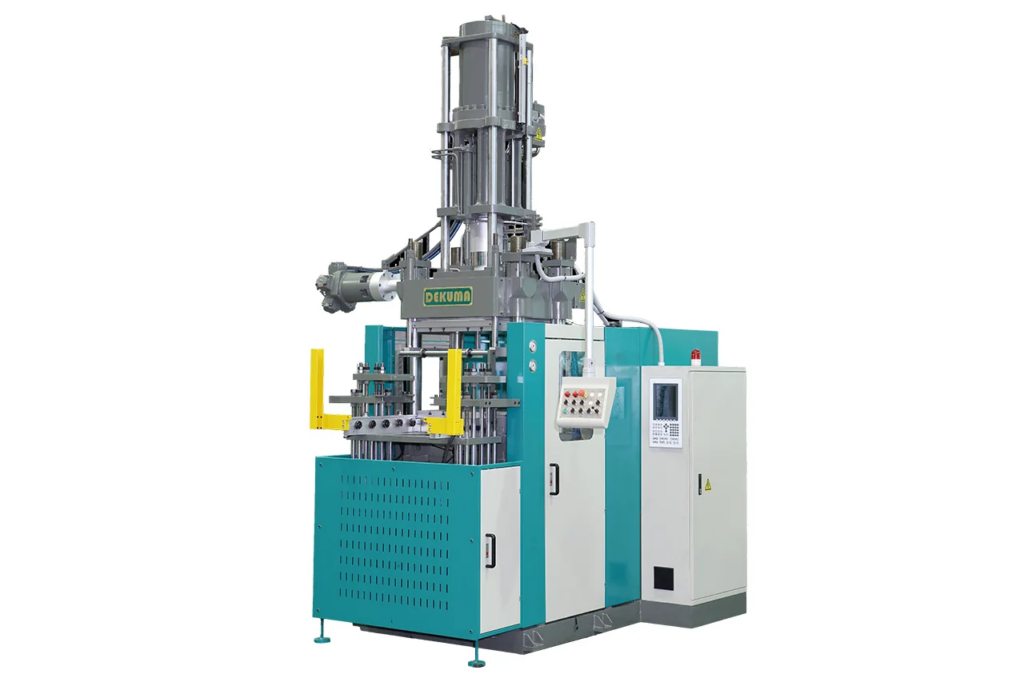
Digital Requirements for Customized Equipment
Product size, weight, compound, mold, output, factory layout, and workflow determine which functions are necessary. A future project record can map each requirement to a module, interface, risk, and acceptance test.
Present needs must be separated from possible expansion so that the first configuration does not carry unnecessary cost and complexity while realistic future connections remain available. Matching molds can be designed with the machine, reducing uncertainty at tooling interfaces.
A custom rubber molding project will need to preserve approved drawings, shot calculations, mold weight, access, utility, safety, and handling data. These records can support model selection, software configuration, trials, and later changeovers.
The goal is not a larger digital file but a traceable reason for each custom decision. Early sequence reviews can also expose unnecessary customization. If a handling conflict can be removed by changing the mold orientation or part flow, an additional mechanism may not be needed.
Conversely, a real safety or access constraint must not be hidden by an optimistic cycle estimate. Next-generation engineering tools can make these alternatives easier to compare while the project still has design flexibility.
Making Each Molding Stage Visible
We can program three independent pressure-and-speed zones for injection and follow them with three separately defined dwell stages. Multiple clamping zones coordinate pressure and speed with mold protection, repeated venting, and stroke control.
Separate heat-transfer-oil circuits allow the temperatures of the plasticizing barrel and injection barrel to be controlled independently. These capabilities allow a process to be tuned around material and mold behavior.
Next-generation smart control can connect zone behavior with cavity results, material batches, and recipe revisions. A custom injection molding machine may highlight drift or compare current curves with a qualified baseline. Any recommendation still needs engineering limits, authorization, and verification.
Automatic adjustment without clear cause and product evidence could move the process away from the conditions established during acceptance. Simulation and virtual sequence checks may increasingly support design review, but physical validation will remain necessary.
Models depend on correct assumptions about material behavior, friction, timing, and operator work. Their best use is to identify collision, access, capacity, or cycle questions for testing. They cannot be presented as proof that a new compound and mold will produce acceptable parts.
Accounting for Time, Energy, and Tooling Risk
Material waste remains visible, but custom rubber molding also loses value through long setup, unstable warm-up, unnecessary motion, poorly balanced handling, and preventable mold damage. Low- and high-pressure mold protection, precise injection, controlled venting, cold-runner equipment, vacuum, and dedicated feeding can address different loss mechanisms.
Their benefit should be measured separately rather than grouped under one efficiency claim. Energy-matched hydraulics can reduce unnecessary pump demand where applicable, while independent temperature circuits can focus heat control on the process.
A useful metric combines energy, material, and acceptable output by recipe. This reveals whether a lower-energy cycle also protects yield. The factory also needs to record maintenance and changeover time, because a complex option can shift cost away from scrap and into downtime.
Next-generation waste accounting can connect each loss with the custom function intended to prevent it. Mold-protection events, vacuum performance, material-feed interruptions, ejection faults, and manual interventions can be reviewed beside scrap categories.
This makes it possible to confirm whether a module is solving its original problem and whether its inspection or service burden remains proportionate to the benefit. Our engineers configure each custom injection molding machine with the required clamping, injection, mold-handling, feeding, temperature, and automation functions at Dekuma.
Evolving Specialized Cells through Modular Design
Depending on the machine family, a project may add upper mold lifting, lower mold holding, sliding tables, one- or two-layer ejection, overturning, silicone feeding, cold runners, or vacuum equipment. Next-generation designs can use standardized mechanical and control interfaces so selected modules are easier to validate, diagnose, and replace.
Safety and manual recovery must remain part of every combination. Standardized interface documents can define mechanical mounting, utilities, signals, permissions, completion, timeouts, and fault states for each module.
This does not make every device interchangeable, but it can reduce ambiguity during upgrades. Change control and regression testing are still required because a new module may affect guarding, sequence timing, recipe logic, maintenance access, or production records elsewhere in the cell.
Before delivery, we can test equipment with customer molds or materials when required. Data from those trials can establish baselines for recipe, cycle, energy, material loss, and quality.
Modular hardware, transparent controls, targeted waste measures, and preserved validation evidence can make specialized equipment easier to operate over time. A defined purpose and lifecycle owner for every option allows customization to support flexibility without turning complexity into a new source of waste.
After installation, remote guidance, on-site training, and 24/7 support can use the same records to investigate changes. This continuity is more valuable than collecting disconnected machine signals. Our view at Dekuma is that disciplined configuration will define the future of custom rubber molding.