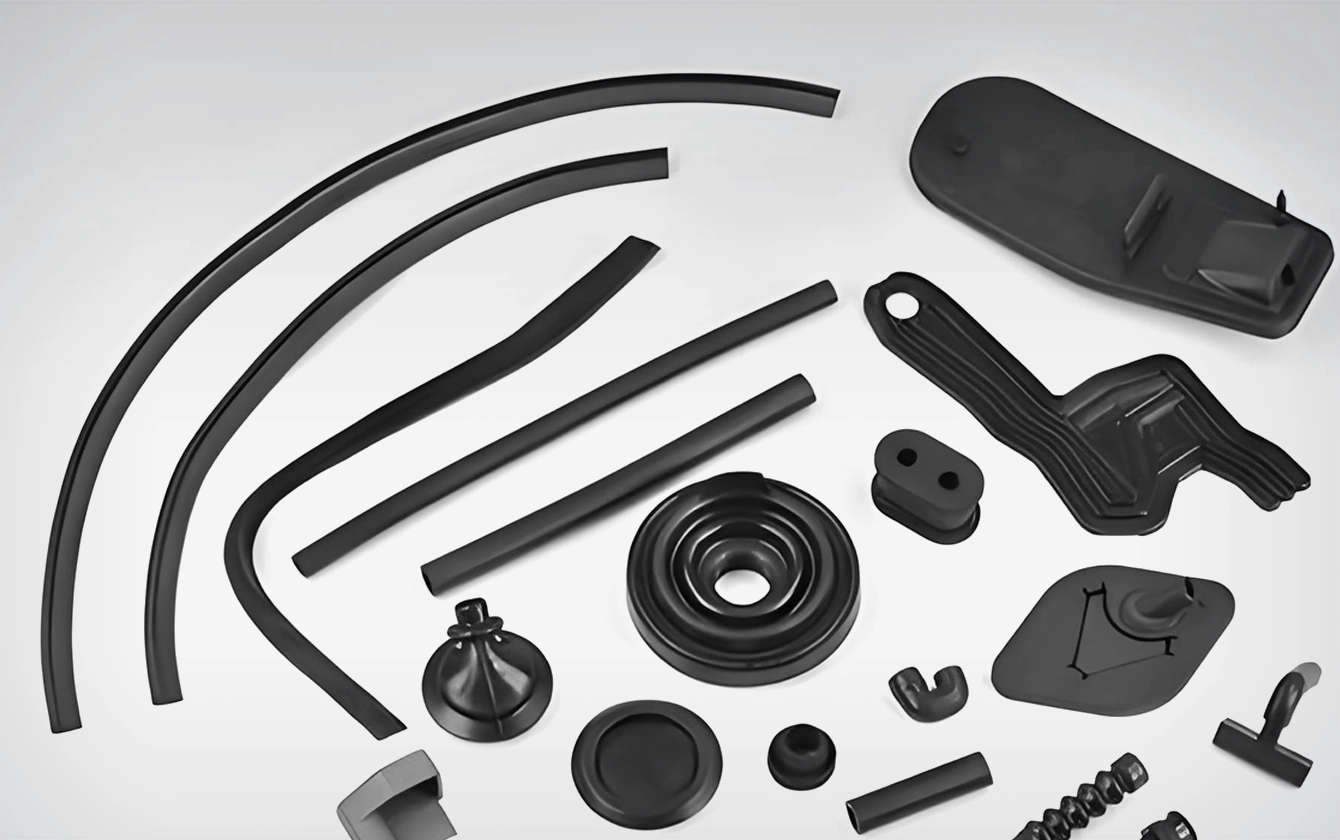
Automotive rubber manufacturing covers seals, gaskets, glazing edges, corner joints, anti-vibration parts, oil seals, O-rings, connectors, TPU products, and other precision components. Their compounds, molds, and handling routes differ substantially. Future automotive molded rubber parts will depend on smarter control that reduces loss without hiding process responsibility.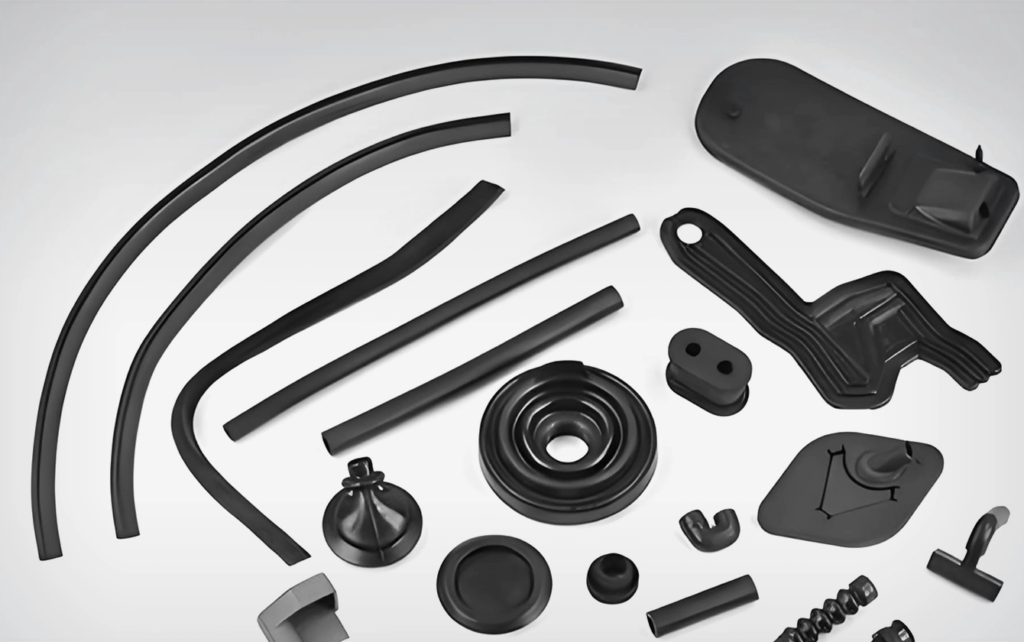
Product and Material Data for Cell Selection
General automotive rubber molding is served by the RV platform. RV-Se systems process TPV, TPE, flexible modified PVC, and related injection-moldable materials. RV-B equipment performs integrated TPV encapsulation on large windows, while RC C-frame machines serve sealing-strip joints, precision seals, skeleton oil seals, and TPU overmolding.
Each architecture creates different capacity, access, automation, and maintenance conditions. Feeding, pressure, temperature, residence time, and curing or cooling must be set for the selected compound, whether it is NR, NBR, EPDM, butyl rubber, TPV, TPE, or another qualified material.
Next-generation application records can map every automotive molded rubber parts family to approved material, mold, machine, recipe, handling, and inspection. Scheduling can then prevent known incompatibility instead of relying on an operator to identify it at setup. Material and tooling releases can be connected to the same record.
Grade, batch, storage, preparation, mold condition, inserts, cavity balance, venting, temperature uniformity, and approved product range affect the result. If these inputs change without traceability, operators may adjust machine settings to compensate and move a stable process away from the conditions established during qualification.
Immediate Quality Evidence
Controlled injection and temperature already support precision molding. Looking ahead, systems may link shot, pressure, position, temperature, cycle, material, insert, and mold records with weight, dimensions, surface inspection, or other product-specific results.
Analytics can show deviation from accepted production, but engineers must confirm cause before a qualified recipe is changed. Automated inspection needs its own validation. False accepts and false rejects may need to be measured, and manual review requires a controlled route.
A vision system that rejects more output without producing a useful defect category can increase waste. Quality data should point toward a material, mold, handling, process, or maintenance action.
Over time, quality systems may combine process traces with inspection by part family or cavity. Correlation can identify where to investigate, but it does not prove cause. Controlled trials will need to isolate a suspected material, tooling, handling, or machine variable.
This protects validated recipes from unnecessary changes and prevents a statistical pattern from becoming an automatic release rule without engineering evidence. Our work at Dekuma uses application-specific platforms for rubber injection molding for automotive industry rather than one standard cell.
Changeover and Handling Losses
Material loss includes startup, purge, runner and flash, short filling, damage, and rejected output. Mixed factories also lose time and material during compound changes, mold changes, fixture adjustment, warm-up, and first-piece approval.
Quick mold-change functions and stored presets are available on applicable models, but they deliver value only when the whole setup route is coordinated. Automation must address defined constraints such as insert consistency, hot-part exposure, flexible-part removal, or glass support.
The timing study needs loading, molding, curing or cooling, removal, inspection, packing, and fault recovery. In rubber injection molding for automotive industry, lower waste means balancing the cell rather than making one device move faster. Modular interfaces can make future expansion easier by defining mounting, utilities, permissions, completion, timeouts, and fault states.
Every new device still affects guarding, cycle timing, maintenance access, and possibly genealogy. A phased automation plan may need to state what is installed, what is merely prepared, and which tests will be required before the next stage may enter production.
Lifecycle Protection through Data and Maintenance
Machine-state monitoring and production-information analysis are available through the iSee intelligent platform, alongside workflows for quality and traceability. Over time, systems can connect energy, alarms, cycle time, scrap, and downtime with the relevant product and recipe. Signal units, timestamps, calibration, communication state, permissions, and software revisions must stay controlled.
Depending on use, the general maintenance reference is roughly six to twelve months; the actual plan must account for the model, operating hours, load, compound, environment, condition, and manual. Baselines after acceptance can support review of hydraulics, heating, sensors, handling, tooling, guards, recipes, and backups.
We also provide configuration, mold and automation coordination, training, spares, and after-sales support. Our future service model can compare pressure, temperature, energy, cycle time, alarm, and defect trends with the acceptance baseline. Maintenance evidence remains interpretable only when software, recipes, backups, component status, and service actions share the same timeline.
Remote access will need to be authorized, limited, and logged, while the cell retains local safety and control whenever a higher-level connection is unavailable. Factories should introduce these functions by product risk and process maturity. Stable naming, calibrated signals, controlled recipes, and clear defect codes come before advanced prediction.
Smarter control should make exceptions easier to understand, isolate suspect output, and guide verified improvement. Digital evidence tied to the physical cell turns lower waste into support for quality and availability instead of merely producing more data.
Pilot results can be reviewed against accepted quality and output, then extended only where the benefit and recovery method are both demonstrated. Our future direction is for automotive molded rubber parts to carry a clearer production history from material and setup through molding and inspection at Dekuma.