From compound preparation to final inspection, rubber-track production moves through reinforcement placement, molding, vulcanization, and heavy handling. Equipment cost cannot be assessed responsibly without considering how these stages interact. A reliable rubber track manufacturing process can be assessed through its applications, cost drivers, and technical requirements.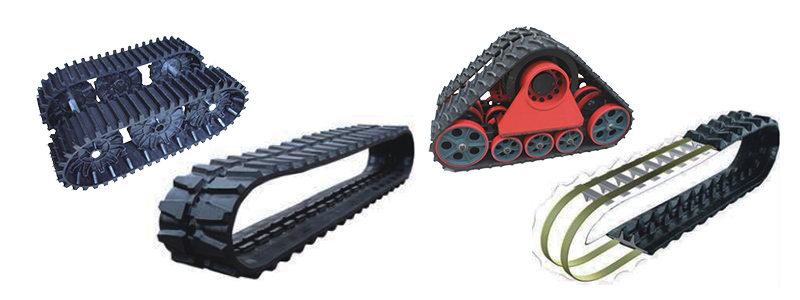
Which Applications and Product Details Define the Line?
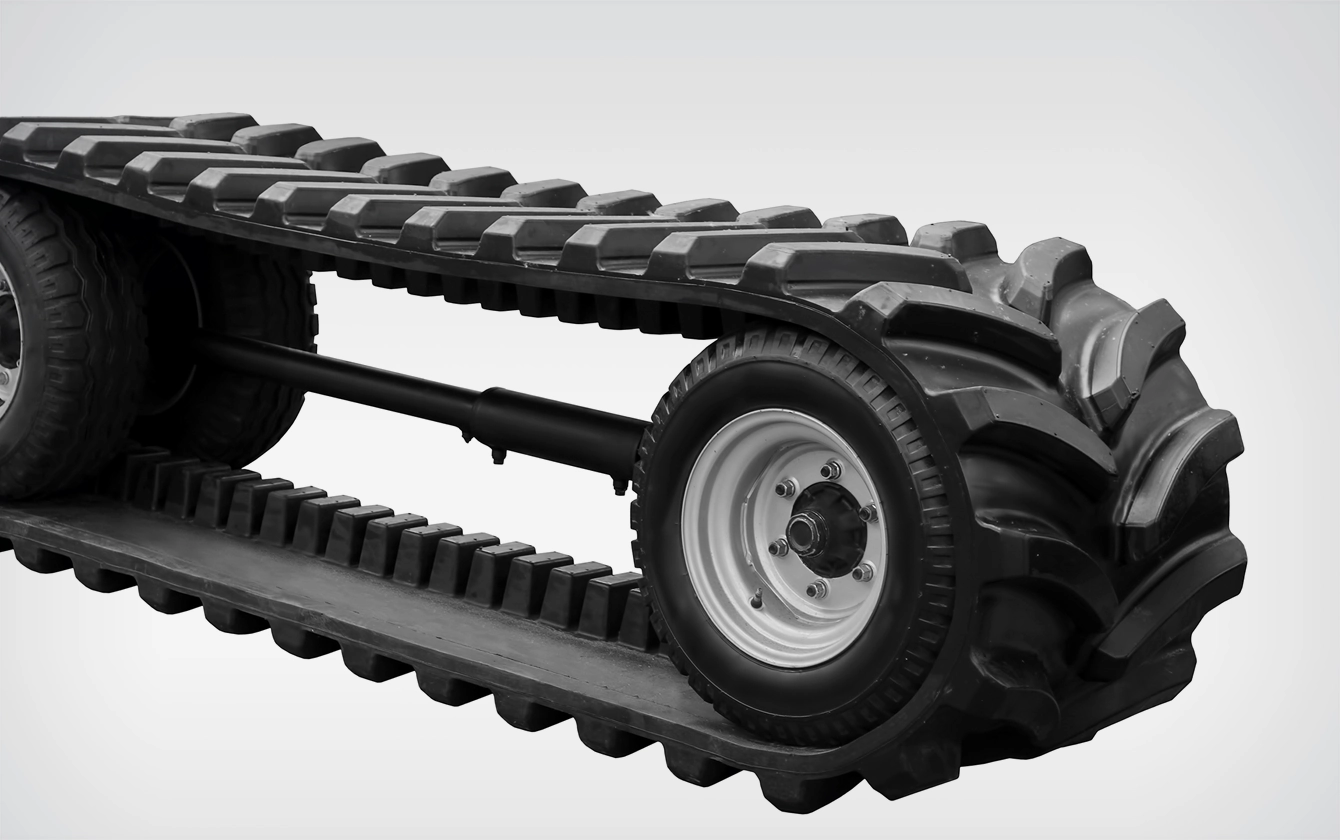
Agricultural, construction-equipment, military-vehicle, and snowmobile tracks can differ substantially in width, usable length, load demand, tread geometry, and reinforcement arrangement. Natural rubber is a principal material for these applications, but the exact compound, cord system, mold, and cure cycle require project-level confirmation.
A proposal must begin with drawings, target properties, part weight, production volume, and inspection criteria rather than a general track category. Our line uses a precision mold-clamping unit with a constant-tension steel-cord system to produce seamless load-bearing tracks. A one-piece structure avoids conventional track joints.
That construction still depends on accurate material preparation, reinforcement position, mold condition, pressure, temperature, and curing time. The rubber track manufacturing process must therefore be qualified as a complete route, including preparation and final inspection, not only as a press cycle.
Which Capacity and Configuration Should Be Checked?
Published models range from DKM-RC200 to DKM-RC900, with clamping forces from 200 to 900 tons and a listed system pressure of 210 bar. Heating-plate dimensions, track-width range, and usable track-length range vary by model.
Selection should account for the full mold envelope, opening and handling space, utilities, floor loading, lifting, guarding, material flow, and future product mix. The largest clamping value is not automatically the most economical choice. Capacity may need to be calculated from the required product mix and cycle.
A long curing time can make mold availability more important than press speed, while reinforcement preparation or inspection may become the true bottleneck. A timing study should include setup, loading, confirmation, curing, unloading, cleaning, inspection, and recovery.
This helps determine whether added tooling, handling equipment, or another shift would improve output. A rubber track vulcanizing machine may be configured with automatic rubber loading, material retrieval, and demolding. Modular design allows the line to be adjusted for different track sizes.
Buyers need to identify every selected module, interface, sensor, safety function, and customer-supplied item. A line described as automated can still require substantial manual preparation or inspection, so the sequence and staffing assumptions need to be written step by step.
Which Factors Determine Project and Operating Cost?
Capital cost includes the press, mold, steel-cord or reinforcement handling, loading and take-out equipment, safety system, controls, utilities, installation, trials, training, and spare parts. Factory preparation may add foundation, power, cooling, lifting, access, and network work.
Quotations should use the same boundary so that an apparently lower price does not simply omit functions essential to production. Material economics needs a documented baseline.
The factory can record rubber and reinforcement entering the line, accepted track weight, trim and startup loss, rejected products, and material remaining after a run. Comparing these values over representative orders reveals where waste actually occurs.
It also prevents an automation proposal from claiming savings that come from a different product mix or accounting boundary. Operating cost includes rubber and reinforcement loss, energy, labor, curing time, changeovers, maintenance, downtime, and accepted-part yield.
Automated handling can reduce labor requirements by up to 50% compared with traditional machines in an appropriate arrangement, but actual results depend on product mix, cell balance, and included tasks.
During long curing cycles, our intelligent shutdown function retains pressure while stopping the main motor, reducing unnecessary power use while maintaining the required conditions. Our engineers configure each rubber track vulcanizing machine around the required track dimensions and production scale at Dekuma.
How Should the Process Be Tested and Supported?
Acceptance must use representative material, reinforcement, and tooling. The trial plan needs a stabilization period, sample quantity, recipe, measurements, tolerances, defect rules, cycle target, and handling of interruptions.
Teams need to check reinforcement tension, mold movement, pressure retention, temperature, cure time, automatic transfers, safety interlocks, alarms, demolding, and traceability. Fault cases such as incomplete loading or failed take-out also require safe recovery procedures.
The customized B&R platform stores and monitors recipes and operating parameters, while the iSee4.0 platform can supervise energy, temperature, pressure, clamping force, time, and machine status. These records help production teams investigate variation when they remain tied to the correct order and product.
Data visibility does not replace material, mold, or maintenance discipline. Maintenance planning should cover clamping and hydraulic systems, heating, pressure and temperature sensors, cord-tension components, handling devices, lubrication, guarding, software backups, and molds. Inspection frequency depends on use, load, compound, environment, and the applicable manual.
Condition trends and service records may need to be connected so that a gradual change in cycle time or energy has a traceable engineering response. We provide configuration, installation guidance, operator training, technical assistance, and support for different scales and specifications.
Our view at Dekuma is that a successful rubber track manufacturing process is the combination of suitable capacity, controlled reinforcement and curing, safe handling, and prepared personnel. Cost comparisons based on accepted output and maintainable operation give buyers more useful evidence than a single automation or energy claim.