In modern manufacturing, producing high-quality, durable rubber components at scale requires a balance of precision, speed, and reliability. Conventional rubber injection molding injects an uncured rubber compound into a heated mold under controlled pressure, where it vulcanizes to form the finished part. Thermoplastic elastomers such as TPE and TPV are instead typically injected in a molten state and cooled to solidify.
Whether you operate in the automotive rubber components sector, manufacture electrical rubber insulators, or oversee heavy-duty rubber track production lines, mastering the rubber injection molding process is vital for scaling your operations and maximizing profitability.
In this article, Dekuma will walk you through the most common industry applications, the main types of molding processes and materials, and the critical selection criteria for choosing the right production solution.
Applications of Rubber Injection Molding
Rubber injection molding supports a broad range of functional components.
1. Automotive Components
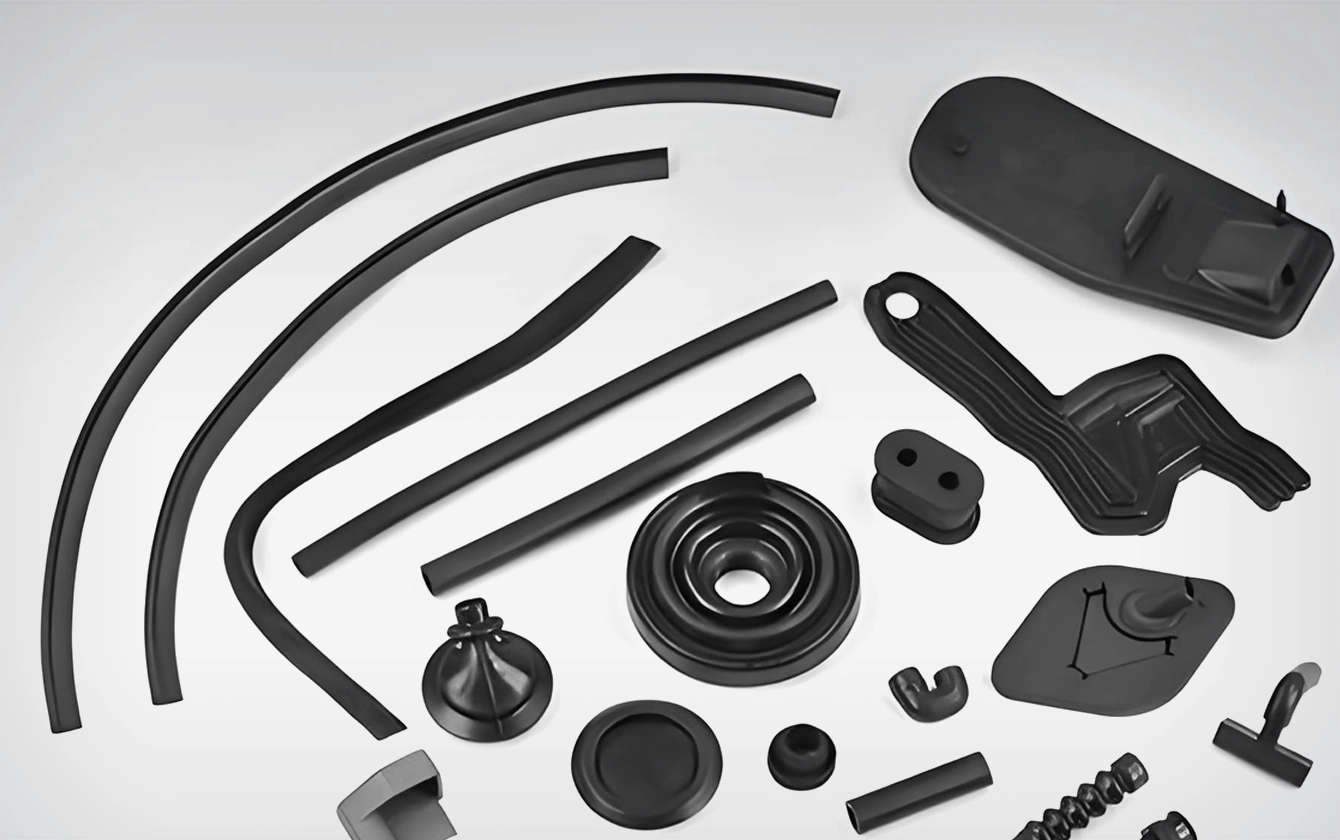
Automotive rubber components must often withstand vibration, heat, weather exposure, oils, fuels, and repeated mechanical stress. Common injection-molded products include:
- Seals and gaskets
- Vibration dampers
- Suspension bushings
- Oil seals
- Cable connectors
- Pipe fittings
- Window encapsulation and sealing components
For automotive rubber parts, sealing-strip corner joints, and one-piece TPV window encapsulation, DEKUMA offers dedicated configurations in its RV Series, RC Series, and RV-B Series, respectively.
Video shown: Dekuma RV-B Series rubber injection molding machine producing one-piece TPV automotive window seals.
2. Medical and Healthcare Products
Liquid silicone rubber, or LSR, is frequently selected for medical and healthcare components because it can offer temperature resistance, flexibility, and compatibility with precision molding. Typical products include valves, diaphragms, seals, masks, tubing connectors, and components for diagnostic equipment. Their production generally requires careful control of material grades, contamination, traceability, and the applicable regulatory requirements.
3. Electronics and Electrical Equipment
Rubber components also help provide sealing, insulation, cushioning, and environmental protection in electrical equipment. Applications include connector seals, cable accessories, insulating covers, keypads, grommets, and waterproof components.
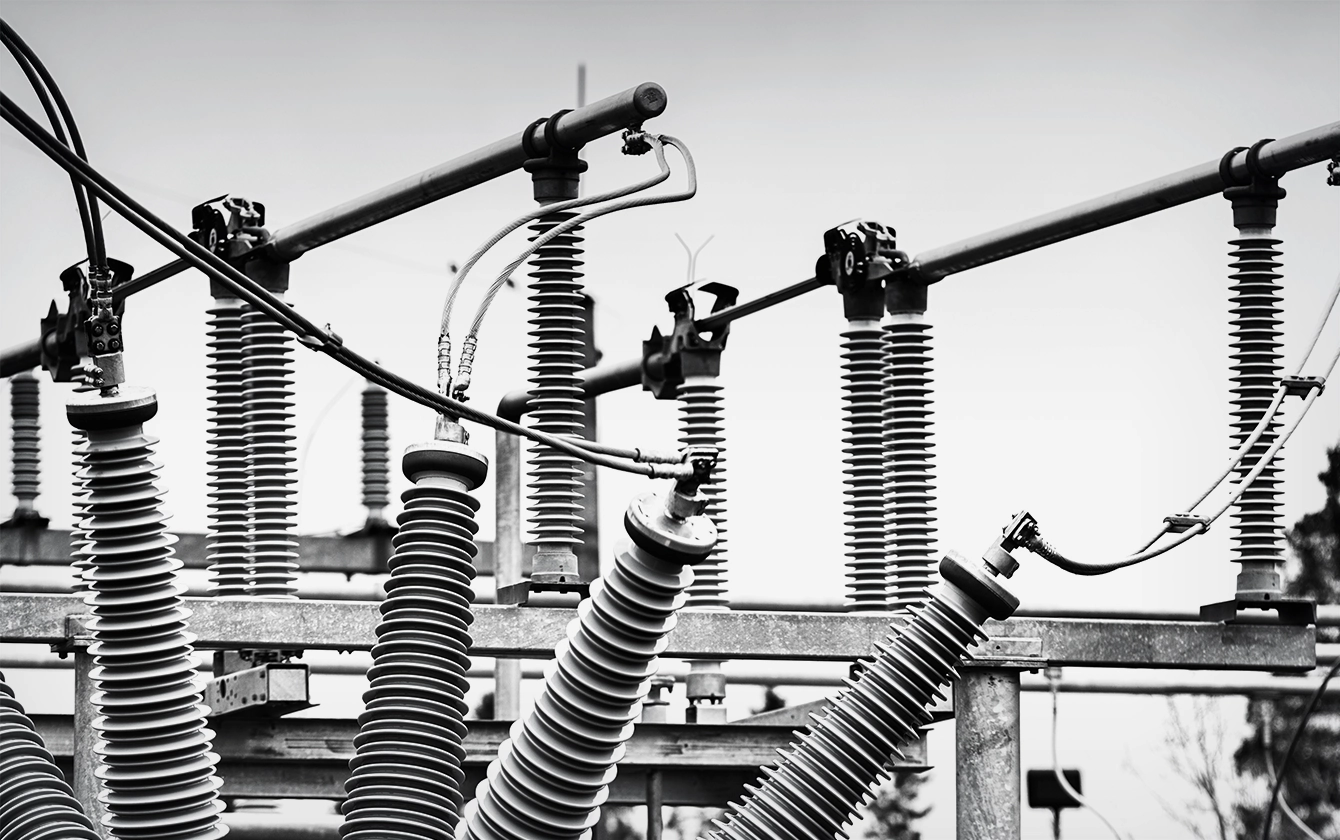
In power transmission, silicone rubber and EPDM are commonly processed into long-rod insulators, hollow-core insulators, surge arresters, and switchgear components. These products require accurate material distribution and stable curing across sometimes large or complex molds.
4. Industrial Equipment
Industrial machinery uses molded rubber parts to control leakage, vibration, impact, and contamination. Examples include O-rings, gaskets, diaphragms, dust covers, rollers, buffers, and vibration isolators. Rubber injection molding is especially valuable for factory plants producing large quantities of components with consistent dimensions and performance.
5. Plumbing, HVAC, and Construction
Plumbing and HVAC systems require seals that can tolerate pressure, moisture, temperature changes, and long service periods. Rubber injection molding can produce pipe seals, valve components, flexible connectors, grommets, and vibration-control parts. Construction applications also include weather-resistant sealing components, protective pads, and rubber parts used in infrastructure and heavy equipment.
Advantages and Limitations of Rubber Injection Molding
Rubber injection molding offers several advantages for manufacturers pursuing stable and scalable elastomer production.
Advantages of Rubber Injection Molding
- Supports repeatable production for medium- and high-volume rubber components
- Helps improve process control for injection volume, pressure, temperature, and curing conditions
- Can produce complex geometries, fine details, sealing lips, holes, and molded interfaces
- Supports insert molding and selected overmolding applications
- Can reduce manual handling when paired with automated feeding, demolding, or part-removal systems
- Can improve material efficiency and production consistency when the machine, mold, and rubber compound are properly matched
Limitations of Rubber Injection Molding
- Mold development and equipment investment can be significant, especially for low-volume projects
- Rubber flow behavior and curing characteristics require careful process development
- Poor venting, temperature control, or mold design can cause flash, air traps, incomplete filling, or inconsistent curing
- Some molded parts need trimming, deflashing, post-curing, or additional inspection
- Material changes may require cleaning, process adjustment, and validation
- Not every elastomer, part design, or production volume is best suited to the same injection molding configuration
The best results come from treating the material, mold, machine, process settings, and automation system as one integrated production solution.
Main Types of Rubber Injection Molding
The following section covers both material-specific injection molding processes and additional molding methods. These are different ways of classifying the process and should be evaluated alongside the material and part design.
1. Rubber Injection Molding Process Types:
- Conventional solid rubber injection molding uses preformed or strip-fed solid rubber compounds, such as EPDM, NBR, natural rubber, or high-temperature vulcanizing silicone. The material is plasticized and injected into a heated mold, where it vulcanizes into the final part. This method is widely used for automotive seals, industrial parts, electrical components, and large molded rubber products.
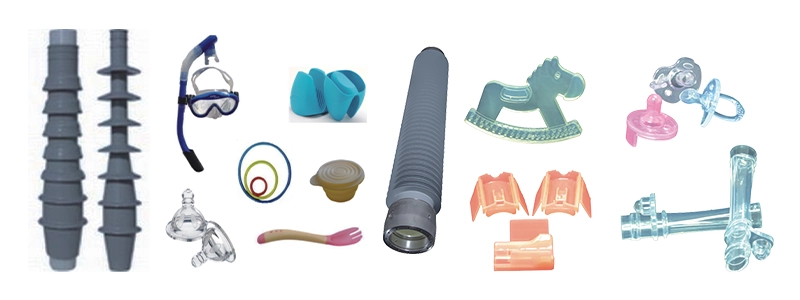
- Liquid silicone rubber injection molding uses two-part liquid silicone rubber, often called LSR. The two components are accurately dosed, mixed, and injected into a heated mold for curing. LSR injection molding is well suited to precision silicone parts that require stable processing, flexibility, and clean production control.
- Insert molding or overmolding forms rubber around a pre-positioned component such as a metal insert, cable, rigid plastic part, or other substrate. It can reduce assembly steps and improve sealing or mechanical retention. Successful overmolding depends on part positioning, material compatibility, interface design, and bonding requirements.
- Two-shot or multi-material molding combines two materials or colors in one production cycle. It may be used for integrated functional surfaces, seals, grips, or complex multi-material components. Because it requires specialized molds, controlled process sequencing, and compatible materials, it should be evaluated early in the product-design stage.
2. Common Rubber and Elastomer Materials:
Material | Key strengths | Typical applications |
Silicone rubber | Wide temperature range (typically -60°C to +230°C), flexibility, weather resistance | Insulators, seals, healthcare-related components, electronics |
EPDM | Weather, ozone, water, steam, and aging resistance | Automotive seals, roofing membranes, cable insulation, HVAC |
NBR | Oil, grease, and abrasion resistance | Oil seals, hydraulic components, industrial and automotive parts |
Fluorosilicone | Silicone-like flexibility with improved fuel and oil resistance | Automotive and aerospace-related sealing applications |
FKM | Heat, oil, fuel, and broad chemical resistance | High-temperature and demanding industrial seals |
Natural rubber | Elasticity, resilience, abrasion resistance | Vibration dampers, rollers, selected heavy-duty parts |
TPE and TPV | Softness, fast processing, recyclable thermoplastic characteristics | Automotive seals, consumer parts, grips, encapsulation applications |
Note: Thermoplastic elastomers behave like rubber but process like plastic. Unlike conventional vulcanized rubbers, many TPE and TPV materials can be reprocessed under suitable conditions; actual reuse depends on the formulation, material condition, and end-use requirements. Due to differences in material characteristics and processing techniques, manufacturers should confirm compatibility between the selected material, mold, and injection molding machine.
How to Choose the Right Rubber Injection Molding Solution
A suitable rubber injection molding solution must align the product design, compound, mold, machine, and production target.
1. Define the Operating Environment
Start with the conditions the component will face. Consider temperature, pressure, mechanical loading, oils, fuels, chemicals, water, steam, UV exposure, ozone, and expected service life.
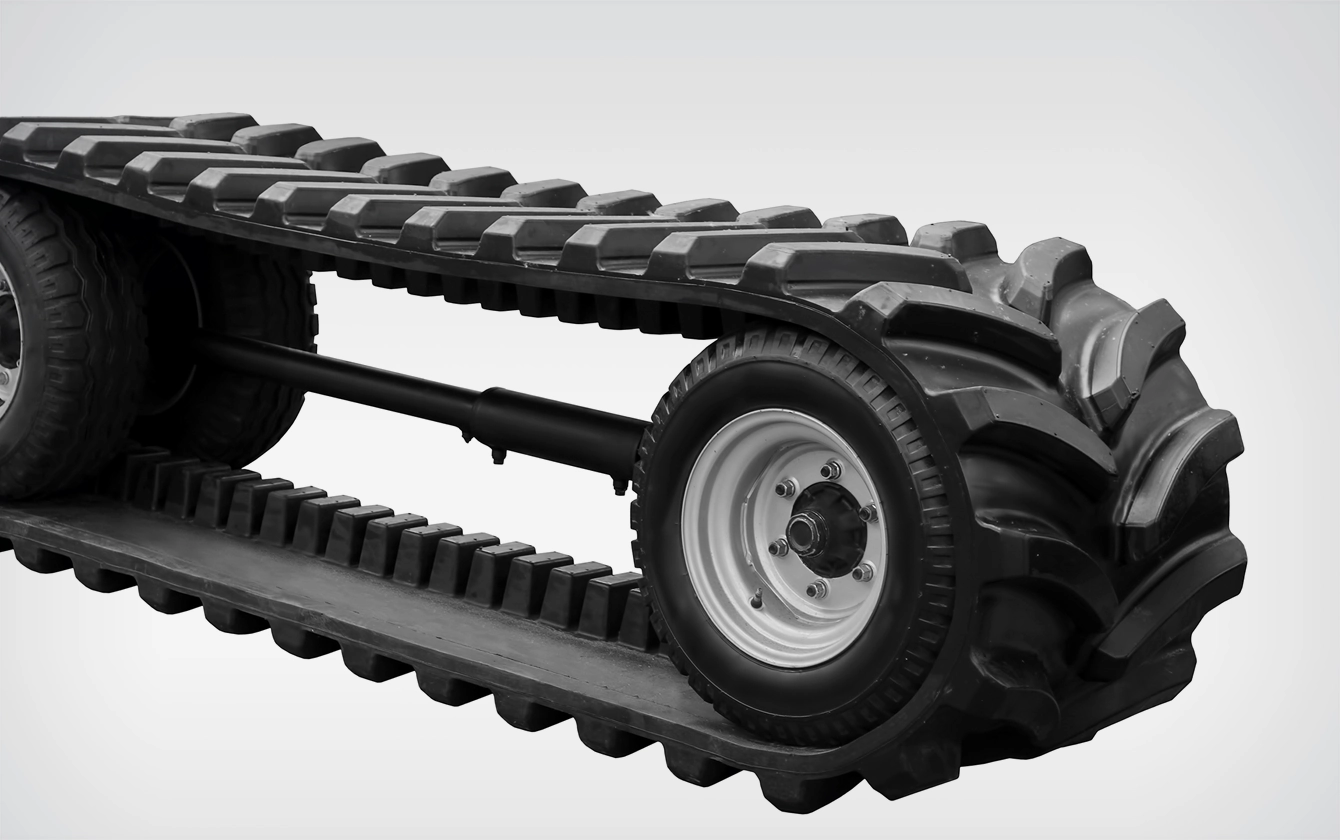
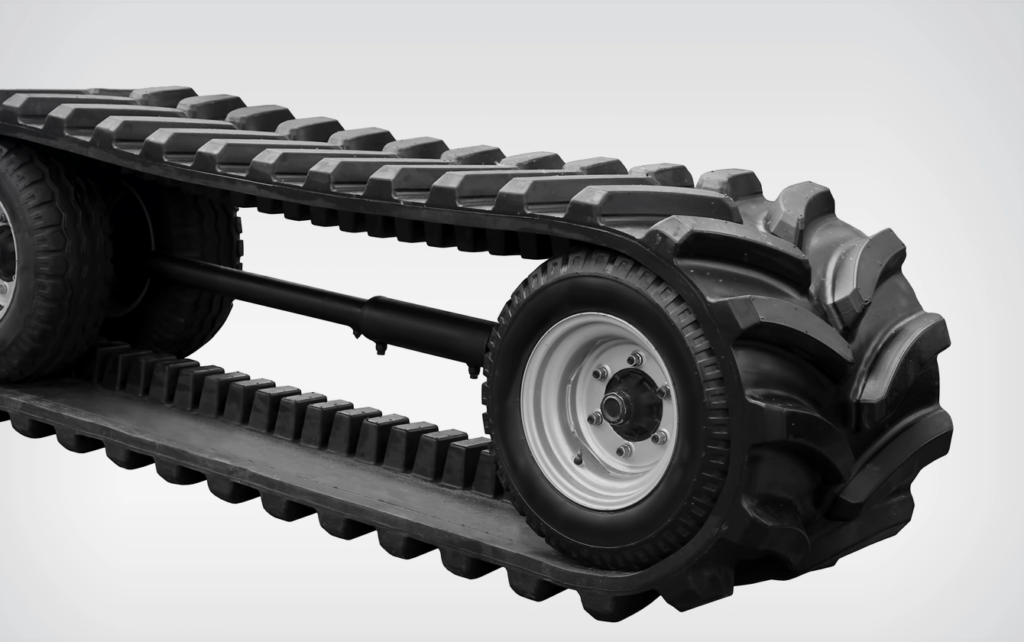
Electrical insulators may prioritize dielectric properties and weather resistance. Automotive seals may require resistance to heat and fluids, while rubber tracks need strength, fatigue resistance, and stable bonding with reinforcement materials.
Video shown: Dekuma RC 480 rubber track production line for construction, agricultural, and specialty vehicle rubber tracks.
2. Select the Rubber Compound
Choose the rubber material based on performance requirements. EPDM may suit weather-resistant and electrical-insulation applications, while NBR may be more appropriate for oil-contact parts. Silicone may support wide-temperature and flexible applications, while FKM may be considered for demanding heat and chemical resistance. Furthermore, material selection should cover not just the base polymer but also fillers, curing agents, additives, and color requirements.
3. Confirm Hardness and Mechanical Performance
Specify measurable performance requirements such as:
- Shore hardness
- Tensile strength and elongation
- Tear and abrasion resistance
- Compression set
- Fatigue resistance
- Electrical or dielectric properties
Avoid selecting a compound based on hardness alone. Two materials with the same Shore A rating can behave differently under heat, chemicals, compression, or repeated movement.
4. Review Design for Manufacturability
Consider design details like wall thickness, draft angles, parting lines, gate locations, venting, undercuts, insert positioning, and demolding requirements.
For example, good mold design helps material reach every cavity while allowing trapped air to escape, and the molding machine must also accommodate the mold dimensions, required opening stroke, injection volume, and clamping force.
Early cooperation among the product designer, mold maker, material supplier, and molding-equipment provider can reduce rework later.
5. Evaluate Production Volume and Cost
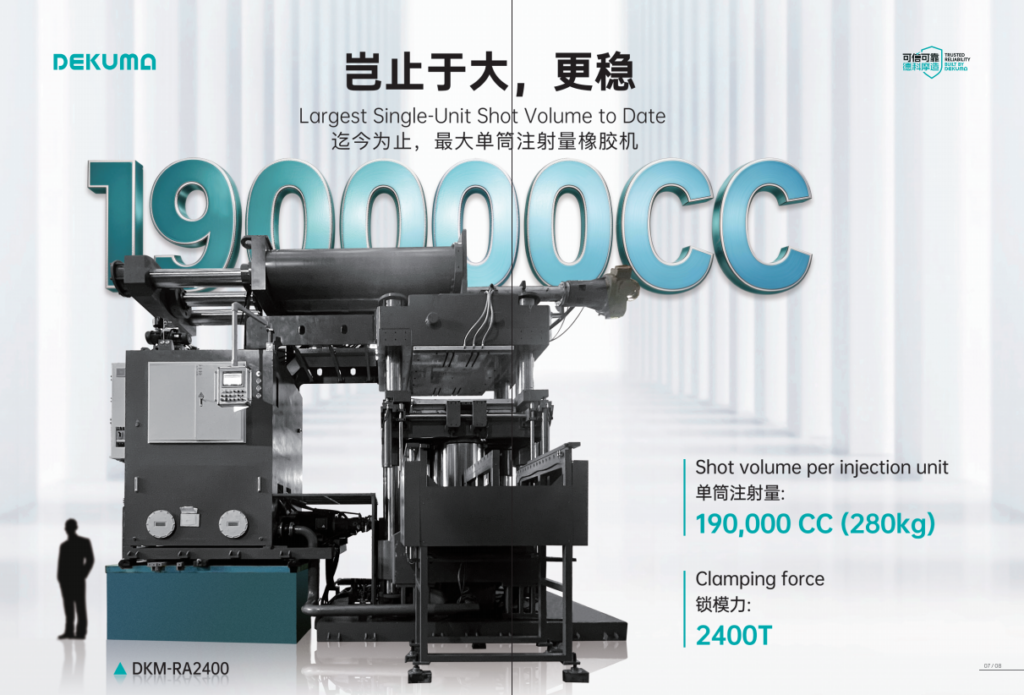
Consider annual output, cycle time, cavity count, labor input, scrap rate, automation needs, mold cost, maintenance requirements, and expected product life. A high-capacity rubber injection molding machine may provide better long-term value for sustained production, while a lower-volume project may require a different approach.
6. Verify Certifications and Supplier Capability
Check whether the equipment complies with applicable machine safety requirements and whether the supplier can provide testing, commissioning, training, spare parts, and technical support.
Requirements also vary by end market. Automotive projects may refer to the IATF 16949 quality management framework, while medical device production may require an ISO 13485-compliant quality system.
Confirm whether a certification applies to the equipment manufacturer, component producer, material, or finished product instead of treating these approvals as interchangeable.
Partner With Dekuma for Reliable Rubber Molding Solutions
Founded in 2004, Dekuma designs and manufactures core machine components in-house and provides turnkey rubber injection molding solutions for customers worldwide across the automotive, power, rubber track, construction, and industrial sectors.
A brief Dekuma rubber molding machine series overview:
Industry Sector | Product Series | Specific Application Scenarios | Key Machine Parameters |
Power Industry | RA Series | Silicone rubber and EPDM hollow-core insulators, long-rod insulators, surge arresters, cable accessories, and switchgear | Clamping Force: 3,000–24,000 kN Injection Volume: 4,000–50,000 cc Injection Pressure: 1,120–1,480 bar |
Power Industry | RT Series | Long-rod insulators, hollow-core bushings, arresters, cable accessories, and switchgear using HTV silicone rubber | Clamping Force: 5,500–18,000 kN Injection Volume: 13,000–50,000 cc Injection Pressure: 1,200–1,520 bar |
Power Industry | RI Series | General insulators and long rubber products requiring convenient three-sided operation | Clamping Force: 2,000–3,000 kN Injection Volume: 2,000–4,000 cc Injection Pressure: 800 bar |
Automotive Industry | RV Series | Rubber shock absorbers, cylinder cushions, sealing parts, cable connectors, pipe fittings made from NR, NBR, EPDM, and other rubber compounds | Clamping Force: 500–10,000 kN Injection Volume: 180–6,000 cc Injection Pressure: 1,750–2,500 bar |
Automotive Industry | RV-B Series | Large-size TPV, TPE, and PVC automotive window seals, particularly one-piece TPV window glass encapsulation | Clamping Force: 160–400 kN Theoretical Injection Volume: 546–800 cc Injection Pressure: 1,840 bar |
Automotive Industry | RC Series | Precision rubber parts, sealing-strip corner jointing, skeleton oil seals, and TPU products | Clamping Force: 150–2,500 kN Injection Volume (Rubber): 70–500 cc Injection Pressure: 2,000 bar |
Extra-Large Rubber Molding | Extra-Large RV Series | Large rubber composite pipes, heavy-duty rubber pads, vibration isolators, and shock buffers for rail transit, marine, dam engineering, and mining applications | Clamping Force: 12,000–100,000 kN Injection Volume: 38,000–560,000 cc Injection Pressure: 2,000–2,200 bar |
Rubber Track Machinery | DKM-RC Series | Rubber tracks for agricultural vehicles, construction machinery, military vehicles, and snowmobiles | Clamping Force: 200–900 kN Max. Track Width: 150–915 mm Vulcanized Track Length: 2,500–12,000 mm |
Specialized Machines | RH Series | High-efficiency automated production of small sealing rings made from NR, NBR, and FKM | Clamping Force: 1,000–4,500 kN Injection Volume: 180–2,000 cc Injection Pressure: 2,000–2,500 bar |
Specialized Machines | LSR Series | Liquid silicone rubber products for electronic components, insulators, infant-care products, food containers, kitchenware, and sports equipment | Clamping Force: 50–400 kN Theoretical Injection Volume: 125–320 cc Injection Pressure: 120 bar |
Conclusion
Selecting the right rubber molding solution requires more than matching a machine to a part name. Injection volume, clamping force, mold dimensions, material behavior, automation, output, and future production plans must be considered together.
With deep German engineering expertise and over 200 honors and patents, Dekuma designs rubber injection molding machines that excel in injection precision, thermal stability, low-waste material handling, and energy-efficient cycle times.
If you are planning a new line or upgrading existing capacity, contact Dekuma with your product drawing, rubber compound, mold information, and output target. Our team can help you evaluate a suitable rubber injection molding machine and build a solution around your actual production requirements!