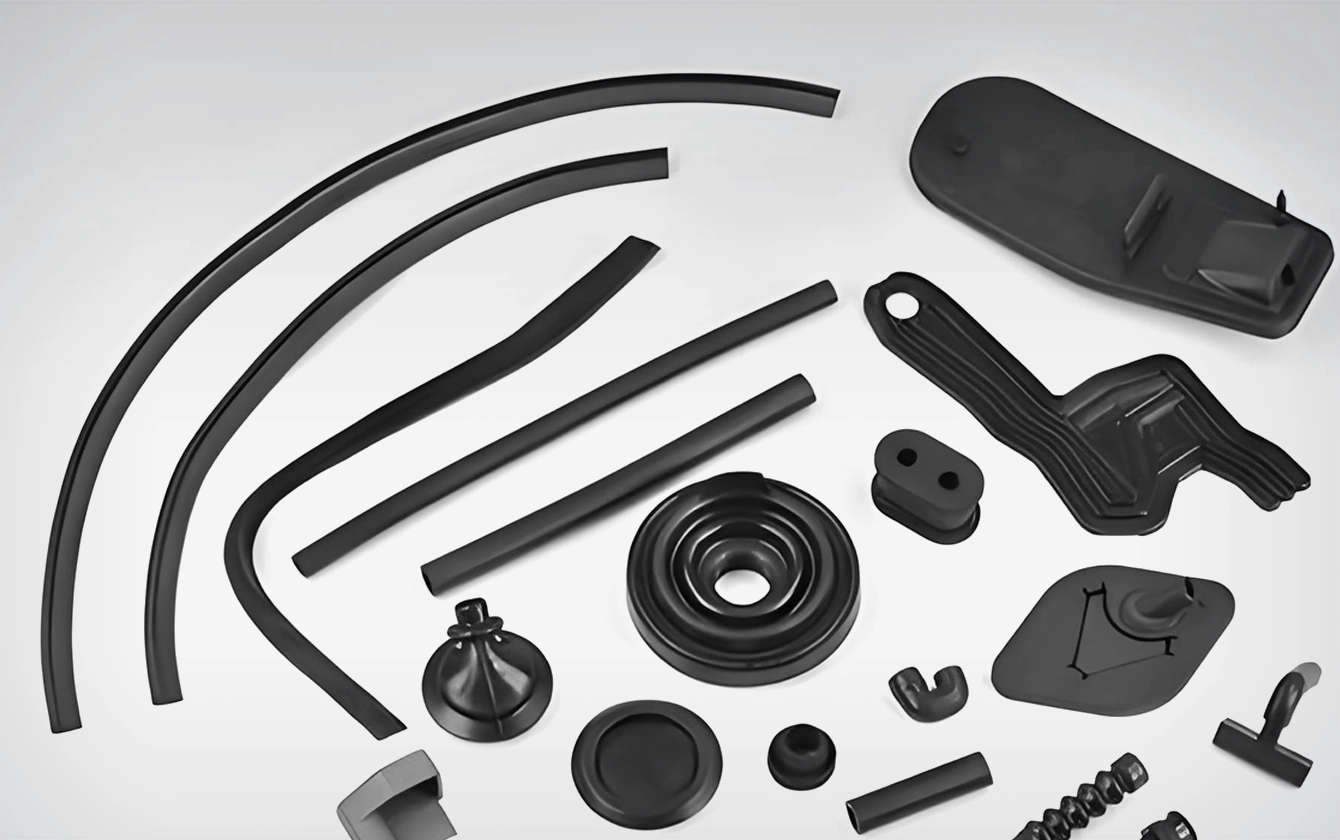
Hydraulic clamping remains valuable in rubber molding because it can deliver controlled force across injection, mold protection, curing, and opening stages. Its economics depend on how pressure and flow are produced during the real cycle. Assessment of a hydraulic clamping injection molding machine must connect application fit with energy evidence and lifecycle support.
Where Does Servo-Hydraulic Control Add Value?
A traditional proportional-control system may maintain hydraulic output when the cycle requires less pressure or flow. The RV-Se servo system changes motor and pump output according to actual demand. Closed-loop correction combines pressure-sensor and encoder feedback with servo-motor commands calculated by a dedicated PID controller.
A synchronized high-performance pump provides fast response and short deceleration distance, supporting repeatable injection and clamping. Automotive applications for the platform include TPV, TPE, flexible modified PVC, and other materials suitable for injection molding.
Suitability still depends on the specific compound, shot size, mold, temperature conditions, product geometry, and cycle target. A hydraulic clamping injection molding machine should be evaluated with representative material and tooling instead of being selected only because its pressure and force range appear adequate.
Which Published Specifications Need Interpretation?
Models in the published RV-Se family run from DKM-RV50Se at the smaller end to DKM-RV1000Se at the larger end. Listed 50Se and 100Se versions provide 2,500 bar injection pressure, while the larger listed models provide 1,750 bar.
Across the published models, available injection volume spans 180-6,000 cc and clamping capacity spans 500-10,000 kN. Larger models require corresponding changes in mold-opening travel, plate spacing, platen area, slide travel, machine mass, hydraulic-pump capacity, heating capacity, and total connected power.
Selection must combine these values. A larger platen may be necessary for the mold even when shot volume is modest, while a high injection-pressure rating does not compensate for insufficient volume or clamping.
Floor loading, utilities, cooling, access, guarding, handling devices, and changeover needs will need to be included in the technical review. Our modular design allows the configuration to follow the material, mold, output, and production process.
The application file must include compound data, product and mold drawings, shot calculation, projected clamping demand, cavity count, cycle target, quality criteria, and required interfaces. Each value needs an assumption and responsible reviewer.
This file gives both parties a basis for approving the model and later deciding whether a process deviation comes from capacity, tooling, material, or settings. Our servo hydraulic injection molding machine platform adjusts output to demand at Dekuma.
How Can Cost and Energy Claims Be Compared?
Capital cost includes the press, selected control package, mold interfaces, handling and automation, safety equipment, data connection, installation, testing, training, and spares. An optional electronic wattmeter can connect with the B&R S98 controller for real-time energy monitoring.
Because it is optional, the quotation will need to state whether it is included, which electrical loads it measures, and how readings are stored or transferred. Under the stated comparison with traditional proportional control, power consumption may fall to about 40% of the reference level, which represents potential savings of up to 60%.
This is a potential result, not an unconditional outcome. The baseline, cycle, warming and idle periods, acceptable output, utilities, and measurement boundary must be documented. Energy per accepted part gives a more useful comparison than instantaneous demand or a short unloaded demonstration.
A servo hydraulic injection molding machine should therefore be measured across representative orders, including warm-up, automatic production, planned waiting, changeover, and selected fault states. The report needs to separate pump and heating demand where the instrumentation permits.
It may also need to record scrap and cycle output, because lower electrical use has limited value if an unstable process produces fewer acceptable parts. Measurement instruments and data intervals will need to be documented so the same method can be repeated after maintenance or a recipe change.
Which Checks Belong in Acceptance and Maintenance?
Factory acceptance can check safety, hydraulic response, injection and clamping repeatability, temperature, alarms, interfaces, and representative molding. The plan needs to identify stabilization time, sample quantity, measurements, tolerances, cycle states, and treatment of stops.
Teams need to verify that the servo system responds correctly at high- and low-demand stages and that the machine enters a safe condition after a sensor or communication fault. Lifecycle performance depends on oil condition, filters, cooling, pumps, valves, sensors, encoders, heating, lubrication, calibration, and approved recipes.
Rising energy per acceptable part may indicate hydraulic wear, cooling problems, longer cycles, changed settings, or increased scrap. Maintenance records must connect these observations with service work rather than treating electricity consumption as a separate facility metric.
Oil cleanliness and temperature deserve particular attention because they influence hydraulic response and component life. Filters, cooling, leakage checks, and sampling will need to follow the machine documentation and actual condition. After maintenance, the team can compare pressure response and energy with the acceptance baseline.
A changed result then prompts investigation before the equipment returns to unrestricted production. We support engineering, customization, commissioning, operator training, spare-parts planning, and technical assistance. The RV-Se Series also emphasizes low-noise operation and holds CE certification.
Our position at Dekuma is that a hydraulic clamping injection molding machine should be chosen through a verified process and energy evidence. Explicit capacity limits, control functions, test methods, and service responsibilities provide the evidence needed to evaluate sustained production value.