C-frame equipment provides three-sided mold access, making it useful where inserts, profiles, tooling, or automation need an open working area. That accessibility must still be combined with accurate dosing, suitable clamping, safe guarding, and repeatable handling. Applications, cost drivers, and qualification needs determine whether a c-frame power press machine fits a production plan.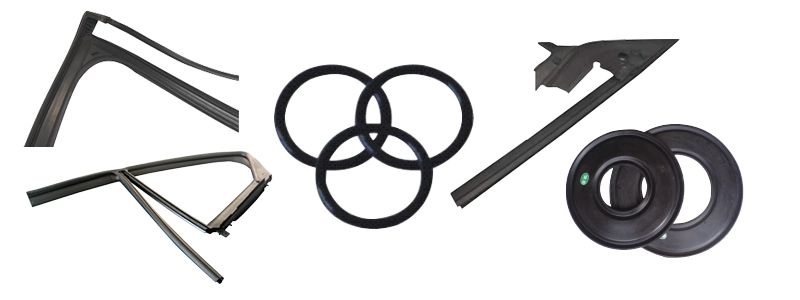
Which Products Suit a C-Frame Arrangement?
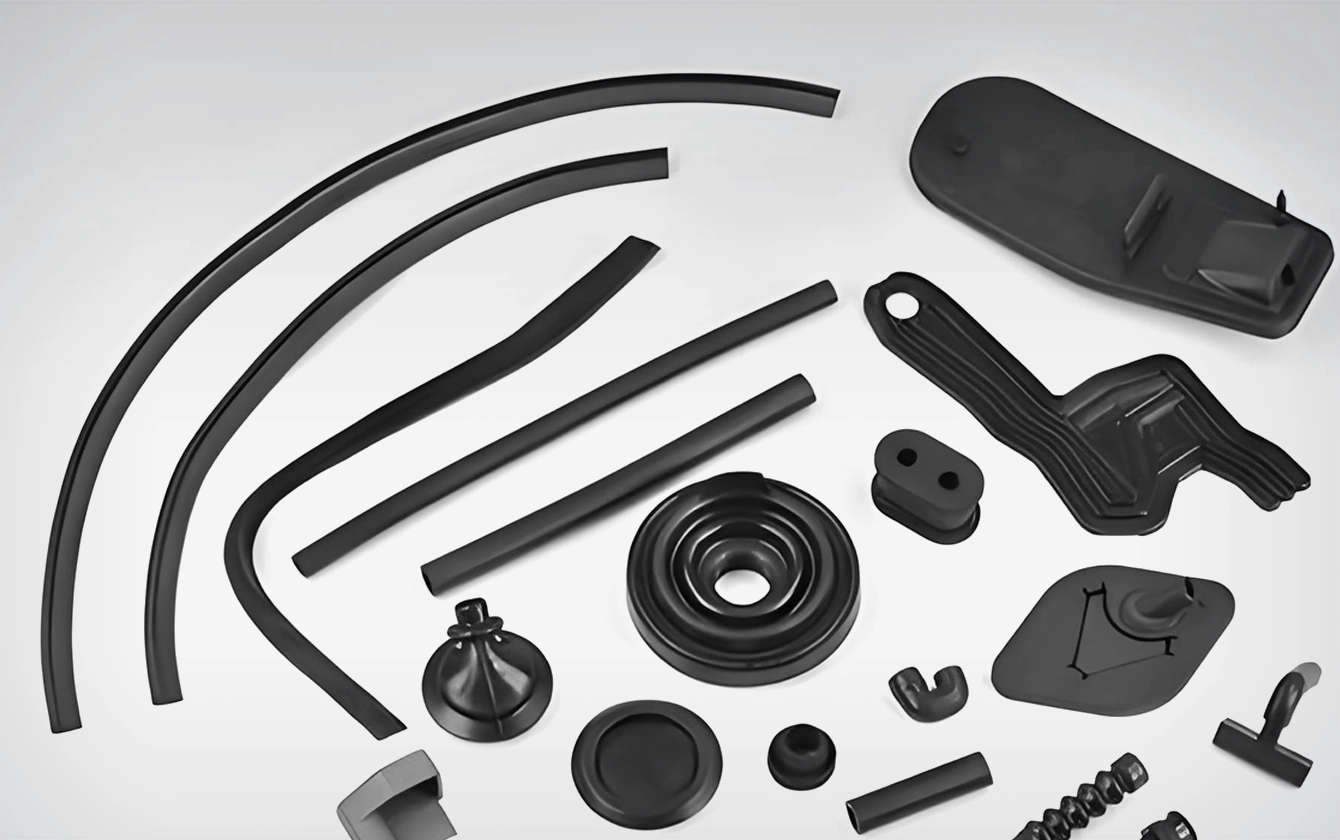
Typical applications include automotive window sealing strips, door-edge seals, skeleton oil seals, O-rings, gaskets, complex corner profiles, and TPU-overmolded bushings. These products can require manual or automated insert placement, precise shot quantities, controlled joint geometry, and careful removal.
Three-side access can simplify these tasks and provide integration space for auxiliary devices. Access alone does not determine suitability. Product geometry, compound, mold size and weight, shot volume, clamping requirement, heating, opening stroke, and part-flow direction must be checked together.
A c-frame power press machine also needs a layout that accounts for guards, loading positions, transfer paths, utilities, maintenance clearance, and safe recovery. Open architecture cannot create uncontrolled access during automatic movement. A cell-layout review should map operator reach, robot envelopes, mold-transfer direction, material supply, finished-part flow, inspection, and service access.
Loading and removal fixtures must support flexible profiles or small inserts without changing their position. The design also needs to show how personnel enter for setup and how stored energy is controlled before maintenance begins.
Which Process and Capacity Features Matter?
The RC Series separates plasticizing from injection so material preparation and injection can be controlled independently. This supports stable temperature management and material consistency.
Injection quantity is controlled precisely, while the nozzle can lift during vulcanization to reduce backflow and material stress. These functions are relevant to small precision joints and overmolded products where excess or insufficient material can directly affect appearance and performance.
Published rubber versions provide injection pressure up to 2,500 bar and selectable injection volumes from small shots to larger requirements. The range extends from compact 150 kN-class machines to models with clamping forces up to 2,500 kN.
Depending on model, mold-opening stroke reaches about 600 mm, and platen dimensions, clearances, and installed power increase with size. A C frame rubber injection molding machine must therefore be matched by the complete mold and cycle, not by pressure alone.
Where Do Project Cost and Automation Scope Come From?
Cost may include the base machine, mold, material feeding, handling fixtures, guarding, extraction, inspection, controls, installation, trials, training, and spare parts. Optional functions include a double workstation, mold-transfer equipment, and servo-valve control for tighter pressure and flow requirements.
These functions are not standard on every model, so the proposal must identify each option and its measurable production purpose. The commercial comparison may also need to include factory preparation, utility connections, mold work, validation material, commissioning, training, recommended spares, and planned service.
Clear exclusions prevent an inexpensive base quotation from appearing equivalent to a complete production cell. Automation should address a defined constraint such as repetitive insert placement, hot-part exposure, inconsistent removal, or long tool changes.
A timing study needs loading, confirmation, molding, curing, opening, removal, cleaning, inspection, and fault recovery. A double workstation can improve utilization only when the surrounding tasks serve both stations without creating another bottleneck.
Mixed-product plants may value adjustable fixtures and fast access more than maximum automatic speed. Changeover planning should identify the time needed for mold removal, installation, connections, material preparation, recipe selection, fixture adjustment, warm-up, and first-piece approval.
A mold-transfer option can shorten and improve the safety of physical movement, but it does not automatically resolve every setup task. Recording each stage helps the plant target the constraint that creates lost production. Our engineers configure each C frame rubber injection molding machine around the part and process at Dekuma.
What Evidence Should Acceptance and Maintenance Provide?
Acceptance should verify mold access, injection quantity, temperature control, clamping protection, nozzle movement, safety, alarms, and selected options under representative conditions. Trials need defined material, mold, stabilization time, sample quantity, tolerances, and defect treatment.
Automation tests may need to include missing inserts, incomplete transfer, open guards, sensor failure, and an authorized manual recovery route. Maintenance planning covers plasticizing and injection units, hydraulics, sensors, heating circuits, clamping and mold-protection settings, lubrication, safety devices, and tooling interfaces.
Mold-transfer and double-station mechanisms require their own inspection points. Recipes, software backups, component changes, and service history must remain controlled so that a correction can be traced and repeated. For connected cells, data ownership also needs definition.
The machine needs to retain safety and time-critical motion, while a supervisory system may hold orders, product identity, completion, and quality status. Signal names, units, timestamps, and communication-loss behavior require validation.
A stopped network must not permit unsafe movement or cause an old value to appear as a current normal condition. We configure RC equipment for rubber or TPE applications and can support mold handling, automation, commissioning, training, and after-sales service.
Our view at Dekuma is that the c-frame power press machine is a modular cell foundation rather than an open press with added accessories. Engineering access, dosing, safety, cycle balance, and maintenance as one system enable the platform to support precise parts while remaining practical to operate.