Automotive weatherstripping does far more than finish the edge of a door or window. It helps protect the cabin from water, dust, wind, heat transfer, and unwanted road noise. For vehicle manufacturers, a reliable sealing system is therefore closely connected to occupant comfort, durability, appearance, and NVH performance.
However, long extruded rubber strips alone cannot always create a dependable seal around tight door-frame, window-frame, trunk, or sunroof corners. Sharp turns can cause a strip to buckle, distort, or lose stable contact with the mating surface.
Rubber corner molding solves this problem by joining prepared sealing-strip sections in a mold, creating a continuous molded corner with the geometry and sealing behavior required for the final vehicle assembly.
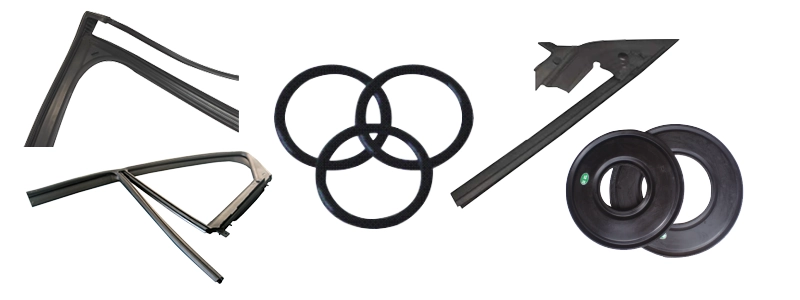
What Is an Automotive Sealing Strip Corner Joint?
An automotive sealing strip corner joint is a molded connection that links two or more sections of extruded rubber sealing strip at a corner, curve, or other complex transition. Rather than forcing a straight strip to bend beyond its stable limit, manufacturers place the pre-cut strip sections into a dedicated mold and inject rubber into the joint area.
After vulcanization, the molded material forms a permanent transition between the sections. The result is intended to function as one continuous weather seal.
A well-designed corner joint should match the connected strip sections as closely as possible in key functional and visual characteristics, including:
- Height and width
- Cross-sectional shape
- Rubber hardness
- Color and surface appearance
- Compression and recovery behavior
- Sealing contact performance
- Resistance to repeated opening-and-closing cycles
These joints are commonly used in automotive door-frame seals, window sealing systems, trunk and tailgate seals, sunroof seals, glass encapsulation-related assemblies, and other body-opening weatherstrips.
The goal is not simply to “join rubber.” The molded corner must preserve the sealing path, maintain proper compression against the vehicle body, and avoid creating a weak point where water, air, or noise could enter the cabin.
Materials for Corner-Joint Molding
1. EPDM Rubber
The most prevalent material in this application is EPDM (Ethylene Propylene Diene Monomer) rubber. EPDM is highly favored for its exceptional resistance to ozone, heat, and weathering, making it the industry standard for exterior vehicle weatherstripping.
2. Other Rubber Compounds
Alongside EPDM, many modern applications utilize thermoplastic elastomers (TPE or TPV) for specific sealing and processing requirements. These compounds blend the elasticity of traditional rubber with the manufacturing efficiency of plastics, allowing for faster cycle times.
However, compound formulation is highly complex. A single material batch may include base polymers, structural fillers, plasticizers for flexibility, pigments for color matching, curing agents, and various processing additives.
It is crucial to note that no single compound is suitable for every vehicle application. Plant managers and purchasing managers must base their material selection on the vehicle’s operating temperature range, required compression set, chemical exposure risks, target hardness, and strict OEM specifications.
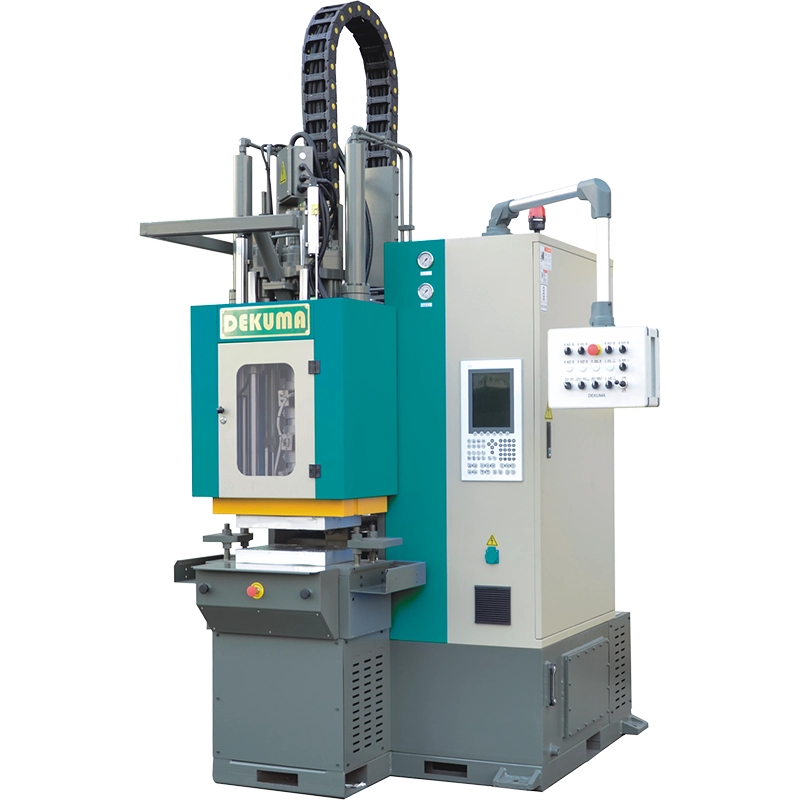
Picture shown: Dekuma RC Series C-frame rubber injection molding machine for processing rubber and TPE materials.
How the Rubber Injection Molding Process Works
Creating a consistent corner joint requires a controlled rubber injection molding process. This operation demands precision equipment and appropriate parameter control to support reliable filling, bonding, and dimensional stability.
Step 1: Strip Preparation and Mold Loading
The corner mold is precision-machined to match the vehicle’s required corner geometry. Operators carefully load the prepared ends of the extruded strips into designated fixtures within the open mold.
Step 2: Mold Closing
Once the strips are loaded, the injection machine’s clamping unit closes the mold with the required clamping force. The mold must secure the extruded strips without crushing them, helping control flash and material escape during injection.
Step 3: Rubber Injection
With the mold securely locked, the machine injects a precise volume of plasticized rubber compound into the corner cavity. Precise dosing helps support complete and repeatable cavity filling while controlling excessive flash.
Step 4: Vulcanization or Cooling
For vulcanizable rubber compounds, the filled mold is held at the required temperature for a specified curing time. During this stage, the injected rubber cross-links and bonds to the prepared extruded strip ends. For thermoplastic elastomers, this stage involves cooling and solidification rather than conventional vulcanization.
Step 5: Mold Opening and Part Removal
After the curing cycle is complete, the clamping mechanism releases, and the mold opens. The fully formed, continuous sealing component is then carefully removed from the cavity, ready for cooling.
Finishing Operations After Molding
A molded corner is not always a finished part immediately after demolding. Depending on the design and customer specification, several post-molding steps may be required.
- Trimming flash: Removing excess rubber from the parting line, the gate, and any overflow areas to ensure a seamless look.
- Removing excess rubber: Carefully clearing out rubber from the mold’s vents or injection points.
- Cleaning the joint surface: Preparing the seal for secondary processing and final inspection.
- Applying secondary components: Depending on OEM requirements, this may involve applying friction-reducing flock, specialized coatings, or double-sided adhesive tape, or embedding mounting clips directly into the rubber.
- Final preparation: Marking, packaging, or arranging the finished continuous seal for smooth integration into the automotive assembly line.
Common Defects and Their Causes
Even with a suitable mold and material, corner-joint quality depends on stable process control. A concise troubleshooting approach can help production teams identify where to investigate.
Defect | Common Possible Causes |
Incomplete filling | Insufficient injection pressure, blocked flow paths, poor venting, or unsuitable rubber temperature |
Weak bonding | Contaminated strip ends, incompatible compounds, inadequate surface preparation, incorrect positioning, or insufficient curing |
Excessive flash | Excessive injection pressure, mold wear, incorrect clamping, poor mold alignment, or inadequate parting-line control |
Air bubbles or voids | Trapped air, inadequate venting, unstable injection conditions, or unbalanced material flow |
Misaligned corners | Incorrect fixture positioning, strip movement during mold closing, inaccurate cutting, or worn locating features |
Cracking at the joint | Under-cured rubber, excessive stress concentration, poor material compatibility, or sharp corner geometry |
Process consistency depends on controlling several connected variables:
- Material batch quality and storage condition
- Strip-end cleanliness and cutting accuracy
- Mold temperature
- Injection pressure and injection volume
- Curing time
- Mold alignment and clamping condition
- Vent cleanliness and venting performance
- Strip positioning before mold closing
For example, increasing injection pressure may help fill a difficult area, but excessive pressure can also worsen flash if the mold is worn or the parting line is not properly supported.
Dekuma RC Series for Automotive Sealing Strip Corner Joints
Achieving consistent, high-quality production in weatherstripping requires robust, high-precision equipment. Across its automotive product portfolio, Dekuma provides rubber and elastomer molding solutions for automotive rubber components such as shock absorbers, cylinder cushions, cable connectors, and one-piece TPV window sealing.
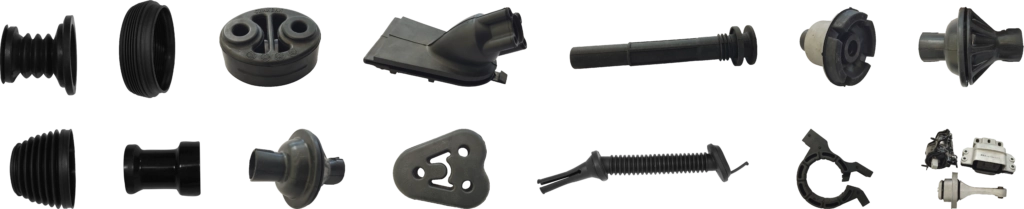
For automotive sealing strip corner joint manufacturing, we offer the RC Series C-Frame rubber injection molding machine.
RC Series Feature | Relevance to Sealing Strip Corner Joints |
C-frame machine structure | Provides three-side operating access, helping operators load extruded strip sections, position molds, and handle finished parts more conveniently. |
Separate plasticizing and injection units | Supports stable material preparation and injection control, which are important when molding joints that need consistent shape and surface quality. |
Precise injection control | Helps manufacturers manage rubber filling in detailed corner cavities, especially where a joint must transition smoothly into the connected sealing strips. |
Liftable nozzle during vulcanization | Designed to reduce backflow and material stress during the curing stage, supporting cleaner and more stable molding conditions. |
Optional double-workstation configuration | Can support a more continuous operating rhythm where production requirements call for improved handling efficiency. |
Servo-valve control options | Offers enhanced control of pressure and flow for projects with strict consistency requirements. |
Support for rubber and selected TPE applications | Gives manufacturers more flexibility when evaluating materials for different sealing, processing, and customer- specification requirements. |
The RC Series is available in multiple configurations to suit different automotive sealing strip corner joint applications. Depending on the model and material type, available options cover injection pressures of up to 2,000 bar, injection volumes from 25 to 800 cc, clamping forces from 150 to 2,500 kN, and heating-plate dimensions ranging from 350 × 550 mm to 910 × 850 mm.
This configuration range helps automotive rubber-component manufacturers select equipment according to mold dimensions, injection volume, clamping requirements, corner geometry, material type, and expected production output.
In addition to standard rubber injection molding machines, Dekuma can develop application-focused equipment configurations around specific production requirements. With German engineering expertise and more than 200 industry honors and patents, Dekuma is a practical partner for manufacturers seeking reliable rubber injection molding machines for automotive rubber components, electrical rubber insulators, rubber tracks, and other demanding applications.
Need support for a corner-joint molding project? Contact Dekuma’s professional team to discuss your material, mold, output, and automation requirements!