Accurate positioning of a large and fragile glass insert is the starting condition for injecting TPV around an automotive window edge. Machine capacity, handling, tooling, and process control must therefore be evaluated together. Cost, application scope, and qualification evidence are the main questions surrounding glass injection moulding.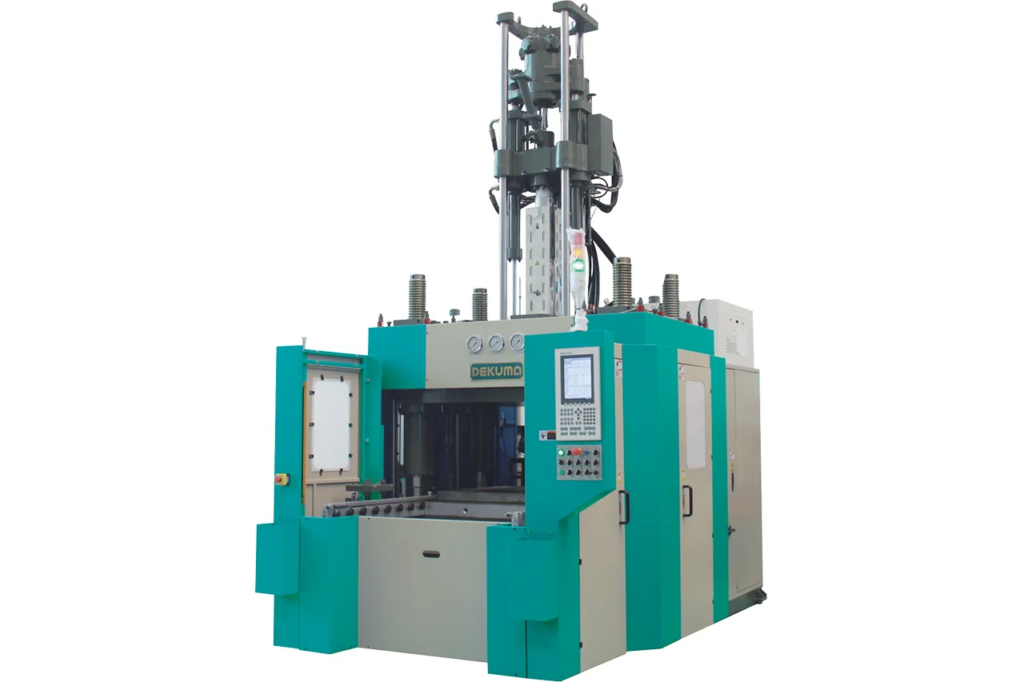
Which automotive glass applications fit this process?
Automotive glass applications include one-step TPV edge sealing for large windows and precise-volume molding for triangular windows. One-step encapsulation forms the TPV around the glass instead of molding a separate strip and attaching it manually afterwards.
This can remove handling stages, but the proposed process must still be checked against glass geometry, edge preparation, sealing profile, tolerances, appearance standards, and downstream assembly requirements. Besides TPV, the system can process TPE, flexible modified PVC, and other injection-moldable materials when configured appropriately.
Material viscosity, temperature window, drying or preparation, residence time, adhesion requirements, and color-change practice influence the setup. Glass injection moulding trials may need to use the intended glass, compound, and mold rather than relying on a similar material designation.
Which Machine Specifications Require Close Review?
The FIFO vertical injection unit renews material in the chamber quickly, while a patented servo-hydraulic injection arrangement supports repeat-shot control. Even clamping-force distribution is supported by a four-column structure working with a stationary lower platen and a moving upper platen.
A low working platform improves access. These features provide a controlled basis, but glass support, locating, robot access, guarding, and safe recovery remain project-specific. The published specifications assign 250 tons of clamping force to DKM-RV250B and 400 tons to DKM-RV400B.
Both list 1,840 kg/cm2 injection pressure, 546 cc theoretical volume, a 242 cc/s injection rate, 600 mm opening stroke, and 1,000 mm maximum opening distance and sliding stroke. Platen sizes are 1,100 x 1,000 mm and 1,250 x 1,100 mm.
A rubber injection molding machine for auto glass encapsulation may need to be selected from the complete glass and mold envelope, not tonnage alone. Shot calculation will need to include the molded edge, gates and runners, cavity arrangement, material density, and a justified operating reserve.
Clamping review should consider projected cavity pressure and the effective projected area. The glass-support and mold-sliding sequence must fit the available opening and platen movement. Recording these assumptions lets engineering teams review the recommendation instead of accepting a model name without a traceable basis.
Which items shape investment and operating cost?
The investment boundary can include the press, mold, glass-loading fixtures or robots, material supply, guarding, inspection, controls, utility work, installation, trials, training, and spare parts. Approximate machine weights are 13 and 17 tons, so floor loading and handling must be planned.
Pump power is 46.1 kW and electric heating capacity is 13.22 kW on the published models, but installed values do not predict actual cycle consumption. Servo output follows the pressure and flow demanded by the process, with potential energy savings of up to 60% compared with traditional proportional pressure-and-flow control. The comparison needs to state the cycle, operating states, acceptable output, measurement boundary, and baseline.
Material loss, labor, cycle time, changeovers, glass damage, maintenance, and yield also belong in lifecycle cost. Energy per accepted window is more meaningful than an unloaded reading. Cost analysis may also need to distinguish glass damage from molding defects.
A scratched, cracked, or mislocated window may carry a different financial consequence from a short TPV fill or surface flaw. Startup, color change, purge, rejected compound, rework, and inspection labor need separate categories.
This information shows whether process adjustment, handling improvement, or tooling correction offers the most useful return. Our engineers configure each rubber injection molding machine for auto glass encapsulation around the window and production route at Dekuma.
What Proves the Cell Is Ready and Supportable?
Acceptance will need to confirm glass identification and positioning, mold movement, clamping, shot repeatability, temperature, material change, safety, alarms, automatic handling, and inspection. The trial plan needs stabilization time, sample quantity, measurement methods, tolerances, defect categories, and treatment of stops.
Fault cases such as a missing window, failed transfer, recipe mismatch, or network interruption require defined safe states and recovery steps. Maintenance covers injection and clamping systems, hydraulics, sensors, heating, FIFO material flow, sliding mechanisms, guarding, molds, and handling tools.
Records need to preserve recipes, calibration, component changes, and fault evidence. Preventive work should follow operating hours, load, environment, and observed condition. Trend review can connect shot variation, hydraulic response, temperature stability, cycle time, energy, and alarm frequency with maintenance activity.
After a repair or software change, the affected functions and relevant product checks may need to be repeated against the acceptance baseline before unrestricted production resumes. Training will need to include glass handling, recipe confirmation, defect isolation, alarm response, and safe manual recovery so that a stoppage does not create additional damage during restart.
Alignment among the window, compound, mold, handling sequence, acceptance criteria, and service plan lets buyers compare cost through stable production and acceptable output rather than through one capacity or energy figure.
We provide maintenance and after-sales support for automotive glass projects, together with configuration, commissioning, and training. Our glass injection moulding projects at Dekuma are planned as complete cells rather than presses operating in isolation.