Servo hydraulics already allow rubber molding equipment to match pump output more closely to the pressure and flow required during each cycle stage. The next development is to connect that control with product quality, energy, maintenance, and scheduling evidence.
A future hydraulic press machine for rubber moulding should lower waste without sacrificing response, repeatability, or serviceability. A servo hydraulic injection molding machine provides a practical starting point for this development.
Measuring Demand-Based Hydraulics
In the RV-Se control chain, pressure sensors and encoders supply feedback while servo motors and a dedicated PID controller correct pressure and flow. A high-performance pump synchronized with the motor supports fast response and short deceleration distance.
In later implementations, monitoring can preserve response curves by recipe and operating state, helping engineers distinguish normal load changes from developing hydraulic or control problems. A future servo hydraulic injection molding machine may also compare commanded and measured pressure, flow, speed, and position over time.
Growing correction demand can indicate leakage, filter restriction, oil-temperature effects, sensor drift, or mechanical load change. The signal will need to prompt inspection rather than automatically condemning a component, because material and mold conditions can alter the same cycle response.
The servo system can reduce consumption to about 40% of a traditional proportional-control reference, corresponding to potential savings of up to 60% under the stated comparison.
A hydraulic press machine for rubber moulding must be measured across warming, injection, clamping, curing, opening, waiting, and fault states. Energy per acceptable part is more meaningful than instantaneous demand.
Adding Product Context to Control Decisions
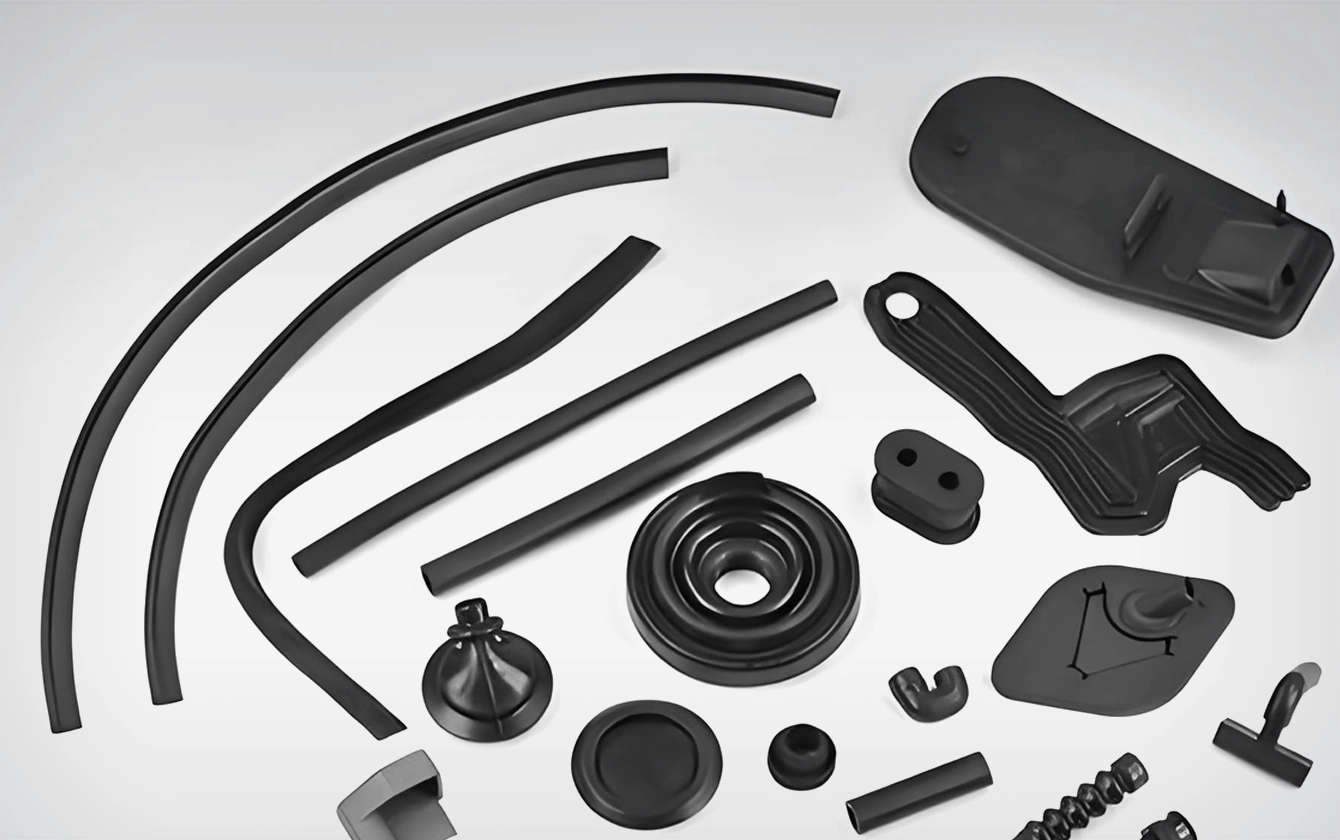
Automotive use of this platform covers TPV, TPE, flexible modified PVC, and other materials that can be injection molded. Their feeding, temperature, pressure, and residence-time behavior differ.
Over time, control records can link material batch, mold, recipe revision, shot values, cycle states, and quality results so a deviation is interpreted within the correct process instead of through a universal limit.
Control architecture will need clear responsibility boundaries, and smart analysis must not make undocumented product changes. Fast regulation, interlocks, and safety remain local. Higher-level systems may provide orders, product context, and reporting.
If a connection fails, the press must remain controlled and the missing data should be flagged. Cybersecurity, account management, backups, and software changes must be treated as production requirements rather than office-system details. Approved windows, user roles, calibration status, and revision history need to remain visible.
Analytics may identify unusual pressure response or growing correction demand, but engineers should verify oil, filters, cooling, valves, sensors, material, mold, and settings before changing a qualified recipe. Our engineering at Dekuma connects this platform with application-specific engineering.
Evaluating Waste across the Complete Cycle
Hydraulic energy is one part of production loss. Scrap, purge, flash, incomplete parts, long changeovers, unnecessary waiting, cooling demand, maintenance, and downtime also matter. In later implementations, reports can separate these causes and normalize them by product.
A lower-energy motion that increases reject rate or lengthens the cycle is not a useful improvement. Heat generation and cooling demand belong in the energy boundary. Reduced unnecessary hydraulic output can lower the heat introduced into the oil and factory, but the actual effect depends on cycle and environment.
Over time, reports should state whether they include pumps, heaters, cooling, auxiliaries, and idle periods. Comparable scope matters as much as the displayed number. We also expect acceptance tests to preserve a cycle-by-cycle baseline for pressure response, flow, energy, quality, and noise.
Later comparisons can then separate normal product demand from deterioration or an undocumented configuration change. An optional electronic wattmeter can connect with the B&R S98 controller for real-time monitoring.
Over time, integration can combine those readings with cycle state and acceptable output. Meter scope, sampling, calibration, and included loads must be documented. Otherwise, comparisons between machines or periods may reflect different measurement boundaries rather than true improvement.
Managing Modular Capacity and Maintenance
Published models span DKM-RV50Se through DKM-RV1000Se. The listed smaller 50Se and 100Se versions provide 2,500 bar injection pressure, while the larger listed models provide 1,750 bar. Across the published range, injection volume extends from 180 to 6,000 cc, while available clamping force extends from 500 to 10,000 kN.
Opening, platen, sliding, weight, pump, heating, and total-power requirements increase with size. Application matrices can connect each product and mold with compatible capacity, utilities, handling, and safety. Maintenance baselines can preserve pressure response, energy, noise, cycle time, alarms, and quality after acceptance.
Maintenance planning can combine those trends with oil analysis, filters, cooling, leakage inspection, sensor calibration, encoder checks, pump condition, and valve response. After service, the affected functions can be compared with the baseline before unrestricted production resumes.
This creates evidence that the intervention restored performance instead of relying only on the disappearance of an alarm. We support modular configuration, commissioning, training, spare parts, and technical assistance; the RV-Se Series also emphasizes low noise and is CE certified.
In our view at Dekuma, future servo-hydraulic development may need to unite demand-based control with transparent energy and quality evidence. A smarter hydraulic press machine for rubber moulding will help teams find where loss occurs while keeping safety and fast control local. This makes efficiency a repeatable production result rather than a headline percentage.