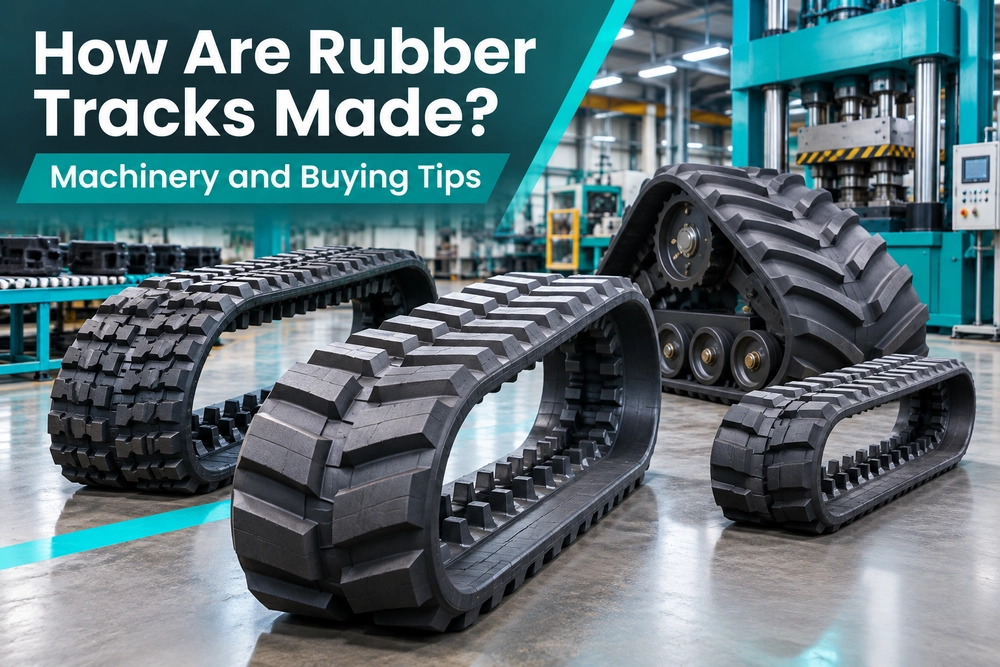
Rubber tracks are made by combining engineered rubber compounds with reinforcing cords and, in many designs, metal cores, then molding and vulcanizing the assembly into a durable belt.
They are widely used on excavators, compact track loaders, agricultural machinery, and specialty vehicles. Compared with steel tracks, they offer good traction, lower operating noise, reduced vibration, and less damage to paved surfaces and sensitive ground.
Manufacturing them requires more than shaping rubber. Producers must coordinate material preparation, reinforcement placement, assembly, and vulcanization. This guide explains how rubber tracks are made, the machinery involved, and what to consider when buying production equipment.
What Are Rubber Tracks Made Of?
How rubber tracks are made depends on the rubber formulation, reinforcement, and molded surface design.
1. Rubber Compounds
Rubber compounds form the main body and outer surface of a track. Natural rubber and synthetic rubber may be combined with additives such as carbon black, silica, processing oils, antioxidants, and vulcanizing agents.
The formulation determines important properties, including abrasion resistance, tensile strength, flexibility, and resistance to environmental exposure. Manufacturers adjust rubber compounds according to the intended application and operating conditions.
2. Steel Cords and Metal Reinforcements
Steel cords provide longitudinal tensile strength and help the track maintain its shape under repeated tension and heavy loads. Depending on the design, metal cores or embedded steel inserts are also incorporated into the structure. These metal components engage with the drive sprocket and support load transmission, helping maintain stable track movement.
3. Tread Patterns
Tread patterns are structural features, not ingredients. They are the raised structures on the outer surface of rubber tracks. Their geometry influences ground contact, traction, soil engagement, and vibration behavior.
Different applications require different tread designs. For example, agricultural tracks may need patterns suited to soft or muddy ground, whereas construction tracks require a balance of traction, wear resistance, and maneuverability.
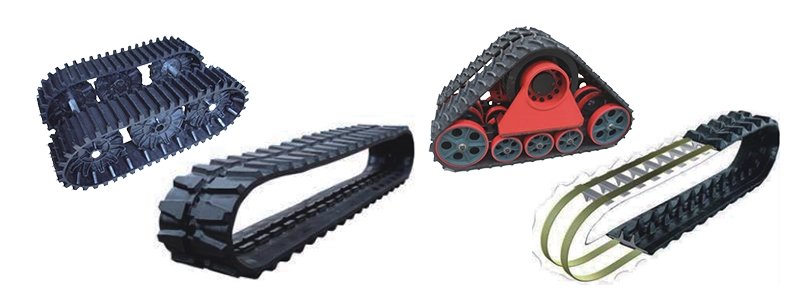
How Are Rubber Tracks Made?
1. Rubber Compounding and Mixing
Raw rubber is combined with reinforcing fillers, processing oils, antioxidants, accelerators, and curing agents according to the required formulation.
An internal mixer, such as a Banbury mixer, distributes these ingredients throughout the rubber. Proper control of mixing temperature, time, and ingredient proportions is necessary to achieve consistent compound properties.
2. Rubber Calendering or Extrusion
The mixed rubber is processed into sheets or profiles through calendering or extrusion.
Calendering uses rotating rollers to produce rubber sheets with controlled thickness. It can also apply rubber coatings to reinforcing materials. Extrusion pushes rubber through a shaped die to create continuous strips or profiles for subsequent assembly.
The appropriate method depends on the track design and production process.
3. Steel Cord and Metal Core Preparation
Steel cords are prepared and positioned according to the track’s reinforcement design. Surface treatment or adhesive coating may be applied to improve bonding between the steel and rubber.
Metal cores and other embedded components are also prepared to meet the required dimensions and positioning tolerances. Consistent cord spacing and tension are important for maintaining uniform reinforcement around the track.
4. Track Building and Assembly
Rubber layers, steel cords, and metal components are combined to form an uncured track structure. Depending on the manufacturing method, rubber strips may be wound around a building drum or assembled using dedicated forming fixtures.
During this stage, manufacturers must maintain accurate material positioning, uniform tension, and consistent track dimensions.
5. Molding and Vulcanization
The assembled track is placed into a dedicated mold and processed under controlled heat and pressure.
Vulcanization creates crosslinks between rubber polymer chains, transforming the uncured compound into an elastic material with more stable mechanical properties. The mold also forms the external tread pattern and internal structural features.
Temperature, pressure, and curing time must be controlled according to the rubber formulation, track dimensions, and mold design.
6. Finishing and Quality Inspection
After curing, the track is removed from the mold and undergoes finishing operations such as trimming and surface inspection.
Quality checks may cover track dimensions, tread appearance, metal component positioning, rubber-to-metal bonding, hardness, and other application-specific performance requirements. These inspections help identify molding defects and inconsistencies before the tracks are delivered.
What Machinery Is Used to Manufacture Rubber Tracks?
1. Rubber Mixing Equipment
Internal mixers and two-roll mills prepare rubber compounds by blending elastomers and additives. Their mixing capacity and temperature control affect compound consistency and production output.
2. Calender or Extruder
Calenders produce controlled-thickness rubber sheets and apply rubber coatings to existing reinforcement materials (e.g., steel cord), whereas extruders manufacture continuous rubber strips and profiles. The selection depends on the required material form and manufacturing route.
3. Cutting Equipment
Rubber cutting machines and steel cord cutting equipment prepare materials to specified dimensions. Accurate cutting helps maintain consistent assembly and reduces material waste.
4. Forming and Assembly Equipment
Building drums, steel cord winding systems, tensioning devices, and assembly fixtures position rubber layers and reinforcement components. Automated positioning and tension control can improve manufacturing consistency.
5. Molds and Vulcanizing Press
Molds determine the track’s dimensions, tread geometry, and internal structure. Vulcanizing presses apply the required heat and clamping force to complete molding and curing.
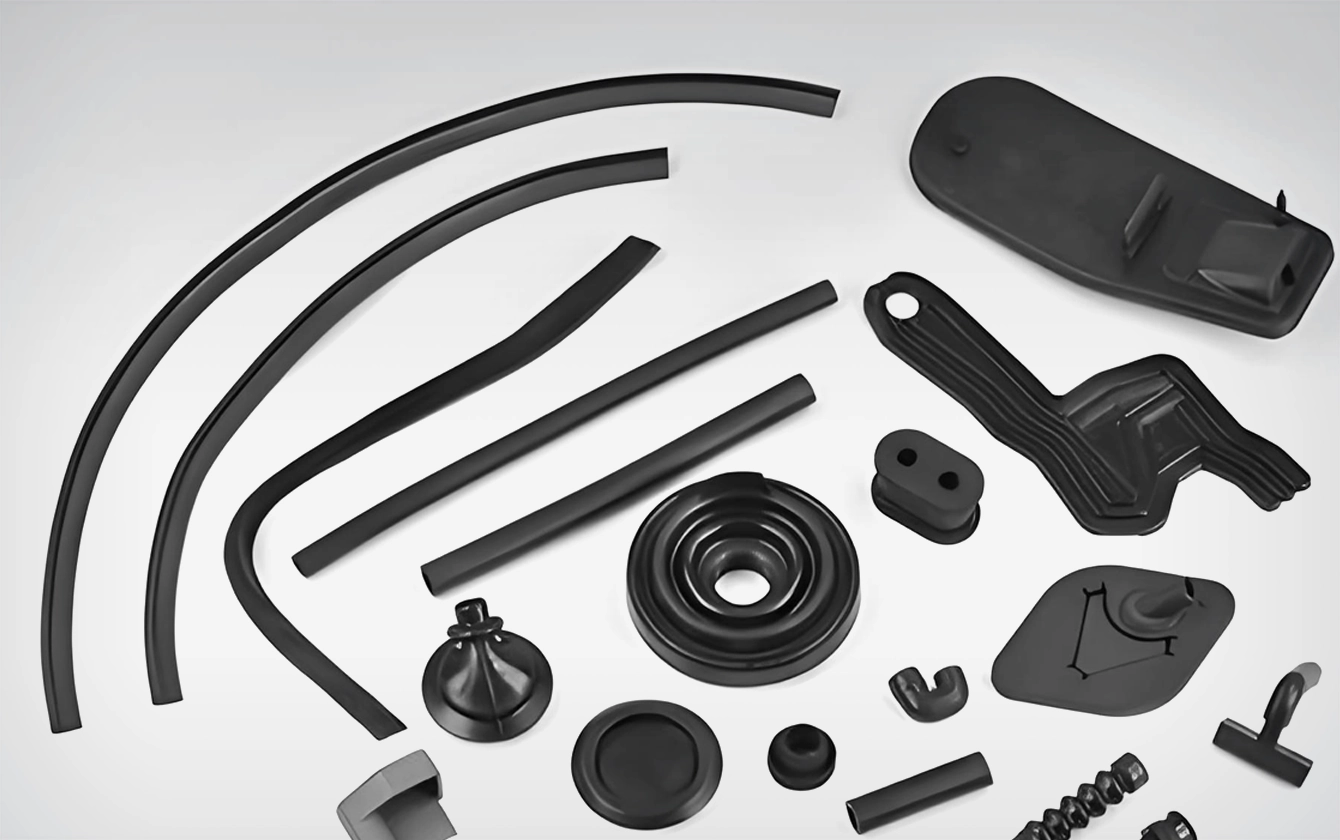
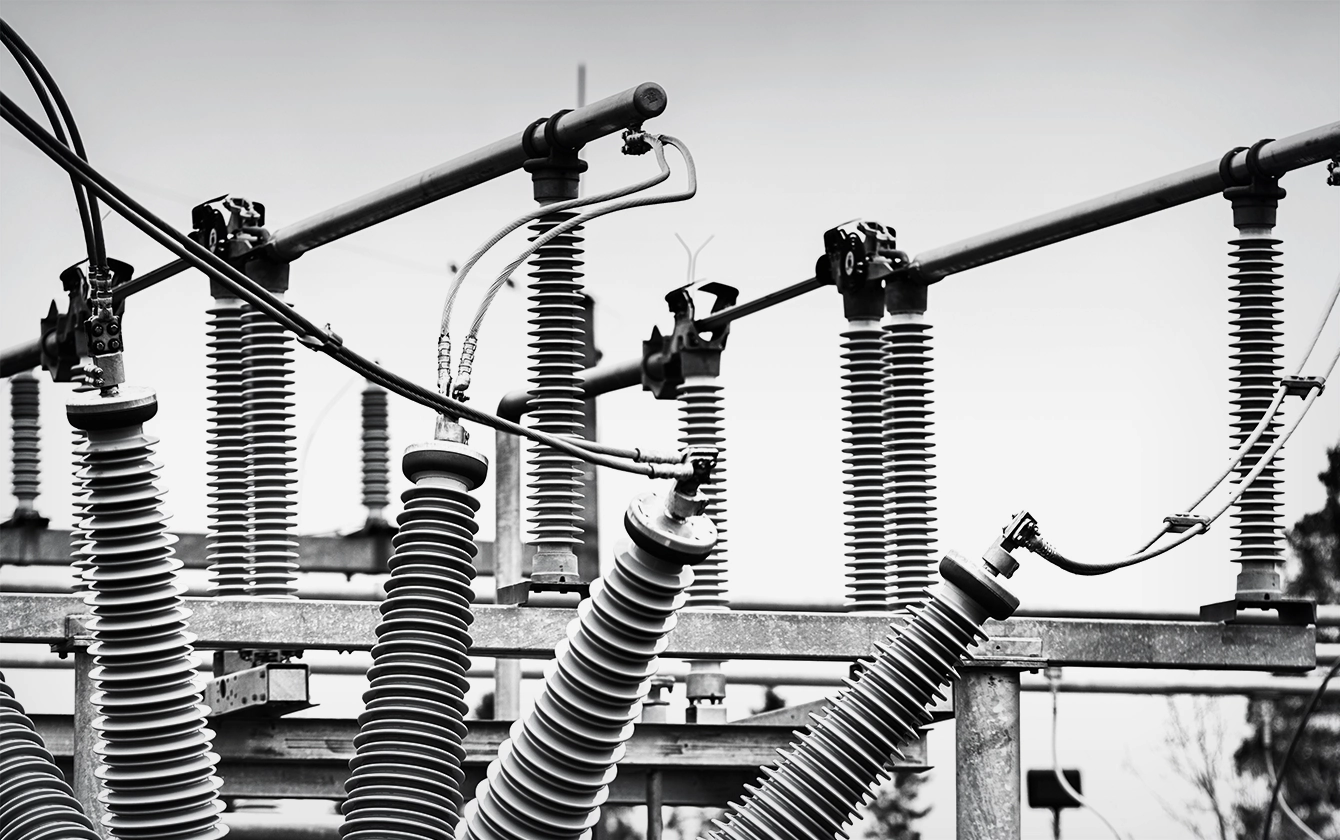
A rubber injection molding machine used for automotive seals or electrical insulators should not automatically be treated as interchangeable with dedicated track equipment. Application-specific molding, reinforcement handling, and vulcanization requirements determine the appropriate configuration.
How to Choose the Right Rubber Track Manufacturing Machinery
Selecting suitable equipment requires evaluating both current production needs and future manufacturing plans.
1. Production Capacity and Track Specifications
Start with the track dimensions, product structure, and expected output. Consider track width, length, thickness, mold dimensions, and the required production volume.
The machine’s clamping force and heating plate dimensions should match the intended molds. Also assess curing cycle times and the number of products that can be processed per cycle.
2. Machine Performance and Automation
Evaluate temperature and pressure control, mold-clamping precision, and steel cord tension management. These functions influence product consistency and production stability.
Automation features such as automatic rubber feeding, demolding, and material handling can reduce manual operations and improve workflow efficiency. Production monitoring and recipe management are also useful for maintaining repeatable processing conditions.
3. Machinery Manufacturer Reliability
Choose a manufacturer with relevant rubber processing experience and proven rubber track production projects. Review its machine configurations, application references, installation capabilities, operator training, and technical support.
Long-term spare parts availability and maintenance services should also be considered, particularly for facilities operating multiple production shifts.
4. Total Investment Cost
The initial machine price is only one part of the investment. Buyers should also account for molds, auxiliary equipment, factory utilities, installation, labor, energy consumption, maintenance, and potential production downtime.
Comparing the total cost of ownership provides a more practical basis for evaluating equipment investment.
Dekuma Rubber Track Production Solutions
At Dekuma, we specialize in rubber and plastic processing machinery, with extensive experience in developing automated equipment for rubber track manufacturing.
Our rubber track production line integrates automatic feeding units with high-precision rubber vulcanizing machines to streamline the core molding and curing stages. It is designed for agricultural tracks, construction equipment tracks, military vehicle tracks, and snowmobile tracks.
Key features include:
- Automated Material Handling: Automatic rubber loading, demolding, and material retrieval help reduce manual operations.
- Precise Molding: A precision mold-clamping unit and constant-tension steel cord system support consistent track manufacturing.
- Energy-Efficient Curing: An intelligent curing shutdown system stops the main motor during extended vulcanization cycles while maintaining clamping pressure.
- Smart Production Monitoring: A customized B&R control system and Dekuma iSee4.0 platform support monitoring of temperature, pressure, clamping force, processing time, and energy consumption.
Our DKM-RC series offers clamping forces from 200 to 900 tons, with different heating plate dimensions and configurations for various track specifications. We develop models that accommodate track widths of up to 915 mm and track lengths ranging from 2,500 to 12,000 mm, depending on the model.
With rubber track machine development dating back to 2012, we have built experience across different manufacturing requirements. Our industry partnerships include ZC RUBBER, DRB, SRJ, and Soucy International. We also provide installation guidance, operator training, and ongoing technical assistance. Most importantly, we can offer customized rubber track production solutions. You can contact Dekuma’s professional team here.
Conclusion
Understanding how rubber tracks are made is an essential starting point for manufacturers planning a new production facility or upgrading existing equipment. From rubber mixing and reinforcement preparation to molding and vulcanization, every stage requires suitable machinery and process control.
With dedicated rubber track molding and vulcanizing solutions, Dekuma helps manufacturers build production lines suited to their requirements. Contact our team to discuss your rubber track production project and explore suitable equipment configurations!