C-frame machines bring tooling, operators, and automation close to the mold through three-sided access. Future improvements must use that openness without compromising guarding, dosing accuracy, or maintainability. This creates a practical basis for a smarter C frame rubber injection moulding machine.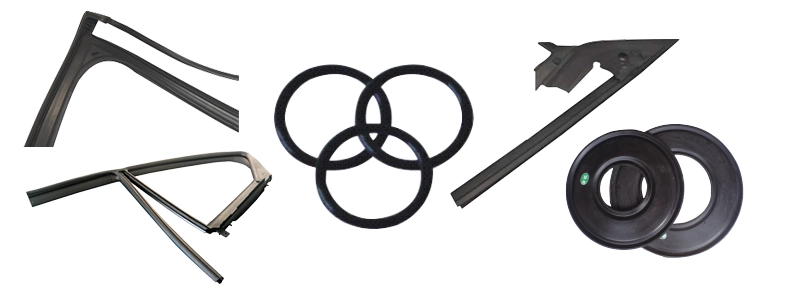
Adaptable Automation through Open Access
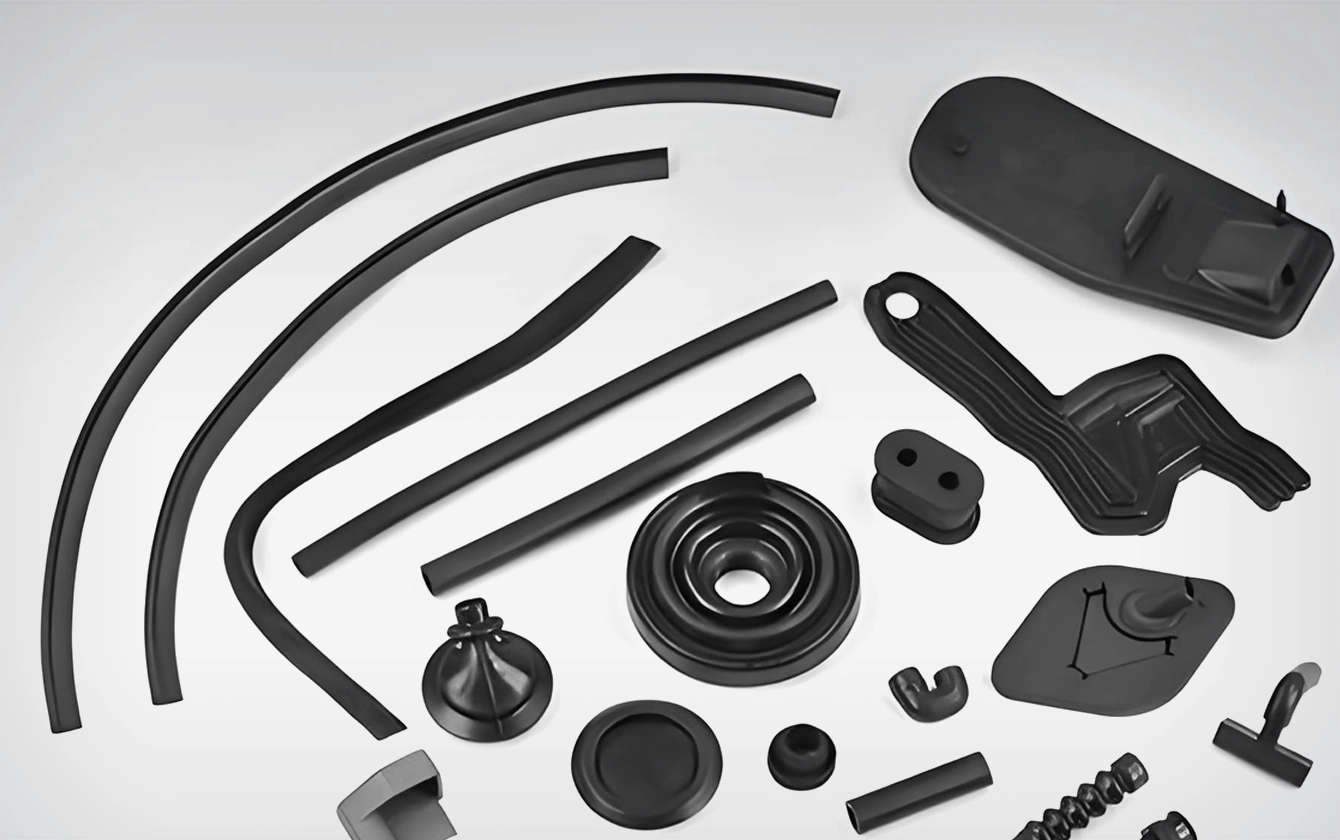
The RC Series is used for automotive sealing-strip corners, door-edge seals, skeleton oil seals, O-rings, gaskets, complex profiles, and TPU-overmolded bushings. These products require different insert placement, support, removal, and inspection.
In later implementations, fixtures and handling devices can use standardized mounting and control interfaces, allowing a cell to change products without rebuilding every connection. Flexibility still requires safe recovery. The sequence needs to define permissions, completion, timeouts, interlocks, and responses to missing inserts, failed transfers, utility loss, or an open guard.
A C frame rubber injection moulding machine must remain accessible for setup and maintenance while preventing entry into hazardous automatic motion. Recovery time may need to be included in automation economics. In later implementations, layout tools may help compare robot reach, operator access, mold-transfer direction, fixture positions, and service clearances before hardware is installed.
These models should expose assumptions and be confirmed against actual molds and movements. Their value lies in finding collisions or awkward access early, not in replacing physical safety validation or proving that a flexible part can be handled without deformation.
Visibility into Material Preparation and Dosing
The plasticizing and injection units are separated, allowing independent control of material preparation and injection for stable temperature and consistency. Precise injection quantity and a nozzle that can lift during vulcanization help reduce backflow and material stress.
In later implementations, monitoring can connect preparation, shot, nozzle movement, recipe, mold, and quality results instead of presenting each signal without product context. Smart control may compare current injection or position patterns with a qualified baseline and highlight meaningful drift.
Any adjustment may need to remain within authorized limits and preserve revision history. A C frame rubber injection molding machine cannot solve incorrect material, blocked venting, uneven mold temperature, or misaligned inserts through pressure alone, so diagnostic guidance will need to keep alternative causes visible. Part-quality feedback can become more specific.
Weight, dimensions, joint appearance, insert position, or surface inspection may be linked with the cycle record where appropriate. Automated inspection must be qualified for false accepts and false rejects. A system that rejects more output without identifying a useful defect category can increase waste and operator workload rather than improve the process.
Setup and Handling Belong in Waste Analysis
Material waste includes startup, purge, flash, overfill, short shots, and rejected parts. Open-mold applications can also lose output through insert errors, profile damage, long changeovers, and inconsistent removal. In later implementations, reporting may need to separate these categories and connect them with machine, mold, fixture, recipe, and operator action.
One overall reject number is not enough to direct improvement. Optional double workstations, mold-transfer equipment, and servo-valve control can address output, changeover safety, or tighter pressure and flow needs. These are not standard on every configuration.
Their value may need to be measured against the specific constraint, including maintenance and recovery. A double workstation does not improve capacity when loading, inspection, or material preparation cannot serve both sides. Energy and movement should also be reviewed together.
Opening, sliding, mold transfer, heating, injection, curing, waiting, and auxiliary devices contribute to consumption. Looking ahead, reports can normalize these states by acceptable output, product mix, utilization, and the defined measurement boundary.
This avoids labeling a larger mold or longer cure as inefficient simply because it uses more energy than a small, fast component. We build the RC C frame rubber injection molding machine around separate material preparation, controlled injection, and a modular layout through our engineering work at Dekuma.
Evidence for Equipment Selection and Upkeep
Published rubber versions provide injection pressures up to 2,500 bar and selectable volumes, with clamping force ranging from compact 150 kN-class machines to 2,500 kN. Opening stroke can reach about 600 mm, while platen size, mold clearance, and installed power vary with model and rubber or TPE configuration.
Looking ahead, application records can map each product to compatible shot capacity, mold envelope, clamping, handling, and utilities. Maintenance can use trends in injection quantity, temperature, hydraulics, mold protection, nozzle behavior, alarms, and quality.
We support modular configuration, tooling and automation coordination, commissioning, training, and after-sales service. Training can use actual sequence faults and changeover cases. Operators need clear guidance for insert mismatches, incomplete transfers, recipe selection, and inspection holds.
Maintenance personnel need test points, drawings, backups, and component history. Engineers need authority rules for process-affecting changes. This division makes a smart cell easier to operate without concentrating knowledge in one person.
Modular automation, controlled dosing, traceable settings, and maintainable interfaces can improve flexibility without turning the cell into an overly complex special machine. The objective is smarter production that operators can understand and engineers can verify.
We also expect future changeovers to use verified mold, fixture, material, and recipe identities, with exceptions held for review before the first production cycle is released. For Dekuma, our future C frame rubber injection moulding machine direction combines accessible mechanics with clear process and loss evidence.