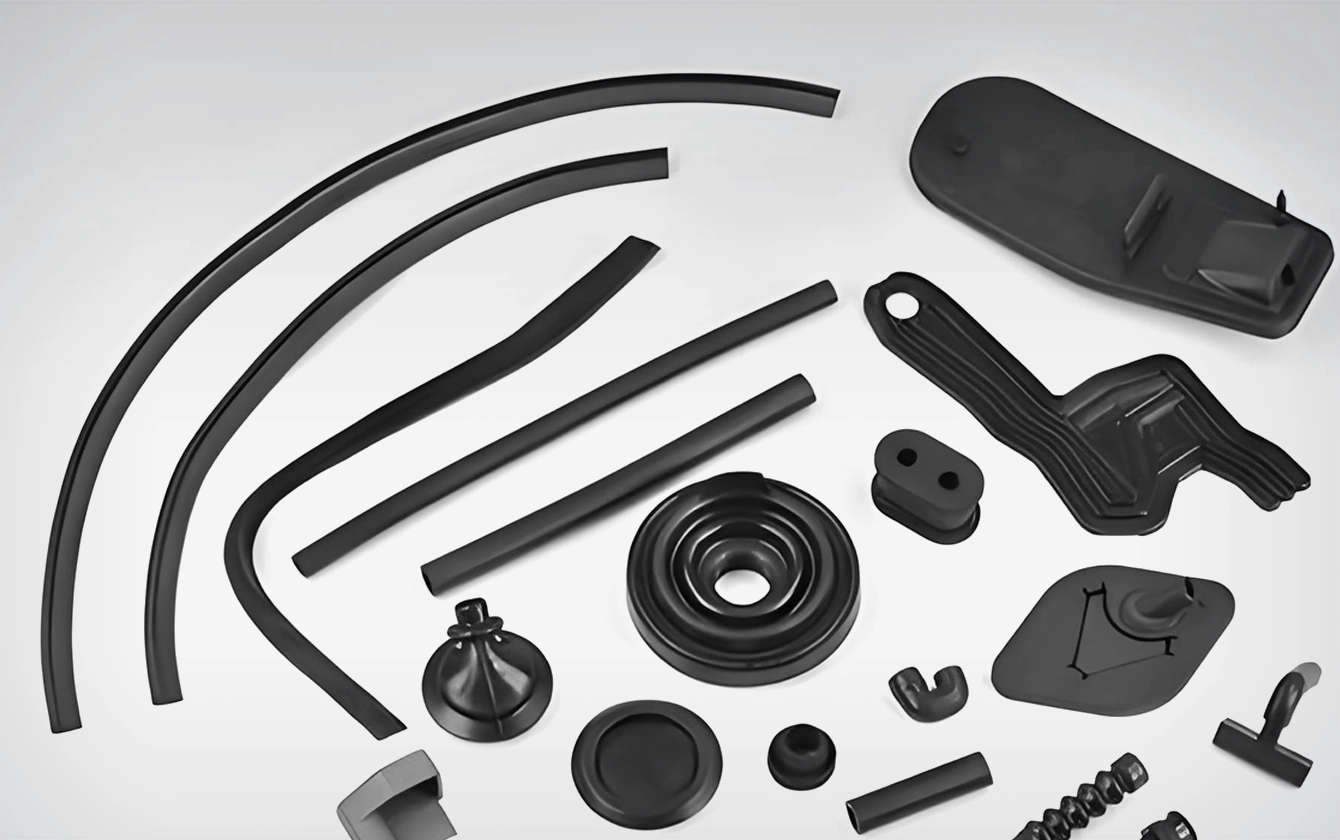
Automotive rubber production includes flexible seals, anti-vibration parts, oil seals, O-rings, connectors, glazing edges, and TPU components. Their materials and process routes vary enough that no single press configuration fits every project. Cost, equipment architecture, automation, and service shape the commercial case for automotive rubber molding.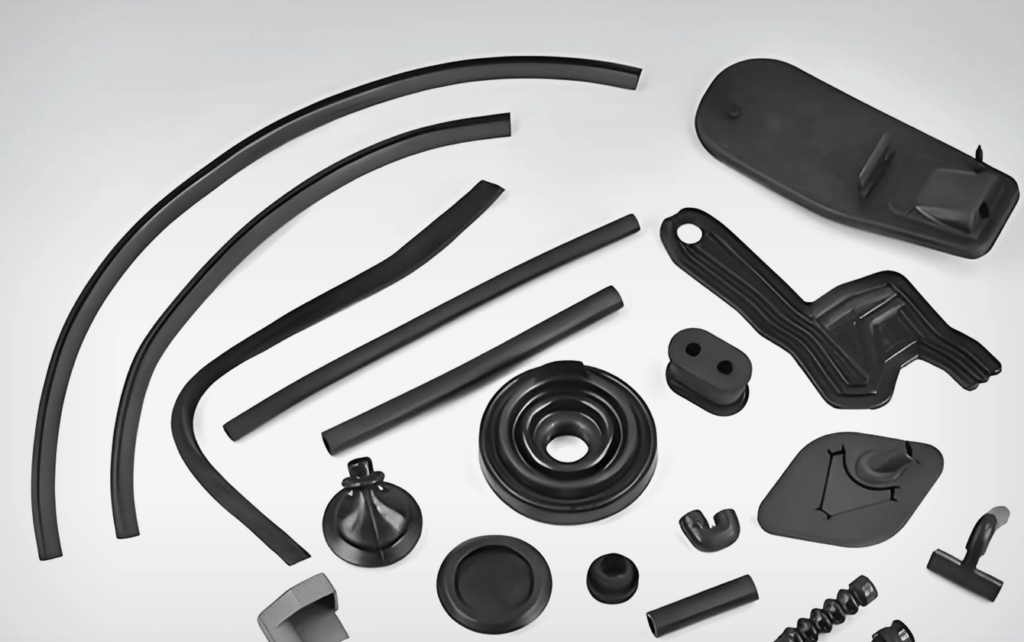
Which parts and materials require different platforms?
RV machines cover general automotive rubber components. TPV, TPE, flexible modified PVC, and related injection-moldable materials can be assigned to the servo-hydraulic RV-Se platform. RV-B systems perform integrated TPV edge sealing for large automotive windows with precise shot control.
For sealing-strip joints, precision seals, skeleton oil seals, and TPU overmolding, the RC C-frame layout keeps the mold area accessible. Feeding method, pressure, temperature, residence time, and curing or cooling must be defined separately for NR, NBR, EPDM, butyl rubber, TPV, TPE, and other compounds.
Product geometry, shot size, cavity layout, inserts, surface requirements, flash limits, mold dimensions, opening stroke, part removal, and output may need to be reviewed together. Automotive rubber molding must be qualified for the exact compound and mold rather than a broad material family.
What Should an Equipment Specification Contain?
The specification should calculate injection volume, injection pressure, clamping force, platen and opening requirements, mold weight, utility demand, and cycle target. It must identify material supply, insert placement, demolding, cleaning, inspection, safety, data interfaces, and changeover needs.
Modular options can adapt a cell to the product and workflow, but each option needs a production reason and acceptance method. Automation will need to cover abnormal operation as well as the nominal cycle.
The sequence needs safe responses to a missing insert, incorrect material, failed transfer, open guard, inspection reject, or communication loss. Manual and maintenance modes must allow authorized recovery without defeating protection or losing genealogy.
A realistic timing study includes these recovery demands instead of assuming continuous automatic production. Quick mold-change functions and stored parameter presets are available on applicable models. These features can shorten setup only when molds, connections, fixtures, material changes, warm-up, and first-piece approval are coordinated.
In rubber injection molding for automotive industry, an engineering matrix can map each part family to an approved machine, mold, compound, recipe, and inspection plan so unsuitable work is not released to the cell.
What Drives Project and Lifecycle Cost?
A useful quotation separates the machine and mold from automation, auxiliary equipment, guarding, inspection, site preparation, trials, training, and spare-parts coverage. A turnkey project may add mold design, cell engineering, and integrated acceptance.
Comparisons should separate included equipment, options, future provisions, exclusions, and customer responsibilities so a low base price is not mistaken for a complete production solution. Lifecycle cost includes material loss, energy, labor, cycle time, changeovers, preventive maintenance, downtime, and accepted-part yield.
A cell with higher automation may reduce handling but increase maintenance or recovery requirements. The timing study will need to cover loading, molding, curing or cooling, removal, inspection, downstream transfer, and faults. Cost per accepted part provides a consistent basis across different product types.
The financial model must state expected product mix, volume, utilization, staffing, compound price, energy rate, scrap basis, maintenance allowance, and evaluation period. Startup, color or material changes, first-piece approval, and planned tool service can be material costs in a mixed factory.
Clear assumptions let decision-makers test how the preferred cell changes when demand or labor availability shifts. Our engineering work at Dekuma develops rubber injection molding for automotive industry applications through product-specific machine selection.
Which Plans Protect Quality, Maintenance, and Support?
Machine-state monitoring and production-data analysis in the iSee intelligent management platform provide records for quality control and traceability workflows. Useful records link part, material, mold, recipe, pressure, temperature, cycle, alarms, inspection, and operator actions.
Signal names, units, timestamps, access rights, and communication-loss behavior must be defined before these records become release evidence. Six to twelve months is only a general maintenance reference; the applicable model, operating hours, load, compound, environment, and manual determine the actual schedule.
Hydraulic response, heating, sensors, lubrication, molds, handling equipment, guards, recipes, and backups need planned checks. Training may need to cover both normal work and safe abnormal recovery. Acceptance records provide the maintenance baseline. They should preserve repeatability, process values, cycle time, alarm behavior, energy where measured, and quality results.
After a component, recipe, or software change, the affected functions and product checks must be repeated. This connects maintenance activity to production evidence rather than relying only on the absence of an active alarm.
Supplier support will need to be defined through warranty scope, contact routes, remote and on-site responsibilities, response expectations, documentation, and critical spares. The plant needs to maintain accurate fault evidence and machine history so assistance can begin with diagnosis instead of reconstructing recent changes.
We also recommend reviewing service access and planned downtime during the original cell layout, because equipment that is difficult to inspect can make routine work longer and less consistent. We can provide machine configuration, mold design, automation, commissioning, training, spare-parts assistance, and after-sales support.
Our view at Dekuma is that automotive rubber molding is a controlled cell whose physical process and production data must agree. Buyers can evaluate the investment through stable quality and production availability once material compatibility, machine architecture, acceptance criteria, and lifecycle duties are explicit.