No responsible equipment quotation can reduce automotive glass encapsulation to one fixed price. Window size, mold envelope, shot control, handling, automation, utilities, validation, and support all shape the project. A useful glass molding machine price comparison must therefore connect capacity and scope with lifecycle production cost.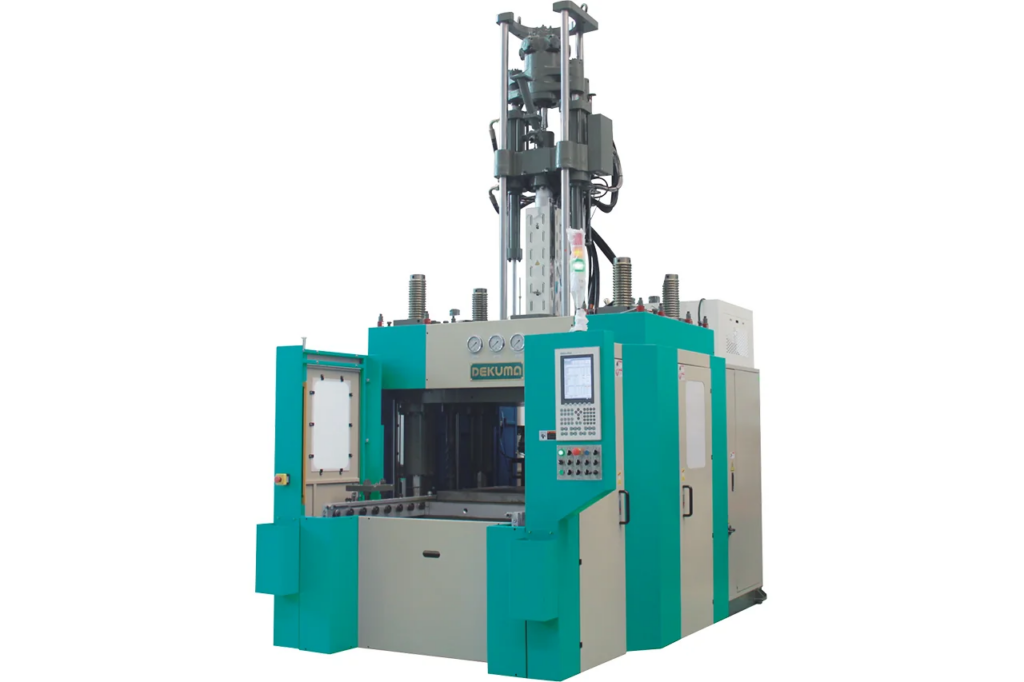
Capacity Must Follow the Glass and Mold
Large automotive windows can receive a TPV edge seal in one step, whereas triangular windows use a precise-volume molding route. Appropriate configuration extends the material range beyond TPV to TPE, flexible modified PVC, and other injection-moldable compounds.
The application file must define glass dimensions and weight, sealing profile, compound, shot calculation, mold dimensions, surface and adhesion criteria, cycle target, inspection, and downstream handling. The published range includes the DKM-RV250B and DKM-RV400B, rated at 250 and 400 tons of clamping force respectively.
Shared published specifications cover 1,840 kg/cm2 injection pressure, 546 cc theoretical volume, a 242 cc/s injection rate, and a 600 mm opening stroke; maximum opening distance and sliding stroke are each 1,000 mm.
Their platen sizes are 1,100 x 1,000 mm and 1,250 x 1,100 mm. The glass molding machine price must be compared only after the complete product and mold fit is confirmed.
Automation Scope Changes Both Value and Risk
One-step encapsulation can remove the separate task of molding and manually attaching a TPV strip. A FIFO vertical injection unit renews chamber material quickly, while the fixed lower platen, movable upper platen, and four-column clamping structure support controlled molding.
A low working platform improves access. These functions still require project-specific glass loading, positioning, guarding, removal, and inspection. Automation cost may include robots, fixtures, identification, material supply, conveyors, inspection, safety systems, and data interfaces.
The cell study will need to include loading, confirmation, molding, removal, inspection, rejected-window handling, and fault recovery. A fast robot does not improve output when cure, inspection, or manual preparation remains the constraint. Glass damage and safe recovery also carry costs that nominal cycle time does not show.
Handling options may need to be evaluated through risk as well as speed. Large glass may need controlled support to limit deflection, while triangular pieces require repeatable location. End-of-arm tooling, confirmation sensors, manual loading provisions, and rejected-window routes affect the scope.
A fault study must cover loss of vacuum, incorrect position, failed transfer, open guarding, and recovery without scratching or breaking the insert. At Dekuma, the actual window, mold, material, and handling route determine how we configure each rubber injection molding machine for auto glass encapsulation.
Energy and material belong in lifecycle cost
A patented servo-hydraulic injection arrangement supports repeat-shot accuracy. The servo delivers only the pressure and flow requested by the cycle; against the stated traditional proportional-control baseline, the potential energy saving is up to 60%.
Pump power is 46.1 kW and electric heating capacity is 13.22 kW on the published models. Actual consumption depends on cycle, utilization, warming, waiting, auxiliary equipment, and baseline.
The lifecycle calculation will need to include TPV loss, purge, startup, rejects, glass damage, energy, labor, changeovers, inspection, maintenance, downtime, and accepted output. A rubber injection molding machine for auto glass encapsulation that costs more initially may create lower operating risk if its capacity, automation, and support are better matched.
The comparison must use the same assumptions and included scope for every proposal. A financial model may need to state annual volume, product mix, utilization, staffing, material and glass value, energy rate, scrap basis, planned maintenance, and evaluation period.
Sensitivity analysis can show whether automation remains justified at lower volume or higher labor cost. It can also reveal which assumption drives the result, preventing a precise-looking payback from hiding uncertain operating inputs.
Service and Acceptance Complete the Comparison
The investment boundary can include machine, mold, handling, guarding, utilities, installation, trials, training, documentation, spare parts, and factory preparation. Approximate machine weights of 13 and 17 tons affect floor loading and lifting.
Standard equipment, options, exclusions, customer-supplied items, warranty, and support locations will need to be identified before commercial evaluation. Acceptance should verify glass identity and position, injection repeatability, temperature, clamping, material change, automation, safety, alarms, inspection, and selected faults.
The trial needs defined samples, stabilization, measurements, tolerances, defect treatment, and interruption rules. Maintenance may need to cover hydraulics, injection, heating, sensors, sliding systems, tooling, handling, guarding, recipes, and backups. Acceptance results will need to become the service baseline.
Repeat-shot behavior, temperature, cycle states, energy where measured, alarm response, glass and TPV defects, and handling performance can be preserved by recipe. After a repair, mold change, or software update, affected checks must be repeated before full release.
This connects maintenance expenditure with production evidence and limits repeated faults. Price evaluation will also need to record the timing of each cost. Initial tooling and integration are different from recurring energy, maintenance, material, and labor expenses.
Separating these cash flows helps purchasing and production teams compare alternatives over the same operating period instead of allowing a low purchase figure to dominate the decision. Our service scope at Dekuma includes configuration, commissioning, training, maintenance, and after-sales support for automotive glass projects.
We believe the glass molding machine price will need to be understood as one part of a documented production case. A comparison covering compatible capacity, complete automation scope, accepted output, operating assumptions, and lifecycle service produces a more reliable commercial decision than a simple equipment-price ranking.