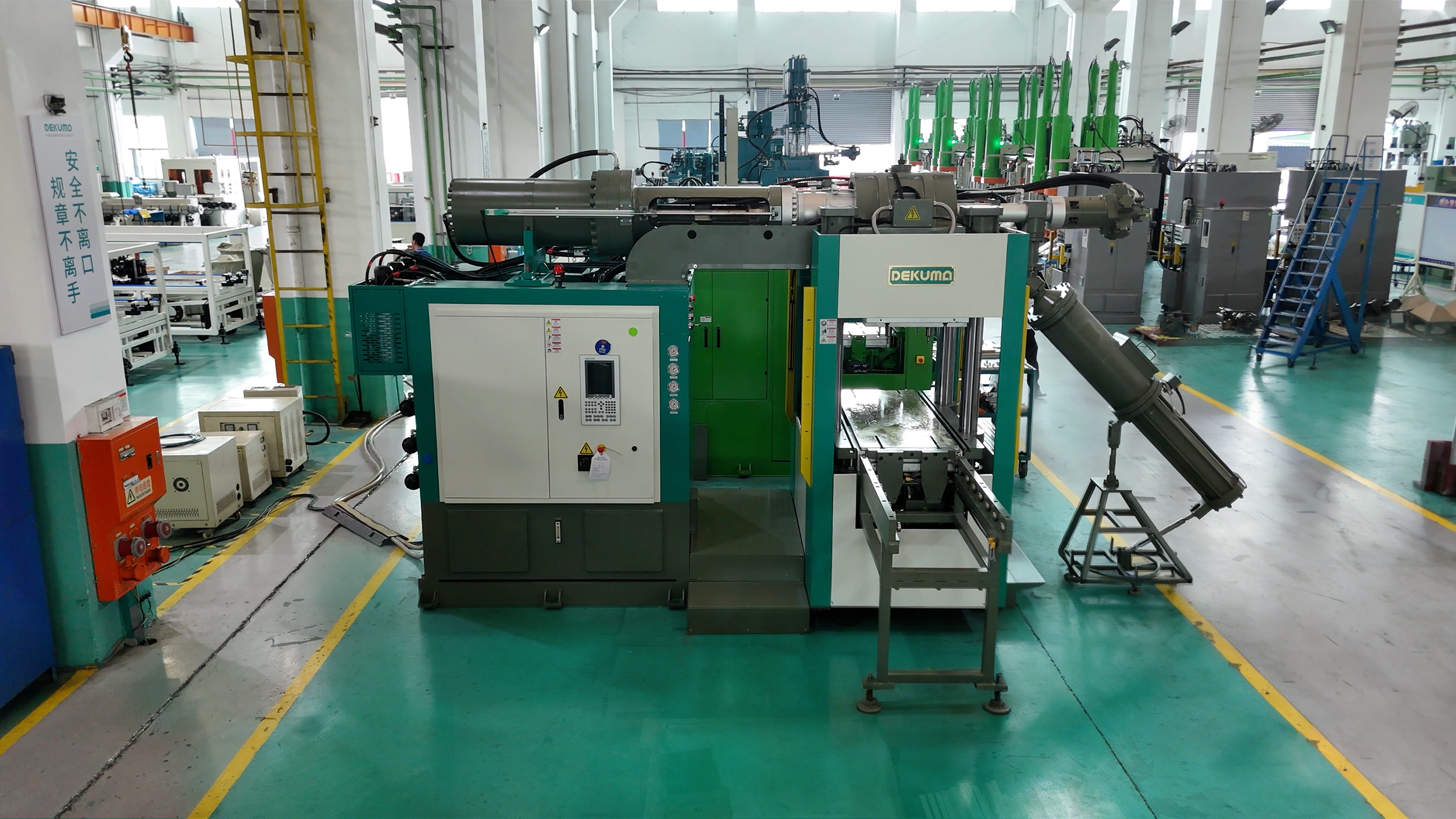
DEKUMA is a national-level “Little Giant” enterprise in China, a designation for specialized and innovative small and medium-sized businesses. DEKUMA provides rubber injection molding solutions for the power industry, covering composite insulators, surge arresters and other electrical insulating components.
As South America expands its power infrastructure and renewable energy sector, demand for key insulating components, including composite insulators and surge arresters, continues to grow. Quality standards are rising at the same time.
For a leading Brazilian manufacturer of electrical insulating components, steady order growth created a clear need to upgrade production. Its equipment had grown with the business over many years, and much of it had been modified in house. It could no longer meet the precision and efficiency requirements of high-end products.
DEKUMA became a core equipment supplier for the upgrade, backed by overseas project delivery and support capabilities. After nearly 20 RA300, RA500 and RA1500 machines entered production in stages, the customer resolved molding quality issues that had persisted for years. Production efficiency and capacity both improved by around 50% compared with its previous equipment. The upgrade gives the customer a stable, efficient base for further expansion in the South American power market.
Project background
From modified equipment to a platform for growth
The customer has served Brazil’s electrical equipment market for many years. It mainly produces composite insulators and surge arresters, and is one of the larger manufacturers in its market. Its products are widely used in power infrastructure, renewable energy power plants and other key applications.
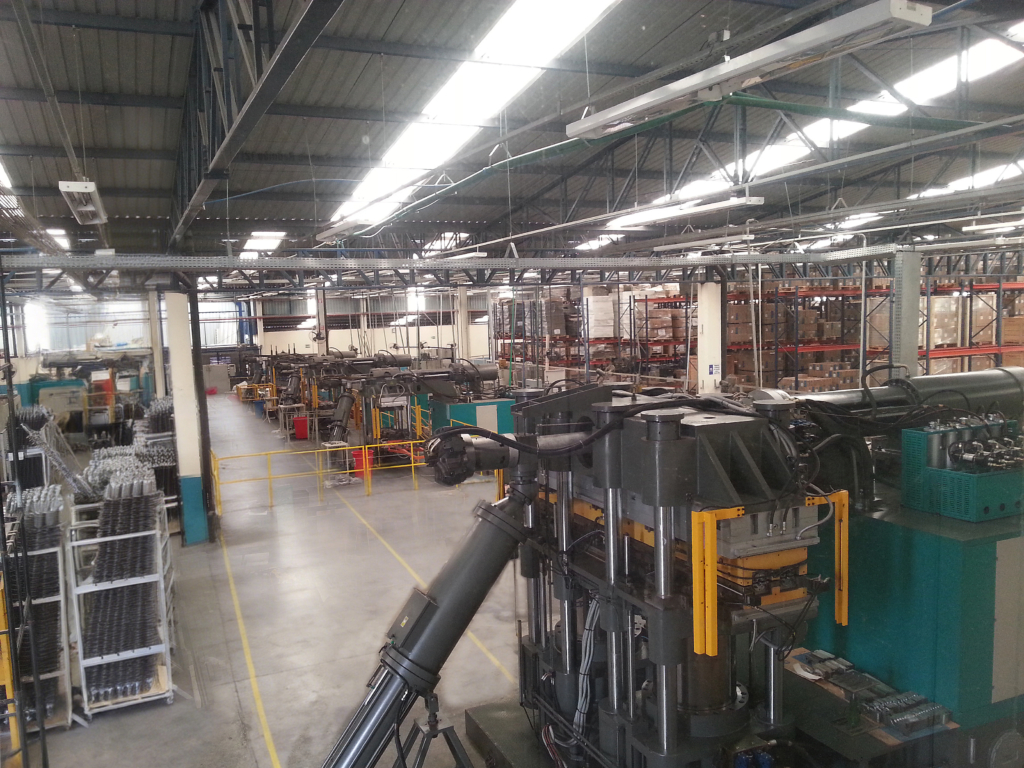
In earlier years, equipment cost and local supply conditions shaped its purchasing decisions. Most of its machines were older models, and some had been modified in house to meet specific production needs.
As the business grew and quality requirements rose, the limits of this approach became harder to manage. Injection efficiency was low, processes were unstable, and quality varied between batches. Routine modification and maintenance consumed a substantial share of production management resources. The customer needed purpose-built rubber injection molding machines to improve efficiency, product quality and management in one step.
Project challenges
Three challenges stood in the way of the upgrade
The customer planned to upgrade its entire production system. Given its current production conditions and the practical demands of running an overseas factory, three challenges stood out.
Challenge 1: Molding accuracy was too limited to keep quality consistent
The in-house modified machines offered limited control over molding accuracy. Flash, air entrapment, scorching and dimensional variation were common. These defects raised rework and scrap costs and made it difficult to meet the acceptance criteria for insulating components used in high-end power projects.
“We used to make do with our old machines, but getting consistent molding quality on large insulators was always a problem. Quality varied a lot from batch to batch.” — Technical lead, customer
Challenge 2: A wide product range and large shot volumes demanded more from the machines
The customer’s range runs from small surge arresters to large composite insulators. Different sizes call for different rubber compounds, molds and shot volumes, and each puts different demands on injection volume, clamping force and pressure holding.
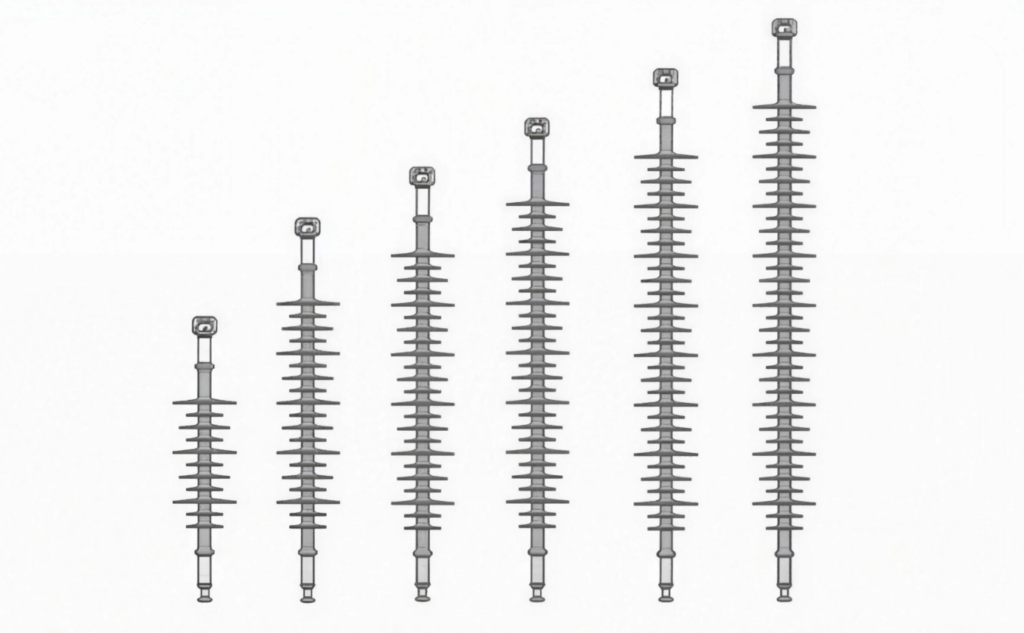
Large shot volumes, stable pressure during long vulcanization cycles and compatibility with long molds all require a high level of machine stability. The existing machines struggled to hold consistent quality in batch production, which directly limited output of larger products.
Proper rubber injection molding machine selection requires careful evaluation of injection volume, clamping force, mold dimensions and vulcanization requirements.
Challenge 3: Limited local service resources made after-sales support critical
For specialized rubber processing equipment, installation and commissioning, operator training, spare parts supply and after-sales response all depend on service resources that are not always close at hand in Brazil.
The customer understood that, for an overseas factory, downtime and missed deliveries caused by machine failures can cost more than the equipment itself. Service capability was therefore a key criterion in machine selection.
Solution
Suitable machines, process expertise and full-lifecycle service
DEKUMA studied the customer’s product range, on-site production conditions and upgrade priorities, then developed a tailored solution combining suitable machines, process optimization and service support. The priorities were better quality, higher capacity and dependable operation and maintenance.
Three models cover the full product range
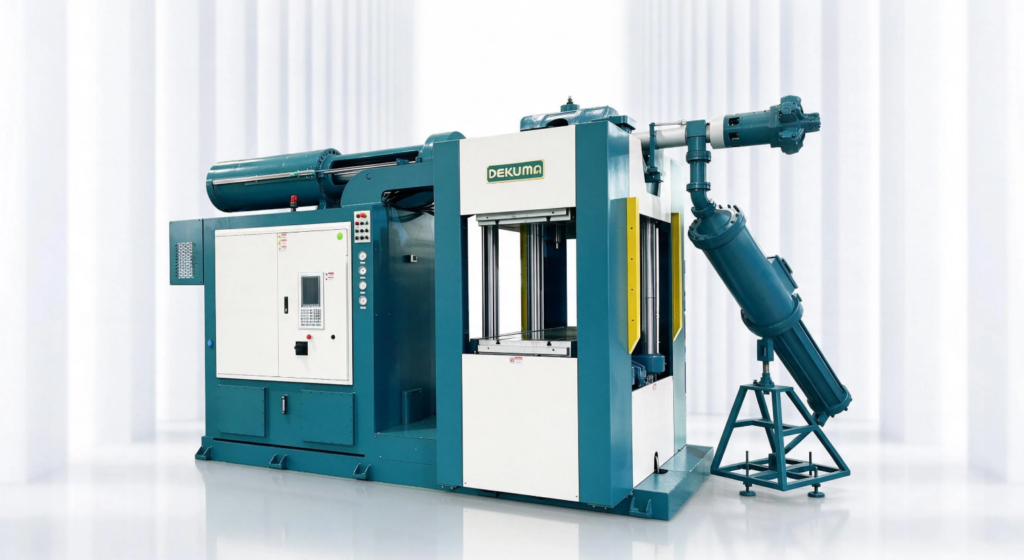
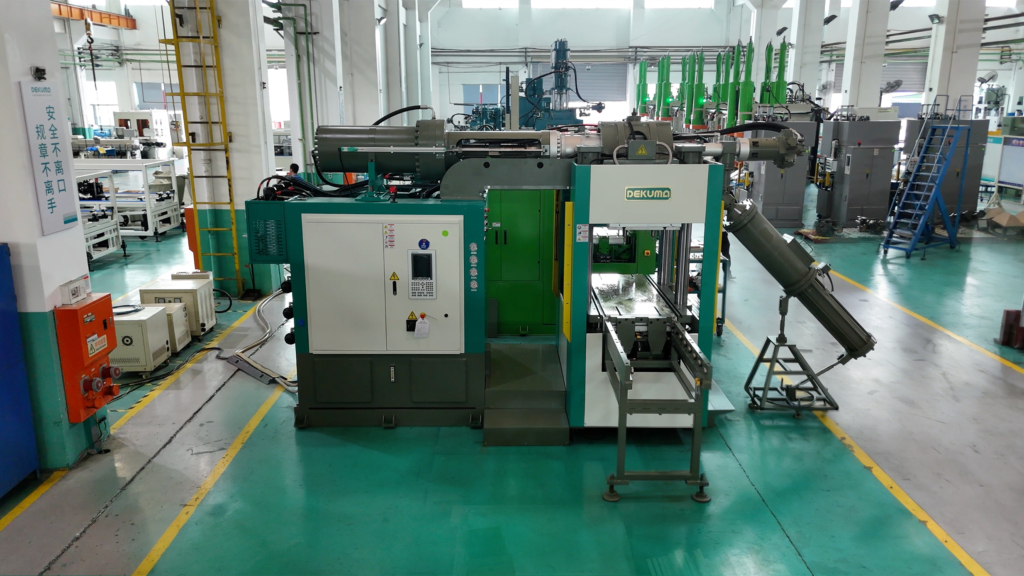
DEKUMA selected three models from its RA Series rubber injection molding machines for the customer’s different product sizes: the RA300, RA500 and RA1500. Together they cover a wide range of injection volumes, clamping forces and mold opening strokes, from small surge arrester components to large, long insulators. The customer no longer needs to modify machines in house.
Customized process settings improve quality and efficiency
Drawing on its rubber injection molding expertise, DEKUMA tuned the machines’ core systems to the customer’s rubber compounds and product requirements.
The plasticizing, homogenization and venting design of the feed system was optimized to deliver uniform plasticizing and reduce air bubbles at the source. Staged injection control allows precise adjustment of injection speed and pressure and, combined with the mold venting design, helps control flash and scorching. Stable pressure holding during long vulcanization cycles supports consistent molding of products with large shot volumes and long dimensions.
Lifecycle support addresses the challenges of running machines overseas
DEKUMA built a service system covering the whole project for the customer’s Brazilian operation. A dedicated team supported each stage: factory acceptance testing, on-site installation and commissioning, mold trials and validation, and hands-on operation and maintenance training for the customer’s production team.
DEKUMA also set up responsive after-sales channels and spare parts arrangements. Remote technical support helps resolve routine issues quickly, reducing the difficulty of maintaining machines overseas and the risk of downtime.
Results and value
Better quality, lower costs, dependable service
As the machines entered production in stages and reached stable operation, the benefits spread from the production floor to the wider business. The upgrade resolved long-standing production problems and gives the customer stronger support for long-term growth.
Fewer defects and consistent batch quality
Tighter control of the molding process significantly reduced flash, air bubbles and dimensional variation. Production has also confirmed stable large-shot injection and pressure holding across long vulcanization cycles.
Product appearance and dimensions now meet the required standards, and consistency between batches has improved markedly. The molded products meet the customer’s acceptance criteria for high-end power projects, and less time is lost to rework.
Higher efficiency and lower management effort
Compared with the previous in-house modified machines, the DEKUMA machines deliver higher injection efficiency and greater process stability. Overall production efficiency and capacity improved by around 50%, while time spent on rework, mold changeovers and setup, and equipment maintenance fell substantially.
Staged injection control and stable pressure holding now run automatically, so results depend far less on operator adjustment. This reduced manual effort, eased production management pressure and improved the customer’s ability to fulfill orders.
Service performance lays the groundwork for long-term cooperation
“The machines have run steadily since we put them into production. Overseas after-sales support was our biggest concern, but responses have also been much quicker.” — Production manager, customer, at follow-up
The machines’ overall performance and DEKUMA’s after-sales service met the customer’s expectations, laying a solid foundation for continued cooperation and further capacity expansion.
About DEKUMA
DEKUMA builds rubber injection molding machines designed for specific applications, with reliability and stability at the center of product development. Its engineers refine machine performance through a detailed understanding of industry processes, including DEKUMA’s patented injection technology, which is designed to prevent rubber leakage during injection.
For customers worldwide, DEKUMA combines equipment supply with customized technical solutions and support throughout the project lifecycle, helping manufacturers address the technical and maintenance challenges of upgrading production lines in different regions and operating conditions.
This project reflects DEKUMA’s focus on application-specific equipment and long-term service support. By combining process expertise with reliable machines, DEKUMA helps manufacturers improve production stability and build a stronger foundation for future growth.