
A machine that can produce a compact cable accessory may not be suitable for a long-rod insulator. The difference is not only the product size but also the required injection volume, mold layout, rubber flow distance, and curing conditions. For electrical insulation manufacturers, equipment selection needs to start from the part structure and production requirements.
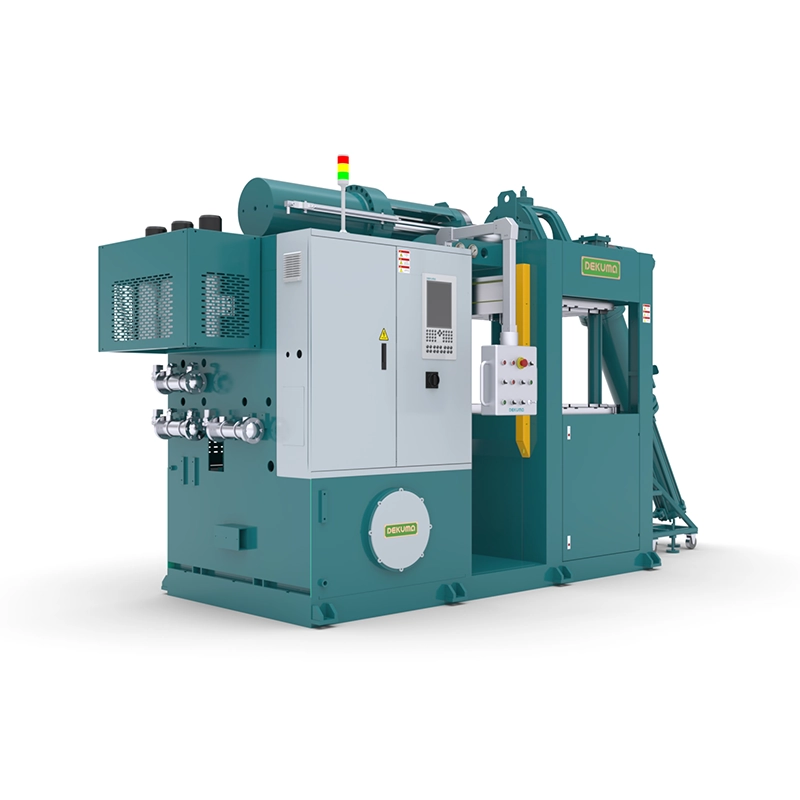
Long-rod insulators, hollow insulators, arresters, and cable accessories may all use silicone rubber, but each product creates different challenges during molding. A suitable silicone rubber injection molding machine needs to provide enough material capacity, stable rubber preparation, accurate movement control, and consistent temperature management throughout the production cycle.
Start With Product Size and Mold Structure
The mold is the first factor that determines machine configuration. A longer insulator requires sufficient space for mold installation and stable filling along a longer cavity, while a hollow insulator often requires larger injection capacity because of its structure and material volume. Manufacturers should therefore consider mold dimensions, injection volume, and available mold-opening space before selecting a machine.
The RA Series is designed for electrical insulation applications, including long-rod insulators, hollow insulators, arresters, cable accessories, and switchgear components. The series covers different production requirements, with injection volumes ranging from 5,000 cc to 50,000 cc × 2 and clamping forces from 3,000 kN to 24,000 kN.
For long-rod insulators, mold length and injection stability are key considerations. The rubber compound needs to travel through a long flow path while maintaining consistent filling behavior. For example, the DKM-RA1500 provides an 800 × 3,700 mm heating plate and a 700 mm mold-opening stroke, providing the space required for long rod-insulator molds.
For hollow insulators, the machine needs greater injection capacity and sufficient mold-opening space to handle larger tooling. The DKM-RA2400, for example, provides 50,000 cc × 2 injection capacity, 24,000 kN clamping force, and a 1,500 × 3,000 mm heating plate for larger hollow-insulator applications.
These differences show why machine selection should be based on the actual product and mold structure rather than relying on a single specification such as clamping force or injection volume.
Material Preparation Affects Injection Stability
Silicone rubber processing does not begin when the material enters the mold. Before injection, the compound needs to be properly fed, plasticized, and prepared for stable filling. Variations during this stage can affect the final vulcanization result, especially for large electrical components with complex cavity designs.
The RA Series uses an enhanced screw design to improve rubber feeding and homogenization. The injection system also includes degassing functions to remove air before the material enters the mold.
For silicone rubber injection molding, stable material preparation is as important as injection pressure. When rubber flow paths become longer or cavity structures become more complex, inconsistent plasticization can create filling differences that cannot be corrected only by increasing injection force.
The equipment can also process EPDM in addition to silicone rubber, allowing manufacturers to select materials according to product requirements while using the same machine platform.
Different Electrical Components Require Different Priorities
Although these products belong to the electrical insulation field, their molding requirements are not identical.
Long-rod insulators usually require long cavities and consistent rubber flow over extended distances. The machine needs accurate injection control to maintain stable filling from the beginning to the end of the cavity.
Hollow insulators often involve larger structures and higher material consumption. Injection volume, mold opening distance, and heating area become more important because the tooling size directly affects machine selection.
Arresters focus more on reliable encapsulation and insulation protection around internal components. The molding process needs stable pressure and accurate switching points to maintain consistent rubber coverage.
Cable accessories typically involve more compact but complex geometries. The machine needs precise movement control when filling around interfaces, inserts, or detailed structures.
These differences mean that a single machine specification cannot represent all electrical rubber applications. The selected configuration needs to match the actual product range.
Control Mold Movement and Vulcanization Conditions
Large rubber insulation components require more than sufficient clamping force. The machine also needs accurate control of injection and clamping movements because small deviations can affect repeatability between production cycles.
The RA Series uses non-contact linear transducers for closed-loop control of injection and clamping strokes. The system monitors movement position during operation and supports more accurate control of injection switching points and mold positioning.
Temperature stability is another important factor during vulcanization. The RA Series uses double-layer thermal insulation plates designed for high-pressure and high-temperature molding conditions. The structure helps reduce heat loss and maintain more stable conditions during repeated production cycles.
These functions work together during molding: material preparation affects filling, movement control affects positioning, and thermal management affects curing consistency.
Process Management for Repeat Production
Manufacturers producing several types of electrical rubber components need a practical way to manage different process settings. Changing from one mold to another should not require rebuilding all parameters manually.
The RA Series uses an Austrian B&R control system with functions for parameter setting, adjustment, storage, process monitoring, and quality control. Production data can be managed through stored settings, allowing operators to repeat established processes when producing the same component again.
At Dekuma, the focus is not only on providing injection capacity but also on connecting material preparation, movement control, temperature management, and process monitoring within one molding platform.
Select Equipment Based on the Actual Production Range
The most suitable machine is determined by the largest and most demanding product that the production line needs to handle. Manufacturers should evaluate mold dimensions, required shot volume, rubber compound, curing cycle, and expected output before selecting equipment.
For companies producing only one type of insulator, a configuration closely matched to that product may be the most practical choice. For manufacturers producing long-rod insulators, hollow insulators, arresters, and cable accessories on the same platform, flexibility in injection capacity and process control becomes more important.
When evaluating silicone rubber injection molding, the machine specification should be considered as a complete process requirement rather than a single number such as clamping force.
At Dekuma, the RA Series is configured around different electrical rubber products and their production conditions. The combination of injection control, rubber preparation, mold positioning, thermal management, and process monitoring allows manufacturers to select equipment according to the actual component being produced.
Choosing a silicone rubber injection molding machine is ultimately about matching the machine structure with the product structure. The right configuration provides the required space, capacity, and control accuracy for stable production of electrical insulation components.