
Digital production planning for electrical insulation must start with process stability. Long-rod and hollow-core insulators, surge arresters, cable accessories, and switchgear components place demanding requirements on material preparation, shot control, mold positioning, and curing.
A connected silicone rubber injection molding machine should capture reliable process information and place it in the context of the product, material, mold, and approved recipe.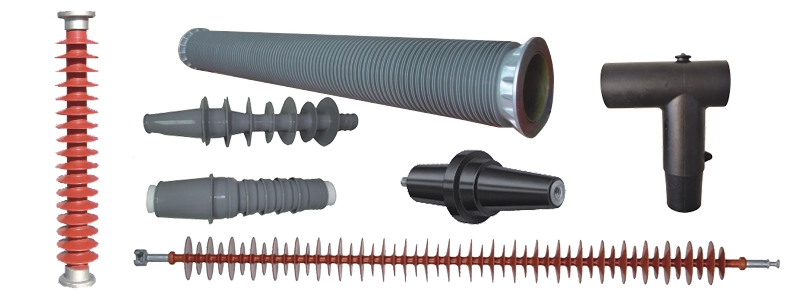
Map the Data to Insulation-Product Requirements
Every integration project needs a defined data model. In silicone rubber injection molding, a production record can include the material batch, mold and insert identification, recipe version, injection pressure, shot size, stroke positions, platen temperature, curing time, alarms, and quality disposition.
The MES will need to link those values to a specific work order and product geometry. Without that relationship, a large volume of data may still be too ambiguous for root-cause analysis or traceability. Machine capacity must also be represented accurately.
The RA Series includes rod-insulator and hollow-insulator configurations, with published injection pressures generally ranging from about 1,120 to 1,480 bar depending on the model. Injection volumes extend from several thousand cubic centimeters to 50,000 x 2 cc, and clamping forces reach 24,000 kN.
These are model-dependent specifications, not settings that apply to every job. Production planning must assign work only after shot volume, mold dimensions, opening stroke, heating-plate spacing, and handling requirements have been matched.
The acceptance plan may need to identify which records prove that match. A model number alone does not establish process readiness. Engineering teams may need approved drawings, material characteristics, mold weight and interface data, utility requirements, target output, and part-quality criteria.
The resulting digital route can then prevent an unsuitable work order from being released to the machine or flag a mismatch for review before valuable material and production time are committed. For us at Dekuma, MES connectivity extends those controls.
Use Closed-Loop Signals to Support Repeatability
Our enhanced screw design is intended to stabilize feeding, improve material homogenization, and promote degassing before injection. These functions matter because trapped air or inconsistent material preparation can affect filling and the final insulation structure. The silicone rubber injection molding record must therefore extend beyond final pressure.
It may need to preserve the relevant preparation, injection, and switching conditions that explain how the shot was produced. Non-contact linear transducers measure clamping and injection strokes in a closed loop, with a stated theoretical precision of 0.05%. That measurement supports mold-position control, shot-size accuracy, and switching-point control.
MES limits must be based on validated process windows rather than on the sensor’s theoretical precision alone. A highly precise measurement can detect variation, but product acceptance still depends on material behavior, mold condition, calibration, and the relationship between the measured variable and part quality.
Control Recipes without Separating Them from Change Management
The Austrian B&R system uses a 10.4-inch TFT color screen for setting, adjusting, storing, and monitoring critical molding parameters. Stored recipes can reduce setup variation, especially when a plant changes between insulation products.
However, recipe storage becomes more valuable when revisions are authorized and traceable. A sound workflow identifies who may create, approve, download, and modify a recipe, and it records deviations made during setup or troubleshooting.
A silicone rubber injection molding machine can send actual values, states, and alarms to a supervisory layer, while the MES supplies work-order and recipe information. The interface needs to define which system owns each field. Machine safety logic and fast control loops must remain local.
Production orders, lot genealogy, completion status, and quality holds may be managed above the equipment. This separation avoids network dependence for time-critical functions while still creating a connected production history. Connectivity also requires practical data-quality controls.
Tags need stable names, units, timestamps, and valid ranges. Communication loss may need to be recorded without allowing an old value to appear current. Before a write command is permitted, the receiving system will need to verify the machine state, product assignment, and authorization.
Our team regards these interface rules as part of production engineering because a technically successful connection can still create risk if its data has no clear owner or validation method at Dekuma.
Plan Automation as a Coordinated Insulation Process
Material supply, insert or core handling, mold access, part removal, inspection, and downstream movement must be evaluated as one sequence. Automation may need to target a defined constraint, such as difficult handling, inconsistent placement, or excessive operator exposure.
It will also need to accommodate changeovers and safe fault recovery. A cell that is fast during normal operation but difficult to clear after a minor interruption can lose much of its expected capacity.
Energy management belongs in the same plan. Double-layer thermal-insulation plates reduce heat loss under high-pressure, high-temperature operating conditions; the stated energy reduction is about 40%. Lower heat transfer can also reduce thermal stress on the machine.
Actual plant savings will depend on cycle demand, ambient conditions, utilization, and the compared baseline, so energy reports should be normalized by product and operating time. We configure RA equipment around product geometry, material, mold, and production targets, with hydraulic components selected for stable pressure delivery.
In our view, connected silicone rubber injection molding succeeds when process engineering and information architecture are developed together. Reliable controls produce meaningful data, disciplined recipe management protects the validated process, and carefully chosen automation converts that foundation into repeatable industrial output.