
Producing rubber tracks for agricultural, construction, defense, and snow vehicles requires more than selecting equipment with sufficient molding capacity. Manufacturers need a production system that can handle different track structures, maintain consistent rubber distribution, and ensure stable bonding between rubber compounds and reinforcement materials.
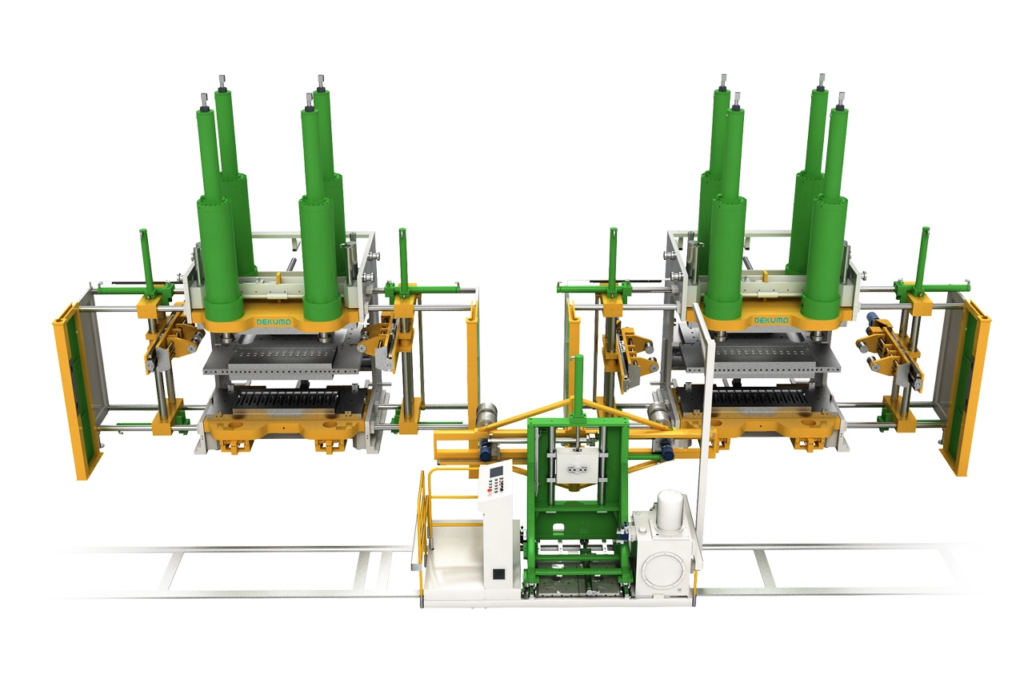
Rubber tracks operate under demanding conditions, including heavy loads, uneven terrain, extreme temperatures, and continuous impact. These factors place strict requirements on the molding process. When evaluating rubber track solutions, manufacturers should consider whether the equipment can support product durability, production consistency, and long-term manufacturing needs.
Rubber Track Manufacturing Challenges Across Different Vehicles
Rubber tracks for agricultural machinery must provide reliable traction on farmland, mud, and uneven surfaces. Construction equipment requires tracks that can withstand heavy pressure and abrasive environments, while defense vehicles demand mobility and durability under complex terrain conditions. Snow vehicles need rubber components that maintain flexibility and grip in low temperatures.
Although these applications have different operating conditions, the production challenges are similar. Rubber tracks usually contain multiple material layers and reinforcement structures that must be accurately positioned during molding. Any variation in rubber distribution or reinforcement placement may affect the service life and performance of the finished track.
Large track dimensions create additional production difficulties. Compared with smaller rubber components, tracks require more precise control of molding pressure, temperature distribution, and curing conditions. Manufacturers need equipment that can maintain stable performance throughout the entire production cycle.
For companies developing new track models or serving different vehicle markets, production flexibility is also important. The equipment should support different mold designs and product specifications without excessive downtime during adjustments.
Equipment Factors That Determine Track Quality
When manufacturers compare different rubber track solutions inc options, they should evaluate more than basic machine capacity or purchase cost. The ability of the equipment to maintain stable production conditions often determines the quality and reliability of the final rubber tracks.
Molding stability is one of the most important factors. Rubber track production requires consistent pressure and temperature control to achieve uniform material distribution. Unstable molding conditions may lead to differences in track thickness, incomplete curing, or inconsistent product performance.
Reinforcement positioning should also be considered. Many rubber tracks include internal structures that improve strength and durability. During molding, these components must remain accurately positioned to maintain the mechanical properties required for different applications.
Machine structure influences long-term reliability as well. Heavy-duty rubber molding involves repeated high-pressure operations, so the equipment must provide sufficient mechanical strength and maintain accuracy over extended production periods.
Manufacturers should also evaluate production adaptability. A supplier that understands different applications can help configure equipment based on track size, material characteristics, and expected output rather than offering a single standard solution.
Precision Control in Rubber Track Production
Precision control directly affects the consistency of rubber tracks. During manufacturing, the equipment must maintain accurate control over key parameters such as pressure, temperature, and processing time.
Stable material processing helps ensure that rubber compounds fill the mold evenly and achieve consistent curing results. This is especially important for larger tracks, where uneven conditions can create differences between different sections of the product.
Control systems also play an important role in production management. Operators need accurate monitoring of molding parameters to adjust processes for different track designs. A practical control system can help manufacturers maintain repeatable results when switching between agricultural, construction, defense, and snow vehicle applications.
Maintenance requirements should also be considered during equipment selection. Rubber track production often involves continuous operation, and equipment designed with reliable components and practical service access can reduce unexpected interruptions.
For manufacturers searching for rubber track solutions inc through different suppliers, evaluating precision control and long-term machine performance is essential before making an investment decision.
Our Rubber Track Production Equipment Approach
With extensive experience in rubber molding technology, we at Dekuma develop equipment solutions for manufacturers producing rubber tracks for agriculture, construction, defense, and snow vehicles.
Our approach is based on understanding the actual requirements of each application. Track size, reinforcement structure, rubber compound characteristics, and production volume all influence equipment configuration. Instead of applying a fixed solution, we consider these factors when supporting manufacturers with suitable molding systems.
Our rubber track solutions are designed for production environments that require stable processing, accurate molding control, and consistent results. The equipment structure and control technology help manufacturers manage challenges related to large rubber components and complex track designs.
The production of rubber tracks requires more than equipment strength. Consistent quality depends on the coordination of machine structure, process control, and application experience. These factors help manufacturers produce tracks that meet the requirements of different vehicle categories.
The technical experience accumulated at Dekuma supports our continued development of rubber molding equipment for industrial applications. By combining engineering knowledge with practical production requirements, we help manufacturers select equipment that matches their specific rubber track production goals.
Considerations Before Choosing Rubber Track Equipment
Before investing in a rubber track production system, manufacturers should evaluate product requirements, production volume, material characteristics, and future development plans. These factors determine whether the equipment can support stable manufacturing across different applications.
Companies researching rubber track solutions inc should also consider supplier experience, technical support capability, and equipment adaptability. A suitable partner should understand the challenges of rubber track production and provide solutions that match actual manufacturing conditions.
For manufacturers looking for reliable rubber track solutions, equipment selection should focus on long-term production performance rather than only initial specifications. A properly matched molding system can help maintain consistent quality and support the changing requirements of agricultural, construction, defense, and snow vehicle markets.