
A rubber track has to be molded around a defined reinforcement structure while maintaining its tread geometry and overall dimensions. The challenge becomes more demanding as track size increases because the mold must accommodate the complete structure, and the rubber needs to fill the cavity around the embedded components before vulcanization. For this reason, track production cannot be reduced to choosing an injection machine with sufficient capacity.
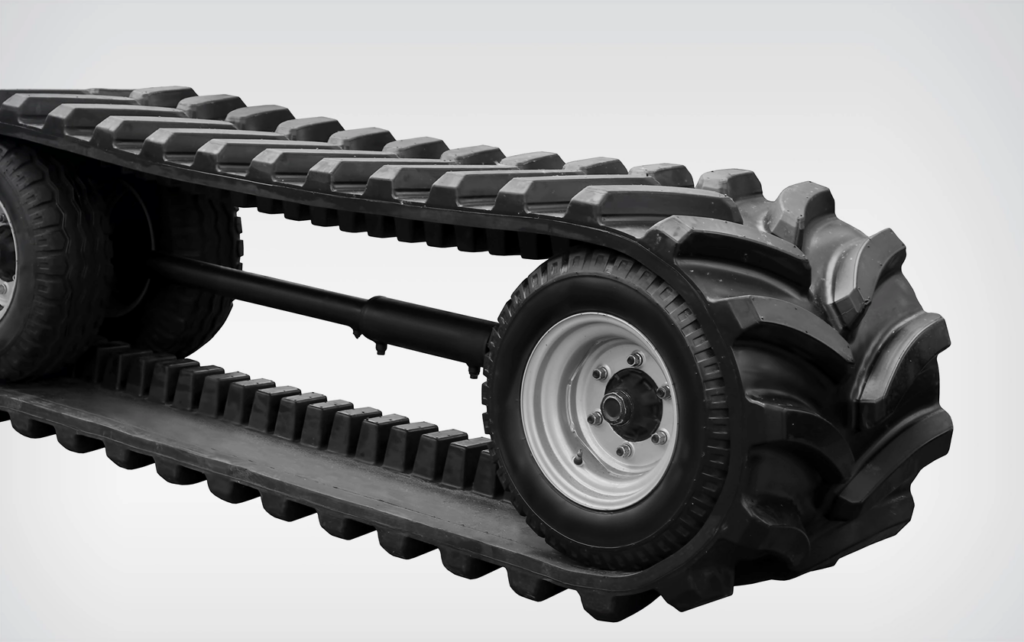
The equipment needs to correspond to the track design from the beginning. Mold dimensions, reinforcement arrangement, rubber volume, tread geometry, vulcanization conditions, and production volume all influence the required setup. This is the starting point for evaluating rubber track solutions.
The Track Design Determines the Equipment
The first consideration is the physical structure of the track. Its length and width determine the mold envelope, while the arrangement of steel reinforcement affects how the assembled components are positioned inside the tooling. Tread geometry then defines the cavity that the rubber must fill.
These factors are closely related. Changing the track dimensions can require different tooling, while changing the reinforcement layout can alter the way the mold accommodates the assembled track. A production line intended for several track specifications therefore needs to be evaluated against the complete product range rather than one representative model.
The operating application matters as well. Excavator tracks and agricultural machinery tracks can differ in dimensions, tread patterns, reinforcement structures, and working conditions. Those differences can influence both the molding process and the equipment configuration.
Why a Dedicated Track Production Line Matters
A rubber track requires more than a molding machine. Before vulcanization, the rubber compound and reinforcement need to be brought together in the correct configuration. The mold then has to close around the complete assembly and maintain the required conditions throughout the curing cycle.
This makes equipment integration important. Mold handling, rubber injection, clamping, and vulcanization need to function as parts of the same production sequence. A limitation in mold space, for example, can affect how the reinforcement is loaded before molding; an unsuitable curing setup can affect the final properties of the molded track.
Our dedicated rubber track production line is designed around this sequence. Rather than adapting a general rubber molding platform to a large product, the equipment is configured specifically for track manufacturing and the tooling required by the finished track.
Molding and Vulcanization Are Closely Connected
During molding, the rubber compound must occupy the cavity around the reinforcement while the mold maintains its intended position. The amount of rubber, cavity geometry, and reinforcement arrangement all influence material distribution.
Vulcanization follows directly from this stage. The rubber must receive the required heat and pressure throughout the mold so that the finished track achieves the intended cured structure. For a large reinforced product, the curing stage cannot be separated from the mold and machine configuration.
This is why the production process needs to be considered as a whole. Injection conditions, mold design, reinforcement positioning, and vulcanization requirements should be established before the production line is finalized.
Applications Covered by the Production Line
The production requirements change when the finished track changes. Excavator tracks generally have different dimensions and tread requirements from tracks used on agricultural machinery. A manufacturer producing several specifications also needs to consider how different molds will be installed, changed, and operated on the same production line.
At Dekuma, our rubber track equipment is developed around these application differences. The dedicated production line is intended for rubber tracks used in tracked machinery, with the production setup considered together with the mold and track structure.
This application-based approach is also important when manufacturers plan to expand their product range. A line that works for one track specification should be assessed for its compatibility with the molds and dimensions required by future products.
Production Consistency Across Repeated Cycles
Once the mold and process have been established, repeated production becomes the next practical test. Rubber volume, reinforcement position, mold closing, and vulcanization conditions all need to remain consistent from one track to the next. This is particularly important when several reinforcement components must stay correctly positioned throughout molding.
For manufacturers producing multiple track specifications, production changes also need to remain manageable. Mold replacement, material preparation, and curing adjustments should fit into the normal production workflow rather than requiring major changes to the equipment setup. This is an important consideration when evaluating rubber tracks solutions for a production line that may handle more than one track design.
At Dekuma, the dedicated rubber track production line is designed around this repeated production process. For manufacturers assessing different rubber tracks solutions, the practical check is whether the molding, clamping, and vulcanization stages can remain coordinated as production moves between cycles and track specifications.
Production efficiency should also be considered alongside product quality, particularly when the line is expected to operate continuously or handle multiple track sizes. A well-matched equipment configuration can help manufacturers maintain stable production while reducing unnecessary adjustments between different track specifications.