
A small O-ring, a long sealing profile, a rubber damper, and an insert-molded connector can all belong to the same rubber component family, yet the machine conditions behind them can be quite different. Cavity size, material volume, mold structure, insert position, and filling behavior all influence the equipment configuration. Choosing a rubber injection molding machine by clamping force alone can therefore leave important production requirements unanswered.
The more useful starting point is the part itself. We first need to understand how the rubber enters the cavity, how the mold needs to operate, and what level of dimensional consistency the finished component requires. The equipment can then be assessed against those conditions rather than selected from a general specification table, especially when the rubber molding machine needs to handle different products or tooling arrangements.
When the Part Dictates the Machine
Seals and gaskets usually leave little room for inconsistent filling. A small change in material distribution can affect the sealing surface, flash, or finished dimensions. Dampers bring a different concern because their geometry and material volume can be larger, while connectors may involve inserts that must remain correctly positioned during injection.
The mold determines much of this behavior. Runner layout, cavity arrangement, insert placement, mold thickness, and opening requirements all influence how the machine should operate. The equipment therefore needs enough working space and process control for the tooling actually used in production.
Material adds another variable. The rubber molding machine also needs to accommodate the compound’s processing characteristics rather than relying on a fixed setup.Rubber compounds respond differently during plasticizing, injection, and vulcanization.
Their flow behavior and temperature sensitivity can affect cavity filling, so the machine needs to maintain suitable dosing, injection, and temperature conditions for the selected compound.The Injection System Becomes Critical at the Cavity
For precision seals, gaskets, and similar components, the question is not simply whether the machine can inject enough material. The injection process needs to deliver the required volume consistently and avoid conditions that create unnecessary material stress or backflow.
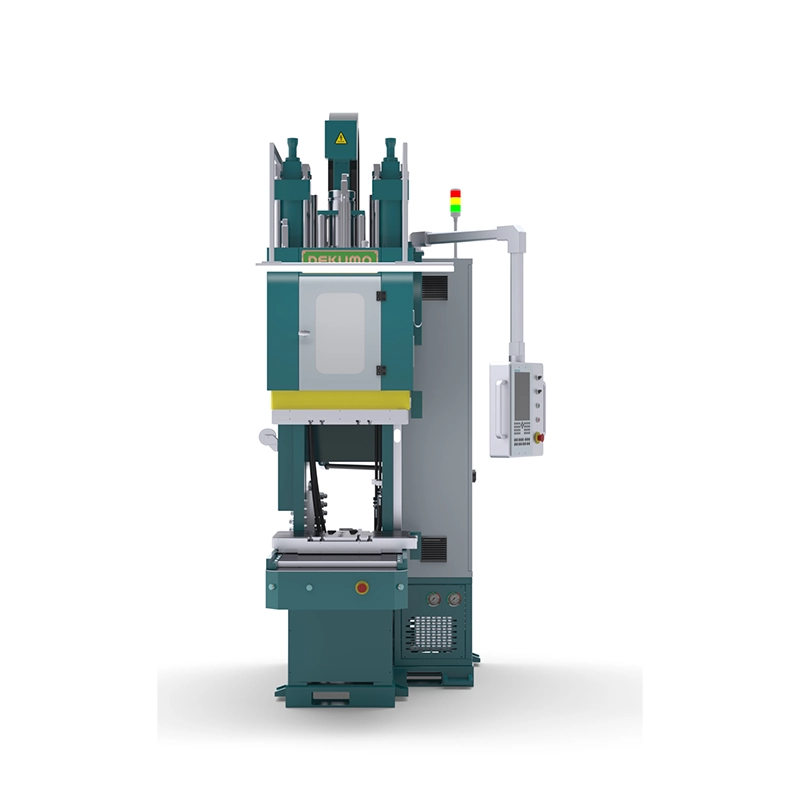
The RC Series takes a specific approach to this process. Its plasticizing and injection units are separated, which helps with temperature control and material consistency. Precise dosing controls the injection volume, while the liftable nozzle is designed to prevent backflow and material stress during vulcanization.
This becomes particularly relevant when a product contains narrow sealing sections or more complicated cavity geometry. In such cases, injection consistency affects more than appearance. It can influence whether the cavity fills properly and whether the molded part remains within the required dimensional range.
For tighter-tolerance applications, an optional servo valve system provides more stable pressure and flow control. This can be relevant to automotive sealing components, where repeatability may be more important than simply reaching a high injection pressure.
Mold Handling Is Part of the Production Cycle
Mold access can become a practical issue when the same machine handles different tooling or when a mold requires regular inspection and replacement. A machine may have adequate injection capability but still create unnecessary work if operators have limited access to the mold.
The RC Series uses a three-side access C-frame clamping structure. This arrangement allows operators to approach the mold from three sides and is intended for precision rubber parts, sealing-strip joints, seals, skeleton oil seals, and TPU products.
That structure also fits applications where tooling changes are part of normal production. An optional mold-transfer function can make mold changes faster and safer, while a double-workstation configuration can be considered for higher-output manufacturing. These options matter when the production schedule involves frequent tooling changes rather than a single mold running continuously.
Machine Size Should Follow the Mold
Machine selection becomes more concrete once the mold drawing is available. Injection volume needs to cover the required shot, including the material used by the runner system. Mold opening stroke determines whether the tooling can open sufficiently for part removal, while the distance between heating plates and minimum mold thickness determine whether the mold can physically fit within the working area.
These checks become especially important when products vary significantly in size. A compact gasket may require relatively little injection volume but still need a particular mold arrangement. A larger damper may place greater demands on shot volume and mold space. An insert-molded connector may need additional access for loading and unloading components.
The RC Series offers multiple configurations rather than one fixed machine size. Different injection volumes, clamping forces, mold opening strokes, heating-plate dimensions, and mold-thickness capacities allow the equipment to be matched to the tooling instead of being selected only according to the size of the finished rubber part.
Where the RC Series Fits
At Dekuma, the RC Series is designed for precision rubber parts, sealing-strip joints, seals, skeleton oil seals, and TPU products. Its application range also corresponds closely with automotive components such as window sealing strips, door edge seals, O-rings, gaskets, complex corner sealing profiles, and TPU overmolded bushings.
The machine configuration reflects those applications rather than adding features without a production purpose. Separated plasticizing and injection support material consistency, precise dosing addresses injection-volume control, and the three-side C-frame structure provides practical mold access. Optional servo valve control, mold transfer, and double-workstation configurations address more specific requirements around process control and production efficiency.
Our wider automotive application experience also includes rubber vibration absorber cylinder cushions, cable connectors, pipe connectors, skeleton oil seals, gaskets, and other rubber components. This range is useful when several product types need to be evaluated against the same equipment platform.
The Final Check Is the Production Match
A suitable rubber injection molding machine should make sense when the part, compound, mold, and production rhythm are considered together. For a seal, injection consistency and cavity filling may receive the most attention. For a damper, mold space and material volume can become more important. For a connector, insert positioning and operator access may affect the configuration.
The RC Series at Dekuma provides several ways to align these conditions with the equipment. Instead of treating seals, gaskets, dampers, and connectors as one generic rubber application, the machine configuration can be assessed against the actual tooling and production task. That gives manufacturers a more practical basis for selecting equipment for precision rubber molding.