
EPDM and TPV may both be used for automotive sealing components, but they do not place the same demands on the molding process. EPDM is a thermosetting rubber that requires controlled vulcanization, while TPV is processed as a thermoplastic elastomer and depends more heavily on melt temperature and cooling. Silicone introduces another requirement because liquid silicone rubber must be metered and mixed before it enters the mold. These differences affect how the injection unit, temperature system, mold, and cycle are configured.
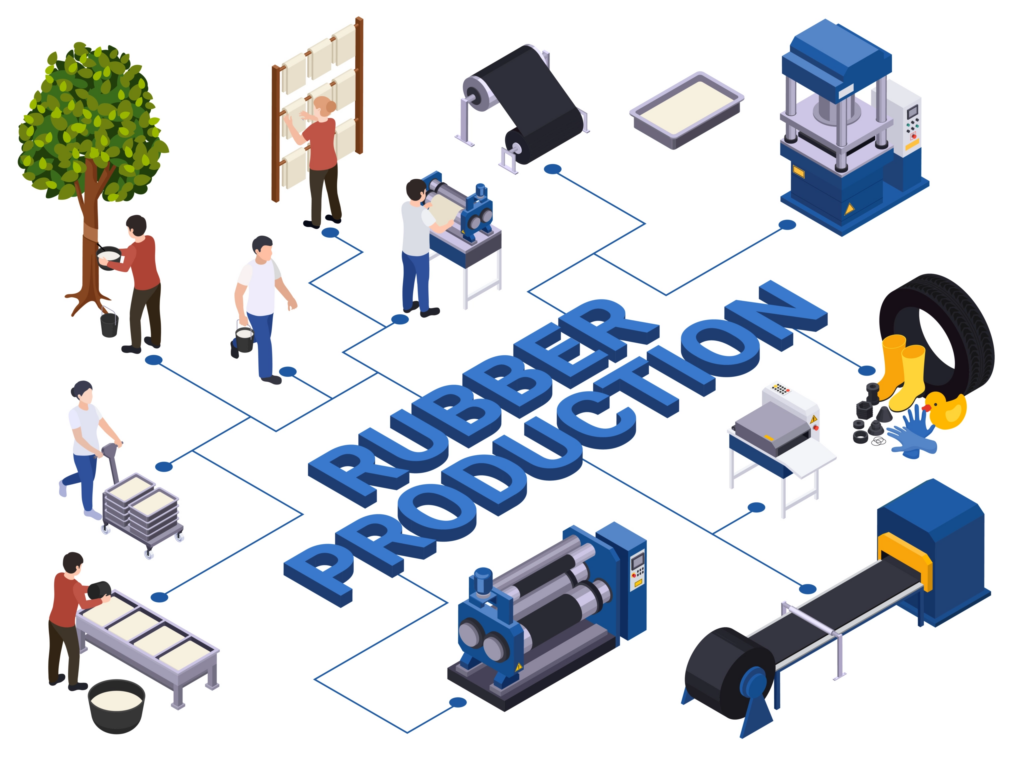
For manufacturers comparing injection molding rubber materials, the material name is therefore only the starting point. The more useful question is how that material needs to be prepared, injected, cured or cooled, and removed from the mold. The machine configuration should follow those processing conditions.
Silicone Starts With Metering and Mixing
Liquid silicone rubber does not enter the mold as a single pre-mixed compound. Its two components need to be metered and combined at a controlled ratio before injection. Any instability in this stage can affect curing and the consistency of the molded part.
Our liquid silicone rubber solution uses synchronized dosing and a static mixer for A/B component blending. The system is intended for soft, high-flow silicone materials and supports low-temperature molding before the material reaches the heated mold.
This makes the injection system particularly important for silicone applications. Medical components, infant-care products, electronic insulation parts, and other silicone products may have narrow cavities or demanding dimensional requirements. Consistent metering and mixing need to be maintained before the material reaches the cavity.
Silicone also places different demands on the mold. Venting, cavity geometry, and demolding need to be considered alongside the material’s flow behavior. A machine with sufficient injection capacity is not enough if the material preparation and mold conditions are poorly matched.
EPDM and NBR Follow the Vulcanization Process
EPDM and NBR are both thermosetting rubber materials, but their applications often lead to different compound and process requirements. EPDM is commonly selected for resistance to weather, ozone, moisture, and heat, making it suitable for seals, profiles, electrical components, and outdoor applications. NBR is more closely associated with oil and fuel resistance and is frequently used for seals and fluid-related components.
During molding, both materials need controlled plasticizing, injection, and vulcanization. The compound must reach the cavity consistently before curing progresses too far, while the mold needs to maintain suitable thermal conditions throughout the cycle.
Our RV Series is designed for NR and EPDM applications. Its plasticizing system is optimized for rubber compounds, and the dual-seal clamping cylinder is designed for stable molding operation. For applications involving high-voltage insulation, the RA Series can process silicone rubber and EPDM and is used for products such as hollow-core insulators, long-rod insulators, surge arresters, and cable accessories.
The distinction between these applications matters because the same rubber category can lead to very different tooling and machine requirements. A compact NBR seal, an EPDM sealing profile, and a large electrical insulation component should not be evaluated by material name alone.
TPE and TPV Change the Temperature Strategy
TPE and TPV require a different molding approach because they are thermoplastic elastomers. They soften when heated and solidify as they cool, so the temperature profile through plasticizing, injection, mold filling, and cooling becomes central to the cycle.
TPE is used across automotive components, grips, consumer products, and flexible parts. TPV is particularly relevant to automotive sealing applications where a rubber-like material is processed using thermoplastic methods.
The RV-Se Series is designed for TPE and TPV injection molding. Its servo system provides responsive pressure and movement control, while real-time pressure control supports repeatable molding. For high-volume production, cycle consistency and energy consumption also become practical equipment considerations.
This is where rubber injection molding needs to be considered as a process rather than a generic machine category. A thermoplastic elastomer requires a different thermal and cooling strategy from EPDM or NBR. The machine must provide the control needed for the material’s actual processing method.
The Material Does Not Work Alone
A material can have suitable processing characteristics and still produce inconsistent parts if the mold is poorly matched to it. Gate position, runner dimensions, venting, cavity thickness, and cooling or heating paths all affect how the material behaves after it enters the mold.
For example, a thin-wall TPV sealing profile may require efficient cooling and stable injection response. A thick EPDM component has different heat-transfer and vulcanization requirements. Silicone parts may need careful venting and demolding because of the material’s flow characteristics.
The product application adds another layer. Automotive seals may use EPDM, NBR, TPE, or TPV depending on resistance, flexibility, and service conditions. High-voltage insulation applications can call for silicone or EPDM. The material choice therefore needs to be considered together with the part geometry, tooling, and production volume.
This also affects machine selection. Injection volume, clamping force, mold dimensions, opening stroke, temperature control, and automation should correspond to the actual mold rather than being selected solely from the compound name.
Matching the Compound to the Machine Series
Our material-based machine range reflects these processing differences. Liquid silicone rubber applications use a dedicated dosing and mixing approach. The RV Series covers NR and EPDM applications, while the RV-Se Series is intended for TPE and TPV. The RA Series provides a solution for silicone rubber and EPDM applications, particularly in high-voltage insulation.
The choice becomes clearer when the material and application are considered together. A manufacturer producing EPDM automotive seals may prioritize stable vulcanization and repeatable filling. A TPV sealing-profile producer may place more emphasis on injection response and cooling. A silicone component manufacturer may need accurate two-component metering before the compound reaches the cavity.
The same logic applies to NBR. Its oil and fuel resistance may make it the appropriate material for the finished part, but the equipment still needs to accommodate the compound’s plasticizing, injection, and vulcanization characteristics.
Match the Machine to the Processing Window
EPDM, NBR, TPE, TPV, and silicone place different demands on injection temperature, material preparation, mold temperature, curing or cooling, and cycle control. These differences determine whether a particular machine configuration can maintain stable processing throughout the molding cycle.
For manufacturers working with injection molding rubber materials, the machine needs to correspond to the actual compound and its processing method. EPDM and NBR require conditions that support stable vulcanization, while TPE and TPV depend on controlled melting and cooling. Liquid silicone requires accurate two-component metering and mixing before injection.
The same distinction applies to rubber injection molding equipment. Part geometry and mold design still determine injection volume, clamping capacity, mold dimensions, and opening requirements. At Dekuma, we consider these factors together when selecting the machine series and configuration, rather than assigning the equipment from the material name alone.