
Producing rubber components for power systems requires strict control over insulation performance, sealing accuracy, and dimensional consistency. For manufacturers of insulators, cable accessories, arresters, and switchgear seals, small variations during molding may affect assembly quality and long-term product reliability.
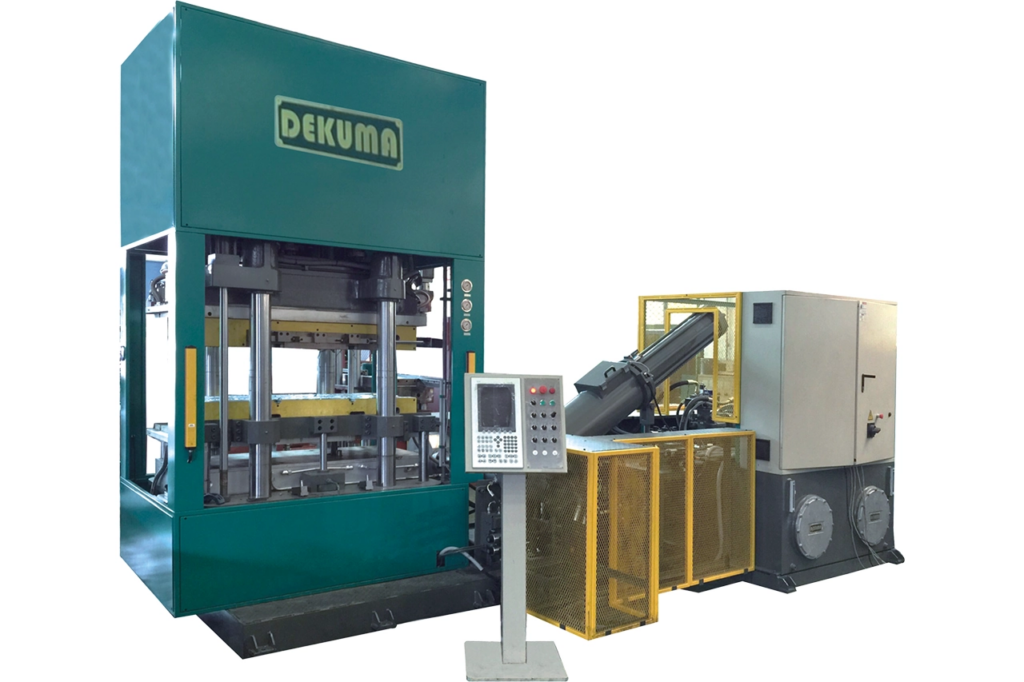
These components often operate in outdoor or high-voltage environments where they must withstand temperature changes, moisture, electrical stress, and aging. Therefore, selecting suitable equipment is not only about injection capacity but also about whether the machine can maintain precise process control throughout continuous production.
When selecting equipment for rubber injection molding for power industry applications, manufacturers should evaluate injection accuracy, mold stability, material compatibility, and technical support to ensure that the production process meets strict requirements.
Manufacturing Challenges of Electrical Rubber Components
Rubber components used in the power industry serve different functions, but they share similar manufacturing challenges. Insulators require stable electrical insulation performance, cable accessories need reliable sealing structures, and switchgear seals must maintain accurate dimensions for proper assembly.
Silicone rubber is widely used in many outdoor insulation applications because of its weather resistance, temperature stability, and hydrophobic properties. However, even suitable materials require accurate molding conditions to achieve consistent performance.
During production, rubber materials must fill complex mold cavities evenly. Uneven material distribution, trapped air, or inconsistent curing conditions can influence the final shape and performance of the component.
For arresters and insulation products, dimensional accuracy is especially important because the molded part must match the designed electrical and mechanical requirements. For cable accessories and seals, small differences in size may affect installation and protection against environmental factors.
These requirements mean that manufacturers need equipment capable of maintaining consistent pressure, temperature, and injection parameters throughout the molding cycle.
Factors That Affect Molding Quality and Consistency
When evaluating rubber injection moulding equipment, manufacturers should focus on the machine functions that directly influence product quality.
Injection accuracy is one of the most important factors. Electrical rubber components often have complex structures, requiring precise control of material volume and flow. A stable injection system helps reduce variations in product weight, surface quality, and internal structure.
Clamping stability is also essential. During molding, the machine must maintain consistent mold closing force to prevent flash and dimensional changes. Stable clamping performance supports repeatable production and helps manufacturers maintain consistent results across different batches.
Temperature control influences rubber curing performance. Different rubber compounds require suitable processing conditions, and accurate temperature management helps achieve uniform curing throughout the component.
The machine’s control system should also provide practical monitoring and adjustment functions. Operators need to manage important parameters efficiently when producing different component designs or adjusting production conditions.
For manufacturers comparing different rubber injection molding for power industry options, the ability to maintain stable production conditions over long operating periods is a key evaluation factor.
Material and Process Requirements for Power Applications
Power industry rubber products often require a balance between electrical performance, mechanical strength, and environmental resistance. The selected rubber material must match the operating conditions of the final component, while the molding process must preserve these properties.
For example, outdoor insulation components may require materials that maintain performance under ultraviolet exposure, rain, and temperature fluctuations. Sealing products used in switchgear applications may place greater emphasis on dimensional accuracy and compression performance.
The relationship between material characteristics and machine capability should not be overlooked. A molding system must provide suitable processing conditions for different rubber compounds to avoid quality issues caused by unstable material flow or curing variation.
Manufacturers should also consider future production requirements. As product designs develop, the ability to adjust molds, process parameters, and production configurations becomes increasingly valuable.
Our Rubber Injection Molding Equipment for Power Applications
With years of experience in rubber molding technology, we at Dekuma develop equipment for manufacturers producing electrical insulation and sealing components. Our solutions support applications including insulators, cable accessories, arresters, and switchgear seals.
Our technical team focuses on practical production requirements, including material characteristics, mold structure, and product specifications. Core mechanical components are designed according to technical standards, while manufacturing processes are controlled to maintain equipment reliability.
Our approach to rubber injection moulding focuses on helping manufacturers achieve consistent molding performance for demanding industrial applications. By combining accurate process control with suitable machine configurations, we support production environments where repeatability and precision are essential.
For power industry manufacturers, the value of molding equipment depends on how well it matches the actual production process. A machine should not only provide sufficient capacity but also maintain stable operation when producing complex rubber components over extended periods.
Considerations Before Selecting a Molding System
Before investing in rubber molding equipment, manufacturers should evaluate product dimensions, rubber material requirements, production volume, and quality standards. These factors determine whether a machine configuration can support efficient and consistent manufacturing.
Technical support is another important consideration. Electrical rubber components often require process adjustment and application experience during production development. A supplier with engineering knowledge can help manufacturers optimize molding conditions and improve production stability.
The experience accumulated at Dekuma supports our continued development of rubber molding equipment for industrial applications. By combining mechanical design expertise with application understanding, we help manufacturers select equipment that fits their specific production requirements.
Choosing suitable rubber injection moulding equipment requires a comprehensive evaluation of machine performance, process control, and technical capability. For power industry manufacturers, the right equipment choice provides a stronger foundation for producing reliable rubber components used in critical electrical systems.