
Rubber injection molding is commonly used when manufacturers need repeatable production of seals, vibration-control parts, cable accessories, and other molded rubber components. During production, the compound must be plasticized and injected into the mold under controlled conditions, while the clamping system maintains sufficient force throughout the cycle. These requirements make injection capacity, clamping force, mold dimensions, and material compatibility key factors in machine selection.
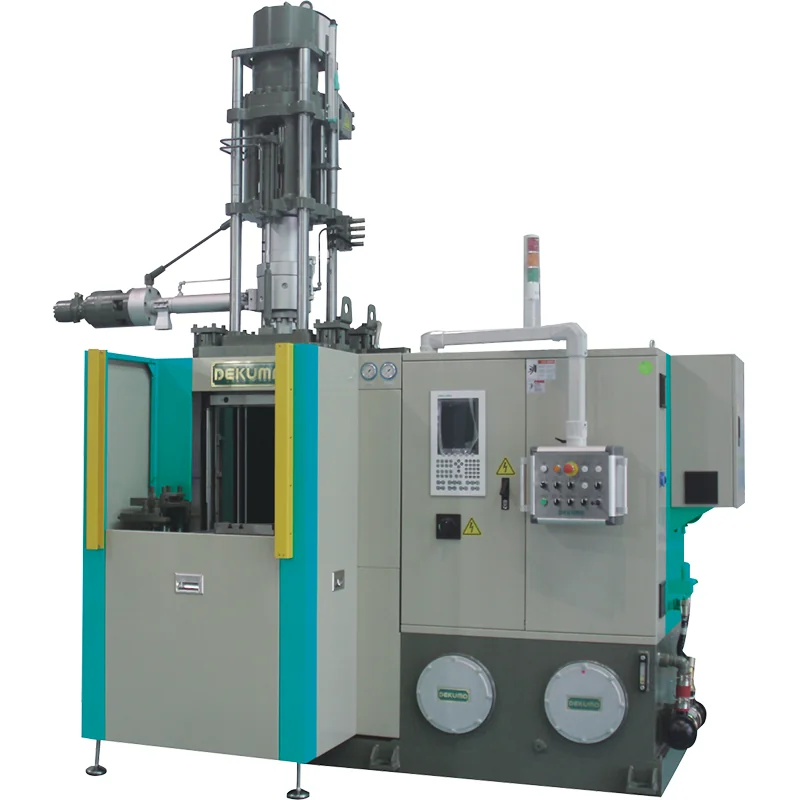
The right equipment also depends on how the machine will be used. A high-volume automotive seal line may prioritize cycle stability and automation, while large electrical components can require substantially higher clamping capacity and mold-opening space. Understanding these differences provides a more practical starting point for selecting a rubber injection molding machine.
Rubber Injection Molding Applications
Automotive manufacturing is an important application area for rubber injection molding. Seals, vibration-control components, cable connectors, and other rubber parts can require stable dimensions and repeatable production. Machine selection depends on factors such as component size, rubber compound, mold structure, and expected production volume.
Electrical and power-related applications can require different equipment characteristics. Insulators and cable accessories may involve larger molds, higher clamping requirements, and specific silicone or rubber compounds. Other industrial applications include pipe fittings, cylinder cushions, and sealing components.
Our RV Series is designed for automotive, power, civil, and other industrial applications. It supports materials including natural rubber, NBR, EPDM, and isobutylene isoprene rubber. Its optimized plasticization and injection systems are designed to support different material requirements, including high-hardness rubber.
Process Requirements for Rubber Molding
Material preparation directly affects injection stability. Rubber compounds need consistent plasticization and feeding before entering the mold. Variations can influence filling behavior, material distribution, dimensions, and finished-part consistency.
Injection pressure should correspond with product geometry, mold design, and material characteristics. Complex cavities or particular compounds may require different pressure levels, so maximum pressure should not be the only selection criterion.
Clamping force is equally important. The mold must remain securely closed during injection. Insufficient force can contribute to flash, while excessive capacity may increase equipment investment without providing a corresponding production benefit.
Key Factors in Equipment Selection
Machine selection should start with the product rather than the machine model. Product dimensions, weight, geometry, compound type, mold design, output, and quality requirements provide the basis for determining equipment capacity.
The RV Series covers injection volumes from 180 to 100,000 cc across its listed models, with clamping forces from 500 to 16,000 kN. Injection pressure ranges from 1,750 to 2,500 bar, while mold opening stroke ranges from 300 to 760 mm depending on configuration. These ranges allow manufacturers to select equipment according to different production requirements.
Factory conditions also matter. Floor space, mold-loading methods, operator access, automation requirements, maintenance access, and future production plans can influence the practical suitability of a machine. A technically capable machine still needs to fit the actual production environment.
Equipment Configuration and Application Experience
Application experience helps connect machine specifications with production conditions. Automotive rubber parts, electrical components, sealing products, and other industrial applications can require different combinations of injection capacity, clamping force, mold space, and control functions.
At Dekuma, equipment development is closely connected with application requirements. Plasticization, injection, clamping, heating, and control are considered as parts of one molding process. This approach is useful when customers need customized configurations or must process a specific rubber compound and product structure.
The RV Series also incorporates an electronic ruler with ±0.05% precision, a dual-seal clamping cylinder, and double-layer thermal insulation plates designed for high-pressure and high-temperature conditions. These features should be assessed together with the product, mold, and production cycle.
A Practical Approach to Machine Selection
When comparing a rubber injection moulding machine, manufacturers should first define the rubber compound, product dimensions, mold configuration, injection volume, required pressure, clamping force, output, and cycle conditions. These details provide a more reliable basis for narrowing down suitable models.
Supplier capability should then be evaluated alongside machine specifications. Technical support, commissioning, maintenance, customization, and application knowledge can influence equipment performance after installation, particularly for new production lines or specialized rubber components.
Our RV Series provides multiple configurations for different injection volumes, clamping forces, pressures, and mold requirements. For manufacturers selecting a rubber injection molding machine, this range allows equipment configuration to follow actual product and production requirements rather than relying on a fixed machine specification.
For manufacturers considering a rubber injection moulding machine, the equipment should ultimately match the complete production requirement. At Dekuma, experience in rubber molding equipment and industrial applications provides a practical basis for evaluating material, product, mold, and production conditions together, helping customers select equipment suited to stable and repeatable manufacturing.
A well-matched configuration can also simplify production adjustments when product specifications or output requirements change. This helps manufacturers maintain consistent molding performance while preparing the production line for future expansion.