
O-rings leave little room for inconsistency. A short shot can break the sealing profile, trapped air can create defects inside the ring, and excess flash can affect assembly or sealing performance. At production scale, even mold residue matters because repeated contamination can increase defect rates and interrupt the cycle. These problems make injection control, material stability, mold handling, and cleaning important parts of the equipment decision.
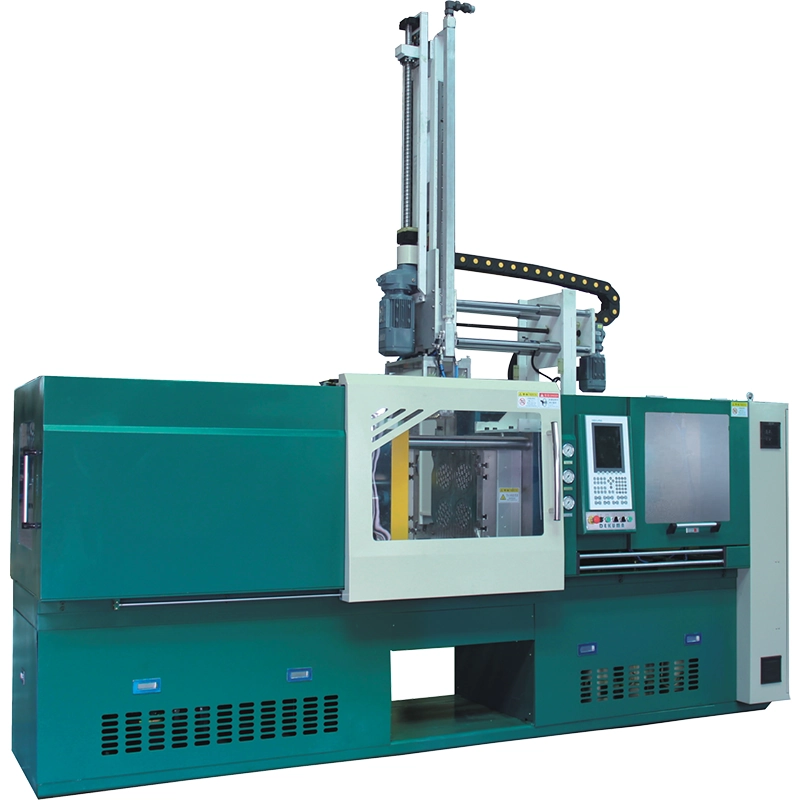
For injection molded rubber parts, the machine should be evaluated against the actual sealing process rather than by clamping force or injection pressure alone. Natural rubber, nitrile rubber, and fluoro rubber can require different processing conditions, while the mold determines how the compound needs to enter, fill, cure, and leave the cavity.
Start With Cavity Filling
The first challenge is getting enough rubber into the complete O-ring cavity before the compound becomes too difficult to flow. A narrow or complex cavity can expose insufficient injection speed through short shots, incomplete edges, or trapped air.
The RH Series uses an ultra-high-pressure injection system to fill the mold in a short time. The product page specifies a 2,500 kg/cm² injection pressure across the RH100, RH200, RH300, and RH450 models. The purpose is not simply to provide a high number on the specification sheet. Rapid injection helps push rubber into the cavity before insufficient flow becomes a source of defects.
For an o ring vulcanizing machine, injection speed also has to be considered together with material residence time. The RH Series uses a FIFO injection system so that rubber does not remain in the barrel for an unnecessarily long period. This helps reduce the risk of over-vulcanization before the material reaches the mold.
Keep the Compound Stable Before Injection
Rubber that stays in the barrel too long can change before it reaches the cavity. That creates a process problem rather than a simple machine-capacity problem. The FIFO design on the RH Series addresses this by using a first-in, first-out material path.
The integrated injection unit takes the same approach from another angle. Instead of leaving a long route between the injection system and mold, the injection system is embedded directly into the mold template. This shortens the injection path and is intended to improve injection efficiency and precision.
This combination is particularly relevant to sealing rings because the cavity is relatively small and the finished part has a defined sealing profile. Material that reaches the cavity consistently is easier to process than material whose condition has changed during an unnecessarily long residence or flow path.
Mold Cleaning Is Part of Production
An O-ring machine does not finish its job when the part leaves the cavity. The next cycle begins immediately, so the condition of the mold can affect the next batch.
The RH Series uses automatic brushes for product pickup and mold cleaning. According to the product specifications, this system is intended to help improve product yield, reduce flash and defect rates, and extend mold service life. The function is particularly relevant to repetitive sealing-ring production, where manual cleaning after every cycle would add labor and interrupt production.
The machine also incorporates cold runner technology. Keeping the runner system cold helps reduce rubber waste and improve flow balance during injection. For small sealing rings produced in high quantities, runner waste can accumulate over thousands of cycles, so the runner system should be considered as part of the overall production process rather than as a separate mold detail.
Match the Machine to the Rubber Compound
The RH Series is designed for sealing rings and other parts made from natural rubber, nitrile rubber, and fluoro rubber. The material choice depends on the service environment, but it also affects the molding process.
Nitrile rubber may be selected where resistance to oils and fuels is important, while fluoro rubber is often used for applications requiring stronger chemical and temperature resistance. Natural rubber serves different performance requirements. These compounds do not necessarily behave identically during plasticizing, injection, or vulcanization.
For injection molded rubber parts, this means the machine needs enough process control to work with the selected compound and mold. Injection conditions, material residence time, mold temperature, and curing conditions should be considered together rather than treating the rubber compound as an isolated specification.
Clamping and Injection Must Work as One System
High-pressure injection only works properly when the mold remains stable during filling. Excessive flash can appear when the material pressure and clamping conditions are poorly matched, while insufficient filling can occur when the injection process does not provide enough material flow.
The RH Series uses a servo-driven hydraulic pump system that adjusts flow and pressure according to real-time demand. This gives the hydraulic system responsive control while avoiding unnecessary output when the process does not require it.
The range also covers four configurations: RH100, RH200, RH300, and RH450, with clamping forces of 1,000, 2,000, 3,000, and 4,500 kN respectively. Injection volumes range from 180 to 1,600 cc. These differences allow the machine to be selected according to mold dimensions, shot requirements, and production scale rather than forcing every sealing-ring mold onto the same configuration.
Why the RH Series Fits Sealing-Ring Production
The RH Series is not simply a general rubber machine with a sealing-ring application added to its description. Its main functions address several problems that occur specifically during repeated ring production.
Ultra-high-pressure injection targets rapid cavity filling. FIFO limits unnecessary rubber residence time. The integrated injection unit shortens the material path. Automatic brushes handle product pickup and mold cleaning between cycles, while cold runner technology reduces runner waste and supports balanced filling. The servo-driven hydraulic pump then manages the flow and pressure required by the molding process.
That combination gives the equipment a clearer application focus. When the production target is a large quantity of consistent sealing rings, the useful question is not simply how powerful the machine is, but whether its injection, clamping, mold-handling, and cleaning functions support the complete cycle.
At Dekuma, we developed the RH Series specifically for sealing rings and related rubber components made from natural rubber, nitrile rubber, and fluoro rubber. The available RH configurations provide different clamping and injection capacities, while the application-specific features are built around the repeated production of sealing rings.
Select the Machine Around the Actual Mold
A suitable o ring vulcanizing machine should ultimately be matched to the mold, compound, cavity arrangement, shot volume, and required production rate. A machine with high injection pressure may still be poorly matched if its mold space or injection volume does not fit the tooling. Likewise, a suitable clamping force does not solve material residence-time or mold-cleaning problems.
For sealing rings and precision seals, the equipment selection can be based on the points that directly affect the production cycle: how quickly the cavity fills, how long the compound remains in the injection system, how the mold is kept clean, how injection pressure is controlled, and how the runner system handles excess material.
At Dekuma, these requirements form the basis for selecting the RH configuration. The result is a machine choice tied to the actual sealing-ring mold and production conditions, rather than a decision based on a single specification.