
Liquid silicone rubber (LSR) is used when molded components need a combination of flexibility, temperature resistance, chemical stability, and reliable performance. Its liquid state also creates different processing requirements from solid rubber compounds. Precise metering, controlled mixing, injection, mold filling, and curing are therefore central to successful liquid silicone rubber molding, particularly for products with complex geometries or demanding quality requirements.
The material itself should be considered before the machine. LSR is supplied as a two-component system that requires accurate proportioning and mixing before injection. The mold, injection system, temperature conditions, and curing process must work together to maintain material consistency and part quality. These requirements provide a practical starting point for evaluating injection molding rubber materials and selecting suitable equipment.
Applications of Liquid Silicone Rubber
LSR is used across several industries because its material properties suit products exposed to heat, moisture, chemicals, or frequent handling. Applications include electronic components, electrical insulators, cable accessories, seals, infant-care products, food containers, kitchenware, and sports equipment. The appropriate formulation and molding conditions depend on the performance requirements of the finished component.
Medical and infant-care products can place particular emphasis on material consistency and hygienic production. Food-related applications may also require appropriate material selection and controlled processing. Electronics and electrical products, meanwhile, can require precise molding of small or complex components while maintaining reliable insulation and dimensional consistency.
LSR also differs from materials such as natural rubber or EPDM in its processing state. While those materials may require different plasticization and vulcanization conditions, LSR enters the molding process as a liquid two-component material. The equipment therefore needs accurate dosing and mixing rather than relying on a conventional solid-rubber feeding approach.
Process Requirements for LSR Molding
The first critical stage is material dosing. LSR generally consists of two components that need to be supplied at the correct ratio before entering the mold. Even small variations in proportion can affect curing behavior, strength, and product consistency. Accurate metering is therefore fundamental to stable production.
Mixing follows dosing. The two components need to be blended consistently before injection. A static mixer can provide controlled A/B mixing and help maintain material uniformity throughout production. Injection speed and pressure then need to support complete cavity filling without introducing defects such as air entrapment or incomplete filling.
Curing is another major process consideration. After filling, the mold is heated to initiate cross-linking and transform the liquid silicone into an elastic solid. Temperature and curing time need to correspond with the material and product design. Poor control can affect hardness, mechanical properties, dimensional stability, and surface quality.
Selecting Equipment for Different LSR Products
Machine selection should begin with the product and mold. Product dimensions, weight, cavity layout, required output, mold space, and cycle conditions determine the appropriate injection and clamping capacity.
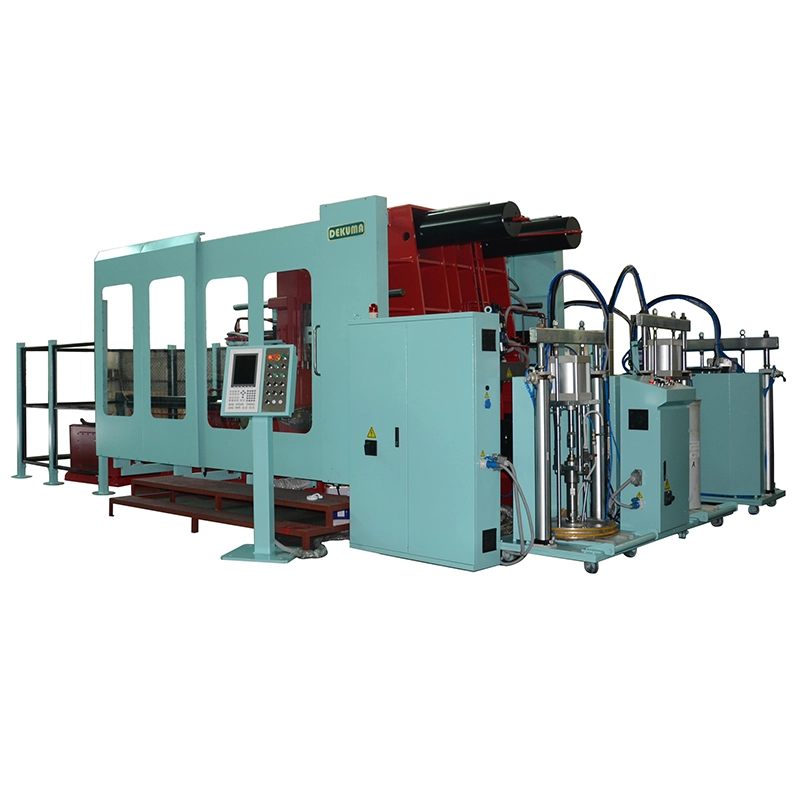
Our LSR equipment portfolio includes vertical and horizontal configurations. Listed models range from 50 to 400 tons of clamping force, while the LSR-V50, LSR-V100, and LSR-V200 models provide theoretical injection volumes of 125, 200, and 320 cc respectively. These differences allow machine selection to correspond with product size and production requirements rather than using one configuration for every application.
Control and dosing functions should also be evaluated. Our liquid silicone rubber injection molding machine uses an S98 Smart B&R control system with a 10.4-inch color touchscreen. A patented synchronized dosing system supports consistent material measurement, while the static mixer is designed to achieve uniform blending of components A and B.
Matching Equipment With Production Requirements
Different LSR applications can require different combinations of machine functions. Small precision components may prioritize accurate dosing and mold control, while larger products require greater mold space and clamping capacity. Production volume can also influence the importance of automation, cycle consistency, and material handling.
At Dekuma, equipment selection is connected with the characteristics of the material and the intended application. The machine portfolio covers LSR applications in electronics, energy, infant care, food-grade products, kitchenware, and sports products. Customized configurations and turnkey systems are also available when standard equipment does not fully correspond with a customer’s production requirements.
Material compatibility should remain a central consideration when comparing injection molding rubber materials. Different materials can require different injection pressure, temperature, flow, and curing conditions. A machine should therefore be evaluated according to the complete process rather than a single specification such as clamping force.
From Material Selection to Equipment Configuration
LSR equipment selection should ultimately follow the product and production process. Mold size, cavity layout, material dosage, injection volume, required cycle time, and output target can determine the appropriate machine capacity and configuration. These factors also help identify whether additional feeding, mixing, mold-handling, or automation functions are necessary.
For this type of project, our liquid silicone rubber equipment combines synchronized dosing with controlled A/B mixing and programmable machine control. Vertical and horizontal configurations are available, with different clamping capacities and injection volumes for different product sizes and production requirements. This allows the equipment configuration to be matched more closely with the intended molding process.
At Dekuma, our focus is on connecting material characteristics with machine configuration rather than treating equipment selection as a specification comparison. For manufacturers evaluating liquid silicone rubber molding, this approach provides a clearer basis for determining the required dosing, injection, clamping, and control functions before production begins.