
ubber injection molding covers applications ranging from automotive seals and electrical insulation components to rubber tracks, and these products do not place the same demands on molding equipment. Injection capacity, clamping force, temperature control, mold configuration, and automation may all need to change according to the product and compound. For this reason, evaluating injection molding equipment manufacturers requires attention to both equipment engineering capability and application experience.
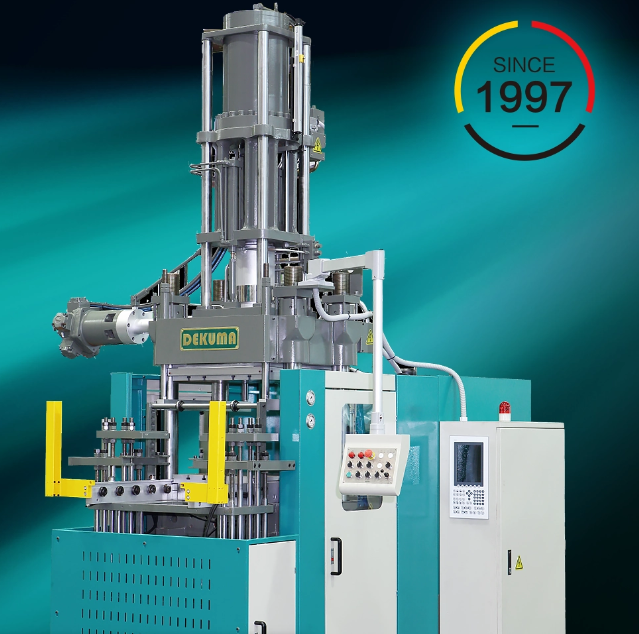
Our experience is built around rubber injection molding technology and specialized equipment for demanding industrial applications. Core mechanical components are developed by our technical team, while raw materials are selected and processed according to rigorous technical standards. This manufacturing foundation supports equipment reliability while allowing machine configurations to respond to different product, material, and production requirements.
Manufacturing Capabilities That Support Consistent Production
A rubber injection molding machine integrates injection, clamping, heating, hydraulic, control, and material-feeding systems. Their performance must remain coordinated throughout the molding cycle. Inconsistent pressure, inadequate clamping, unstable temperature control, or unsuitable feeding can affect product quality even when the machine appears technically adequate on paper.
Internal engineering capability becomes particularly valuable when customers require customized configurations. Product size, mold structure, compound characteristics, required output, and factory layout can all influence machine selection. A supplier with control over core mechanical design has more room to adapt these elements to the intended process.
Our portfolio includes RV, RV-Se, RC, RA, RT, and RI series rubber injection molding machines, along with specialized equipment for sealing rings, liquid silicone rubber, glass encapsulation, rubber tracks, and solid tires. This range supports applications with substantially different production conditions rather than relying on one universal machine platform.
Machine Design and Process Requirements
Manufacturing capability should also be assessed through the details of machine construction. For example, the RV Series uses an optimized plasticization and injection system, double-layer thermal insulation plates, a dual-seal clamping cylinder, and an electronic ruler with ±0.05% precision. Its models cover clamping forces from 500 to 16,000 kN.
These specifications matter because machine capacity must correspond with the product and mold rather than simply being as large as possible. A suitable configuration can provide the necessary injection capacity and clamping force while avoiding an unnecessary mismatch between equipment capability and the intended production process.
Application Experience Across Industrial Markets
Application experience provides another way to evaluate rubber injection molding machine manufacturers. Automotive components, electrical insulation products, and rubber tracks involve different materials, product geometries, molds, and production targets. Experience across these areas can help equipment selection move beyond general specifications toward practical process requirements.
- Automotive Rubber Components
Automotive rubber molding can involve window seals, gaskets, cable connectors, oil seals, vibration absorbers, and other precision components. Our RV, RV-Se, and RC series are used in automotive applications, while the RV-Se Series is designed for materials including TPV, TPE, and flexible modified PVC. Its servo system is designed to match pressure and flow requirements, with the manufacturer specifying energy consumption at 40% of traditional proportional-control systems under its stated operating conditions.
This application experience also affects customization. Different automotive components can require different mold arrangements, injection conditions, and production workflows. Equipment flexibility is therefore useful when a factory needs to manage multiple product types without building an entirely separate machine platform for every application.
- Electrical Power Applications
Electrical insulation presents another set of production challenges. Products such as hollow core insulators, long-rod insulators, arresters, cable accessories, and switchgear components require equipment appropriate to their size, material, and molding conditions.
Our RA, RT, and RI series address this sector. The RT Series is designed for HTV silicone rubber and includes applications such as long-rod insulators, hollow core bushings, arresters, cable accessories, and switchgear. Its design incorporates a top-opening mold structure, block-type clamping unit, hydraulic mold-thickness adjustment, and an optimized injection system.
- Rubber Track Production
Rubber track manufacturing requires a broader production perspective because molding and vulcanization form part of an integrated process. Our rubber track production line combines an automatic feeding unit with rubber vulcanizing machines and is intended for agricultural, construction, military, and snowmobile tracks. The system also includes smart monitoring and automated production functions.
The equipment portfolio therefore extends beyond individual injection machines when a customer’s production objective requires a more complete manufacturing solution. This is especially relevant to project managers and factory managers planning a new production line or upgrading an existing process.
How to Assess an Equipment Manufacturer
For purchasing managers, technical specifications should be only one part of supplier evaluation. The first step is to define the product, rubber compound, mold dimensions, expected production volume, cycle requirements, and quality targets. These factors provide a clearer basis for determining the appropriate machine configuration.
The second consideration is application experience. Relevant customer cases and established applications can indicate whether the supplier has encountered similar production challenges. This does not eliminate the need for technical validation, but it provides useful context before equipment selection and project planning.
Service capability also matters over the equipment lifecycle. Installation, commissioning, operator training, maintenance, spare parts, and technical support can influence production continuity after delivery. For larger projects, turnkey capabilities may further reduce coordination between equipment suppliers and other production-system providers.
From Equipment Manufacturing to Application Solutions
Our approach combines machine manufacturing with application-specific engineering. The objective is not simply to provide more models, but to match equipment characteristics with the material, product, mold, and production environment.
For companies comparing injection molding equipment manufacturers, this distinction can make supplier assessment more practical. Manufacturing depth provides control over the equipment itself, while application experience helps translate production requirements into a workable machine configuration.
With more than two decades of development in rubber injection molding, Dekuma has built solutions across automotive, power, rubber track, and other industrial applications. Our product range, internal engineering capabilities, customized equipment, and technical support provide a foundation for projects that require more than an off-the-shelf machine.
For buyers researching rubber injection molding machine manufacturers, Dekuma offers an equipment portfolio shaped by both manufacturing capability and practical application experience. The right evaluation should ultimately focus on how well the machine, process, and support system fit the customer’s actual production goals.