
Automotive rubber molding often involves long sealing profiles, gaskets, and thermoplastic elastomer components that must be produced repeatedly under controlled pressure and temperature. For these applications, the hydraulic system directly affects injection response, clamping stability, and energy use. A machine that maintains pressure efficiently can be more valuable than one selected simply for its maximum tonnage.
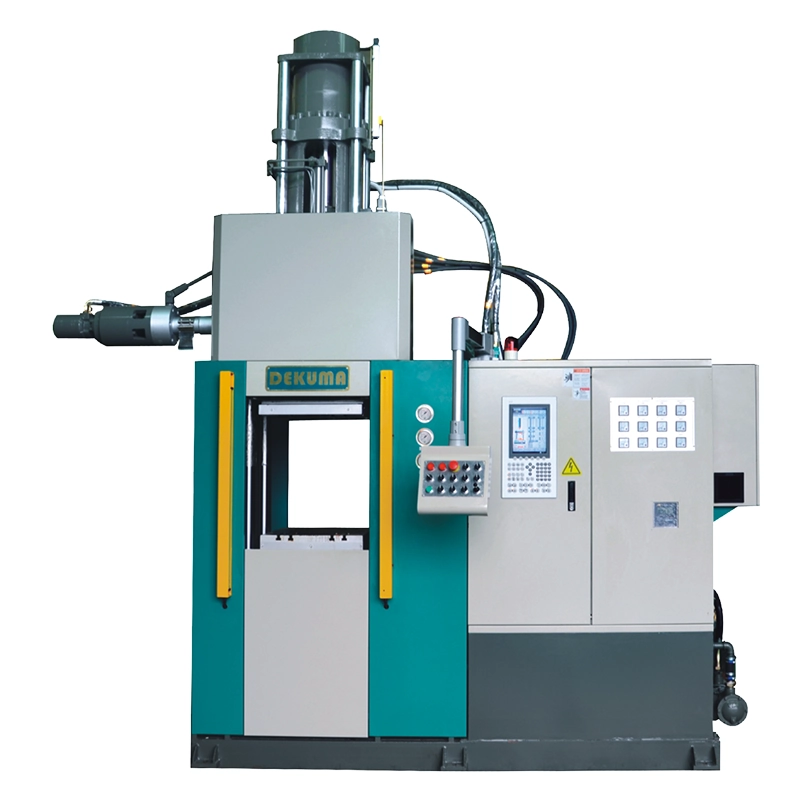
A hydraulic injection molding machine combines hydraulic power with controlled injection and clamping movements. In servo-driven configurations, pump output can respond to the pressure and flow actually required during each stage of the cycle. This approach is particularly relevant to manufacturers seeking repeatable molding while keeping hydraulic energy use under control.
Where Servo-Hydraulic Molding Fits
The RV-Se Series is designed for automotive applications involving TPV, TPE, flexible modified PVC, and other injection-moldable materials. These materials are used in components where dimensional consistency, surface quality, and repeatable production are important.
The required machine configuration depends on the component and mold. A long sealing profile may require greater mold-opening space, while a larger molded part can demand higher injection volume and clamping force. Production volume also affects the preferred machine size and automation level.
For these applications, a servo hydraulic injection molding machine can adjust hydraulic output according to actual process demand. Instead of maintaining the same pump output throughout the entire cycle, the servo system responds to required pressure and flow.
How the Hydraulic System Affects the Cycle
Injection and clamping require different pressure and flow conditions. During filling, the injection system needs sufficient pressure and speed to move the material into the mold. During clamping, the system must maintain the required force while avoiding unnecessary hydraulic output.
The RV-Se Series uses a servo system that matches output directly to required pressure and flow. The official product page states that power consumption can be reduced to 40% compared with traditional proportional control systems.
Pressure feedback also contributes to repeatability. High-precision pressure sensors, servo motors, and encoders compare pressure and flow in real time, while a dedicated PID controller adjusts the system. This allows the molding process to respond to changing conditions rather than relying only on fixed hydraulic settings.
Matching Capacity to the Mold
Machine capacity should be established from the actual product and tooling. Injection volume needs to cover the required shot, while clamping force must correspond with the mold and projected injection load. Mold-opening stroke, heating-plate dimensions, and minimum mold thickness also determine whether a configuration is suitable.
The RV-Se Series offers multiple clamping-force configurations to accommodate different molding requirements. Listed injection volumes range from 180 cc to 6,000 cc, with mold-opening strokes from 300 to 760 mm. Heating-plate dimensions extend from 450 × 450 mm to 1,300 × 1,300 mm across the available configurations.
These figures give purchasing and production teams practical criteria for comparing the machine with their existing or planned molds. Selecting a larger press than necessary is not automatically better; the useful capacity is the capacity that fits the product, tooling, and output target.
Energy, Response, and Production Monitoring
Servo control becomes especially relevant when the molding cycle contains frequent changes in pressure and flow. The RV-Se system combines a high-performance pump with a synchronized servo motor for fast response and short deceleration distances. This supports controlled movement during injection and clamping.
Energy monitoring can provide another useful production reference. An optional electronic wattmeter connects with the B&R S98 controller to provide real-time power-consumption information. Production teams can use this information to understand how machine operation affects energy use rather than relying only on installed motor power.
The machine also provides low-noise operation during high-pressure clamping and injection, and the series is CE certified according to the official product information.
How to Choose the Right Configuration
When comparing a hydraulic injection molding machine, start with four practical questions: What material will be processed? What shot volume does the mold require? How much clamping force does the tooling need? What mold-opening space is available? These answers narrow the suitable machine range before energy use or additional functions are considered.
A servo hydraulic injection molding machine is particularly worth considering when pressure and flow vary significantly during the cycle or when energy consumption is an important operating cost. Servo response, pressure feedback, injection capacity, and clamping performance should be assessed as one system.
The RV-Se Series offers multiple configuration options and uses a modular design that allows customization for specific molding requirements. At Dekuma, machine selection starts with the actual part and mold, then works through injection volume, clamping force, stroke, and hydraulic requirements to determine the appropriate configuration.
For production teams, this approach makes the comparison more concrete: instead of asking which press is the most powerful, the better question is whether the hydraulic system can deliver the pressure, flow, movement, and repeatability that the planned molding cycle actually requires. Dekuma can then configure the equipment around those specific production conditions.