
A rubber component that looks simple from the outside may involve complex production requirements behind the mold. An automotive sealing part may require tight dimensional control to prevent leakage, while a silicone rubber insulation component may need stable processing conditions to maintain electrical performance. For manufacturers producing customized rubber parts, the challenge is not simply finding molding equipment, but selecting a supplier that understands the complete production process.
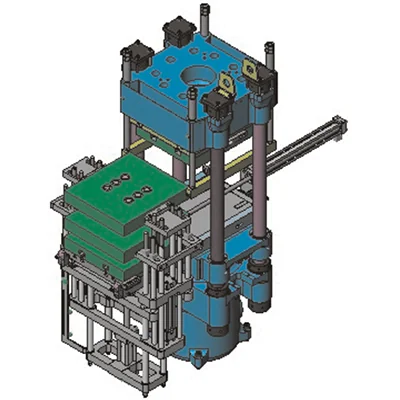
Standard equipment configurations are not always suitable for products with special materials, complex mold structures, or changing production requirements. A suitable custom injection molding machine should be configured around the product, material, and manufacturing process instead of forcing the production line to adapt to a fixed machine design.
Define the Requirements of Your Custom Rubber Production
Before comparing suppliers, manufacturers need to clearly define what the equipment must achieve. Many equipment decisions become difficult because buyers start with machine specifications before analyzing their actual production conditions.
Important factors include rubber material, part structure, mold design, production volume, and quality requirements. Materials such as NR, NBR, EPDM, and silicone rubber have different flow characteristics and curing behaviors, which influence injection settings and machine configuration.
Product complexity also determines the level of customization required. Components with inserts, irregular geometries, thin walls, or strict tolerances may require more precise injection control and flexible mold operation.
For example, a manufacturer producing automotive oil seals may focus on repeatable injection cycles and dimensional accuracy. A supplier producing electrical insulation parts may prioritize silicone rubber processing stability. These differences affect the selection of a custom injection molding machine.
Check Whether the Supplier Can Customize the Machine Around Your Process
Customization is not simply adding optional components to a standard machine. A qualified supplier needs to understand how the injection system, clamping structure, mold design, and material characteristics work together.
When evaluating a supplier, buyers should ask how the machine can be adjusted for their specific application. Questions about material compatibility, mold installation, production automation, and future product changes can reveal whether the supplier has real customization experience.
For manufacturers producing different rubber components, flexibility is often more valuable than excessive machine capacity. A properly configured machine allows the production line to handle current products while leaving room for future development.
Our Dekuma machine options are developed to support different rubber molding requirements. Depending on the application, manufacturers can select configurations related to material feeding, mold operation, production safety, and other process requirements. These options allow the equipment to better match specific manufacturing conditions rather than relying on a single standard setup.
Evaluate Experience With Different Rubber Applications
A supplier’s technical experience is especially important for customized rubber production because many issues appear during actual operation rather than during initial equipment selection.
For example, problems such as incomplete mold filling, inconsistent curing, or repeated parameter adjustments may involve several factors, including material behavior, mold design, and machine settings. A supplier familiar with different rubber applications can provide more practical guidance during equipment configuration and commissioning.
Experience across industries is also valuable. Automotive rubber parts, electrical insulation products, and engineering vehicle components each have different production priorities.
Our equipment is applied in industries including automotive rubber components, electric power products, engineering vehicles, and agricultural machinery. The RV Series vertical machines support applications such as seals, vibration dampers, cable connectors, and pipe connectors, while the RC Series C-frame machines are designed for precision rubber parts including sealing strip joints, seals, skeleton oil seals, and TPU products.
Review Available Options for Flexible Production
For customized rubber projects, equipment flexibility can influence production performance after installation. A machine designed only for one product may become difficult to adapt when customers introduce new designs or production requirements change.
When selecting among custom injection molding companies, buyers should review whether the supplier provides practical options rather than only different machine sizes. Useful options may include adjustments for specific materials, mold requirements, automation needs, and production environments.
A flexible equipment platform helps manufacturers avoid unnecessary replacement costs when expanding product categories. Instead of purchasing completely new equipment for every change, factories can select configurations that better support future production plans.
Our customized options are designed to provide this flexibility. By selecting suitable configurations according to product requirements, manufacturers can create equipment setups that better match their rubber processing conditions and production goals.
Consider Technical Support After Machine Delivery
The supplier relationship does not end after equipment delivery. Customized machines often require careful installation, commissioning, and process adjustment before reaching stable production.
Before making a decision, buyers should understand how the supplier supports the project after delivery. Technical communication during installation, operator training, and production optimization can directly affect how quickly the equipment reaches expected performance.
This is particularly important for companies producing specialized rubber components. When problems occur, engineers need to identify whether the cause comes from machine settings, material characteristics, or mold conditions.
With our experience in rubber injection molding equipment, Dekuma works with manufacturers to develop machine configurations based on specific production requirements. Our approach combines equipment design knowledge with practical application experience to help customers address different rubber processing challenges.
Choose a Supplier Based on Production Fit
When evaluating custom injection molding companies, the key question is whether the supplier has experience solving problems similar to yours. A machine may look suitable on paper, but issues such as rubber flow, mold matching, and process adjustment often appear only after production begins.
Before making a decision, review how the supplier handles your actual application details, including material selection, mold structure, and expected output. This information is often more useful than comparing machine specifications alone.
A custom injection molding machine should fit the way your factory produces rubber parts, not require your production process to be changed around the equipment. The right supplier is one that can turn product requirements into a practical machine configuration.