
The equipment requirements for a rubber molding project are determined largely by the product being manufactured. Product dimensions, rubber compound, mold structure, required output, and automation level can all change the required injection system, clamping capacity, heating arrangement, and mold-handling configuration. For a factory planning a specialized production line, these parameters need to be defined before the machine configuration is finalized.
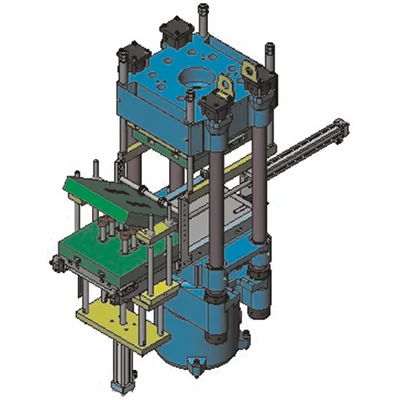
This is where custom injection molding becomes relevant. Instead of selecting a machine first and adapting the production process afterward, manufacturers can establish the process requirements first and then determine which machine functions, options, and auxiliary systems are necessary for the intended application.
Applications That Require Equipment Customization
Automotive rubber components, electrical insulation products, sealing parts, silicone components, and other molded products can impose different requirements on production equipment. Product size and geometry affect mold dimensions, while material characteristics influence plasticization, injection, and temperature control.
Large electrical components, for example, may require substantial clamping capacity and mold-opening space. Automotive components may place greater emphasis on repeatable cycles, mold handling, and automation. Silicone rubber applications can require dedicated feeding and processing arrangements. These differences make application-specific configuration more practical for certain production projects.
Our equipment portfolio covers rubber injection molding applications across automotive, power, civil, rubber track, and other industrial sectors. Machine platforms include RV, RA, RC, and RI series, while specialized equipment is available for liquid silicone rubber, glass encapsulation, rubber tracks, and solid tires. This range provides different technical foundations for customized production requirements.
Process Requirements for Custom Equipment
Customization should begin with measurable production information. Product drawings or samples, material type, product weight, mold dimensions, expected output, cycle time, and required automation provide the basis for determining machine configuration.
The injection system is one of the main areas that may require customization. Our available options include separate injection zones with adjustable pressure and speed, separate dwell zones, and configurations designed for different material and process requirements. The injection piston is also designed for convenient disassembly, supporting maintenance access.
Clamping requirements need similar attention. The structural design of key components uses finite element stress analysis to evaluate stress distribution and structural rigidity. Optional clamping configurations include separate pressure and speed zones, adjustable low- and high-pressure protection, and multiple venting-cycle options.
Temperature management can also be adapted to the process. Separate heat-transfer oil systems for plasticization and the injection barrel allow independent temperature regulation. This arrangement can be useful when the material and molding process require different thermal conditions.
Options for Mold Handling and Automation
Mold handling can become a significant consideration when molds are large, heavy, or frequently exchanged. Available options include mechanical or hydraulic mold lifting and holding devices, lower mold sliding devices, and mold sliding arrangements for compatible machine configurations.
Ejection can also be adapted to the product and mold structure. Single- or double-layer ejecting devices are available, providing different approaches to removing molded parts after the molding cycle.
Other options include silicone rubber feeding devices, cold runner systems, cold runners with heat-transfer oil, vacuum pumps, and all-round covers. CE safety configurations are also available for the RV, RA, RC, and RI series. The appropriate options should be selected according to the actual production process rather than added simply to increase machine functionality.
Equipment Selection for Different Production Goals
A customized machine should solve a defined production problem. When evaluating a custom injection molding machine, manufacturers should first identify the functions that cannot be adequately addressed by a standard configuration.
Mold dimensions may determine the required opening space and mold-handling method. Product weight and compound characteristics can influence injection volume and feeding requirements. Production volume can affect automation needs, while factory layout may determine the practical arrangement of mold movement, loading, unloading, and operator access.
At Dekuma, customization is approached through modular equipment options and application requirements. Injection, clamping, heating, feeding, ejection, mold handling, and other functions can be considered together when developing a suitable configuration. Matching mold design and production support can also be incorporated when required.
From Custom Configuration to Production
Customization should continue through equipment validation rather than ending when the machine is manufactured. Testing with the customer’s product mold or material can help verify machine performance and accuracy against the intended production requirements before full-scale operation.
Technical support after delivery is another consideration. Installation, operator training, remote guidance, and after-sales service can help customers move from commissioning to stable production. For projects involving multiple production stages, turnkey support can also help coordinate equipment, workflow, and process requirements.
For manufacturers planning custom injection molding, the practical approach is to define the product, material, mold, output, and production conditions first. These requirements can then determine which machine systems, auxiliary equipment, and optional functions are genuinely necessary.
At Dekuma, modular options and application experience provide a basis for developing equipment around specific manufacturing requirements. Injection, clamping, heating, feeding, ejection, mold handling, and automation can be configured according to the intended process, while matching mold support, testing, and technical service can help move the project from equipment planning toward production.