
Sealing-strip joints, oil seals, TPU parts, and insert-molded components are different products, but their production processes often involve similar concerns: accurate mold positioning, controlled filling, and efficient operation around the tooling area.
A sealing-strip joint needs precise control at the connection section because the molded profile directly affects assembly accuracy. Oil seals require consistent cavity filling to form the sealing lip correctly. TPU parts involve different material flow characteristics compared with traditional rubber compounds, while insert-molded components require the inserted part to stay in the correct position throughout injection and vulcanization.
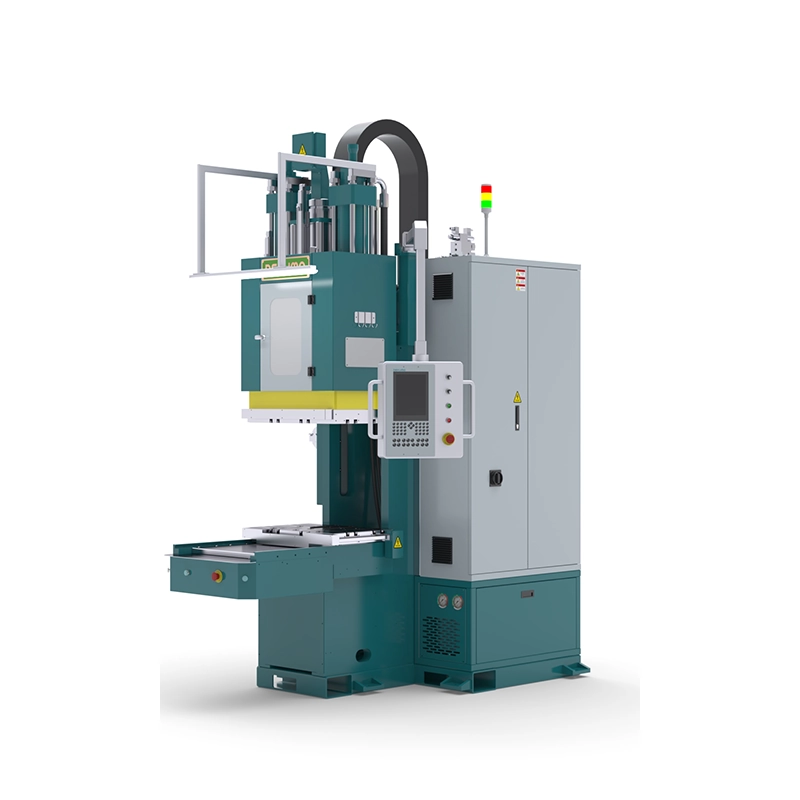
These applications require a machine structure that matches the way the parts are produced. A C-frame rubber injection molding machine is often considered for applications where operators need better access around the mold, flexible tooling arrangements, and accurate control of the injection process.
Mold Access for Sealing Joints and Insert-Molded Parts
For many rubber components, production efficiency depends not only on injection performance but also on how easily operators can work with the mold.
Sealing-strip joints often involve complex corner or connection molds. During production, operators may need to check mold alignment, adjust tooling positions, or switch between different product specifications. Limited access around the mold can make these operations more difficult.
Insert-molded components have another requirement. Before injection starts, inserts must be placed accurately inside the cavity. The available working space around the mold affects how easily operators can complete insert positioning and how smoothly automation systems can be integrated.
The RC Series from Dekuma uses a C-frame clamping structure with three-side access around the mold area. This design provides more practical space for mold installation, adjustment, and insert handling. It is especially suitable for applications such as precision rubber parts, sealing strip joints, seals, skeleton oil seals, and TPU products.
When evaluating a C-frame press, the open structure should be considered together with production requirements. The purpose of the frame design is not only to save space but also to make daily molding operations easier to manage.
Injection Control for Rubber and TPU Processing
Material behavior has a direct influence on molded part quality. Rubber compounds need proper filling before vulcanization, while TPU materials may require different injection conditions because of their flow characteristics.
For oil seals, the injection process needs to fill narrow sealing areas accurately to maintain the designed profile. For TPU components, injection volume, pressure, and temperature control can influence the appearance and dimensions of the final part.
The RC Series separates the plasticizing and injection systems, allowing each stage to focus on its specific function. The design helps improve material preparation before injection and provides more accurate control over injection volume. The nozzle can also be lifted during vulcanization to reduce material stress and improve process control.
For manufacturers selecting a C-frame rubber injection molding machine, injection performance should be evaluated according to the material and product structure. A machine producing sealing parts and TPU components needs flexibility in process adjustment rather than only a high injection capacity.
Clamping Accuracy for Precision Sealing Components
The relationship between the mold halves influences the final dimensions of rubber parts. This is especially important for sealing applications where small differences in shape may affect performance.
Oil seals require accurate cavity formation because the sealing lip needs to maintain its designed geometry. Sealing-strip joints also depend on correct mold matching to ensure the connection area meets product specifications.
Insert-molded components add another factor because the insert must remain stable when material enters the cavity. If the mold position changes during injection, the final part may not meet dimensional requirements.
The RC Series combines the C-frame structure with hydraulic clamping control to maintain mold positioning during production. For applications requiring higher injection accuracy, optional servo valve control can provide additional control over pressure and flow.
Why RC Series Fits Flexible Rubber Molding Applications
Different products require different machine configurations.
For sealing-strip joints, manufacturers often need convenient mold access because tooling adjustments can be frequent. The RC Series provides an open mold area that supports easier operation around connection molds.
For oil seals, accurate dosing and injection control help manage cavity filling requirements. The separated plasticizing and injection system is designed to handle the preparation and delivery of rubber material as two controlled processes.
For TPU parts, production conditions may change according to material characteristics and product design. The RC Series offers configuration options that allow manufacturers to adjust the machine according to their molding needs.
For insert-molded components, the three-side access structure provides more working space for insert placement. This makes the machine suitable for production environments where operators need to combine molding with additional assembly steps.
This application-focused design is one reason the RC Series is used for precision rubber parts, sealing applications, and TPU products.
Matching Machine Design With Product Requirements
A molding machine for sealing-strip joints, oil seals, TPU parts, and insert-molded components needs to fit the production process behind each product.
The frame structure affects mold operation. The injection system affects how materials are processed. The clamping system affects how accurately the mold remains positioned during repeated cycles.
The RC Series from Dekuma combines these elements into a C-frame platform designed for precision rubber molding applications. Instead of focusing on one single specification, the machine configuration considers how the mold, material, and product design work together during production.
For manufacturers working with different rubber components, the value of a C-frame press comes from its ability to adapt to real production conditions. A machine that provides accessible tooling operation, controlled injection, and flexible configuration can better support applications ranging from sealing-strip joints to complex insert-molded parts.