
Long sealing profiles, rubber gaskets, oil seals, and TPU overmolded parts often require frequent mold handling during production. Operators may need to position inserts, place long profiles, remove cured parts, or change tooling between production runs. When access around the mold is restricted, these routine operations can become unnecessarily difficult. For this reason, machine-frame design deserves attention alongside injection capacity and clamping force.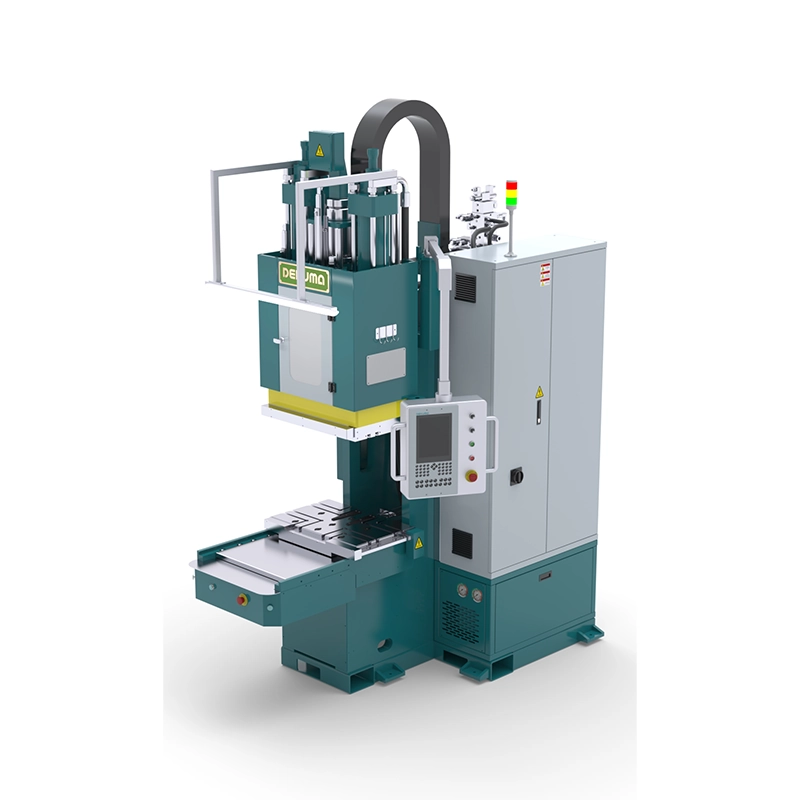
The three-sided opening of a C-frame hydraulic press is particularly relevant when operators need to position long sealing profiles, place inserts, or remove cured rubber parts directly around the mold.Our RC Series combines this frame configuration with a separated plasticizing and injection system, a liftable nozzle, and hydraulic clamping to address the specific requirements of rubber and TPU molding.
Where Open Mold Access Has a Practical Advantage
The value of a C-frame structure becomes clearer with long or manually handled products. Automotive window sealing strips and door-edge seals can require careful positioning before the mold closes. Operators may also need unobstructed access when removing finished profiles or checking the tooling after a cycle.
The same consideration applies to insert-based products. Skeleton oil seals and TPU overmolded bushings require the insert to be correctly positioned before injection. A three-sided working area provides more room for these operations and makes the mold easier to reach during inspection or adjustment.
This is where a C-frame rubber injection molding machine differs from equipment selected purely according to injection and clamping specifications. The frame itself becomes part of the production workflow, particularly when manual handling remains an important part of the cycle.
Injection Control Must Match Precision Parts
An open frame does not compensate for inconsistent material preparation. Rubber still needs to be plasticized and injected under controlled conditions, especially when the mold contains narrow sealing profiles, small cavities, or detailed geometries.
The RC Series separates its plasticizing unit from the injection unit. This allows the two stages to be controlled independently and helps maintain suitable material conditions before injection. The configuration is intended for precision rubber applications including sealing-strip joints, seals, skeleton oil seals, and other molded components.
The nozzle also moves away from the mold during vulcanization. This liftable design helps prevent material backflow and reduces unnecessary stress on the rubber. For precision components, maintaining controlled dosing throughout the cycle can be more useful than simply increasing injection capacity.
Hydraulic Clamping Has a Direct Role in Vulcanization
The hydraulic system is responsible for more than closing the mold. Once the mold reaches the required position, sufficient clamping force must be maintained while the rubber cures. If the machine is selected without considering the mold structure and projected area, the available clamping capacity may not correspond with the actual production requirement.
The RC Series covers clamping forces from 150 to 2,500 kN, allowing the equipment to serve different precision rubber and TPU applications. Injection volume ranges from 25 to 800 cc across the listed configurations.
Mold-opening stroke is another practical consideration. The RC Series provides strokes from 465 to 600 mm, while heating-plate dimensions vary according to configuration. These specifications should be checked against the actual mold rather than treated as independent machine figures.
For a C-frame hydraulic press, the useful capacity is therefore the capacity that fits the tooling and production cycle. A higher clamping force does not automatically make a machine more suitable if the mold, injection volume, or working area does not match the application.
Production Options Should Solve Real Workflow Problems
Not every factory needs the same machine options. The right choice depends on how parts are loaded, how frequently molds change, and how much manual handling occurs between cycles.
The RC Series offers an optional double-workstation configuration. This can allow preparation at one station while molding takes place at the other, which is relevant when loading or unloading takes a significant portion of the production cycle. An optional mold-transfer function is also available for applications involving frequent tooling changes.
Pressure and flow requirements can vary between precision rubber applications. A high-precision servo valve system is available as an option for applications such as automotive sealing components where tighter control is required.
These options should be selected according to measurable production needs. If mold changes are rare, a transfer system may offer limited value. If manual loading consumes substantial cycle time, a double workstation may have a more direct effect on productivity.
How to Select the Right Configuration
A C-frame rubber injection molding machine should be evaluated from the part and mold outward. Start with the material and shot volume, then check mold dimensions, clamping requirements, opening stroke, and heating-plate size. After those basic requirements are established, consider whether open access, mold transfer, or additional pressure control can improve the actual workflow.
For long sealing profiles, mold access may deserve priority. For small seals and gaskets, dosing and injection control can be more important. For insert molding, the available working area and mold-handling method may influence the equipment decision more than maximum clamping force.
The RC Series brings these requirements together in an open three-sided structure with separated plasticizing and injection, a liftable nozzle, hydraulic clamping, and optional production functions. Dekuma can configure the equipment around the specific part, tooling, and workflow rather than applying the same setup to every application.
That is also the more practical way to assess a C-frame hydraulic press: not by frame style or tonnage alone, but by whether the machine gives operators enough access, provides the required injection and clamping capacity, and fits the way the mold actually moves through production. Dekuma provides the RC Series as a configurable platform for manufacturers whose rubber or TPU applications require this combination of accessibility and controlled molding.