
High-voltage insulation components made from HTV silicone rubber often need to maintain consistent performance under electrical, mechanical, and environmental stress. For manufacturers, achieving this consistency depends not only on the silicone material itself but also on how accurately the injection and curing process is controlled.
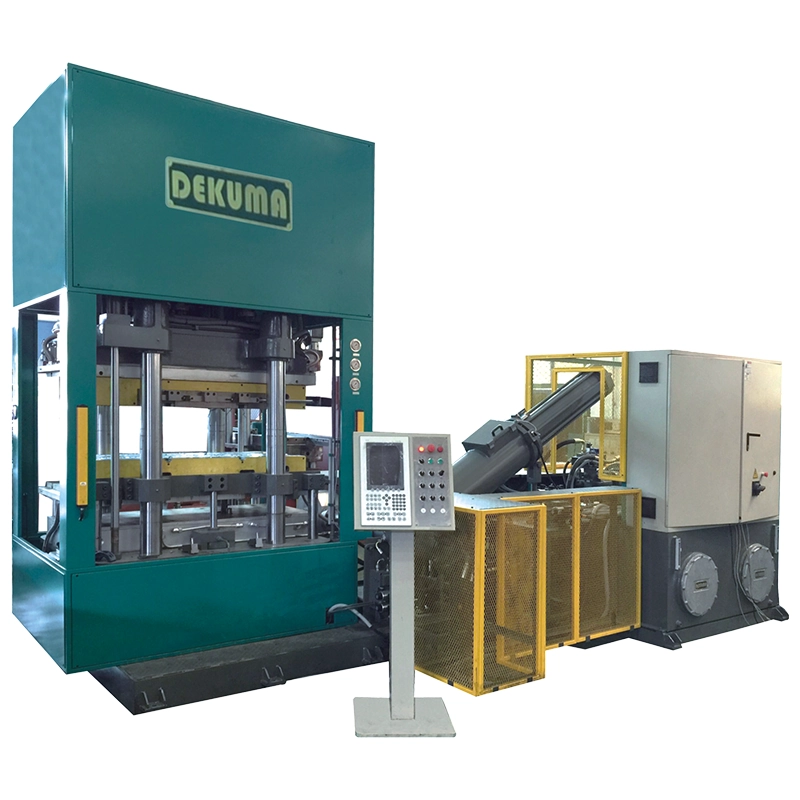
Compared with general rubber products, silicone insulators usually involve complex geometries, strict dimensional requirements, and demanding surface quality standards. Variations in injection pressure, material flow, or temperature conditions can influence the final molding results.
For this reason, the control system becomes an important factor when selecting molding equipment. A suitable system should help manufacturers manage key parameters, reproduce stable production conditions, and adjust processes according to different product requirements.
When evaluating an HTV silicone insulators injection machine, manufacturers should consider how the control platform works together with the injection unit, heating system, and machine structure to support consistent silicone insulation production.
Control Requirements for HTV Silicone Insulator Manufacturing
HTV silicone rubber has different processing characteristics compared with many conventional rubber materials. During injection molding, factors such as material flow behavior, injection speed, mold temperature, and curing conditions need to be coordinated carefully.
For high-voltage insulators, these conditions are closely related to product reliability. Inconsistent filling or unstable process parameters may affect the appearance, dimensions, and insulation performance of the finished component.
A machine control system plays a role in managing these variables. Beyond basic machine operation, it should allow operators to monitor important parameters, adjust settings when necessary, and maintain repeatable conditions between production cycles.
For manufacturers producing different insulator designs, the ability to manage and reproduce process parameters becomes especially important. Equipment should provide a clear connection between operator input, machine response, and final molding results.
Key Factors to Evaluate in a Control System
When selecting rubber injection equipment, manufacturers often compare mechanical specifications such as clamping force and injection capacity. However, control functions can also influence long-term production stability.
Several aspects should be considered during equipment evaluation:
- Parameter adjustment and storage capabilities;
- Repeatability between molding cycles;
- Operator interface and process visibility;
- Coordination between injection, heating, and curing functions.
For silicone insulation applications, production consistency is often more important than simply achieving high output. A control system should allow manufacturers to maintain established molding conditions while still providing flexibility when product designs or material requirements change.
The selection of an HTV silicone insulators injection machine should therefore include an assessment of how the control system supports the entire molding process rather than focusing only on individual hardware specifications.
The Role of B&R Control System in Injection Molding
In rubber injection equipment, the control platform connects different machine functions and helps coordinate their operation during the molding cycle.
The B&R control system is used in industrial automation applications where communication between machine components and accurate process management are required. In rubber molding equipment, its role is related to managing operating parameters, coordinating machine functions, and supporting consistent production operation.
For high-voltage silicone insulation manufacturing, the importance of a control system is not limited to automation. The ability to maintain repeatable settings is valuable when manufacturers need to produce components with similar structures over extended production periods.
A well-integrated control platform should work together with the injection system, temperature control, and machine configuration. The overall performance depends on how these elements interact during actual molding operations.
RT Series Connects Control Technology With Silicone Insulation Production
The RT Series Rubber Injection Molding Machine is designed for rubber molding applications where process control and production consistency are important considerations.
For HTV silicone insulation components, the machine needs to manage multiple factors during molding, including material injection, pressure control, temperature conditions, and curing requirements. The RT Series integrates a B&R control system to coordinate machine operation and provide a platform for managing these production parameters.
The control system allows operators to adjust and monitor molding settings according to different product requirements. This is particularly relevant for silicone insulators, where product structures and processing conditions may vary between applications.
Beyond the control platform, the RT Series is developed around the requirements of rubber injection molding. The relationship between the injection system, machine structure, and process parameters determines how effectively the equipment can support stable production.
For companies evaluating an HTV silicone insulators injection machine, the RT Series represents an equipment configuration that combines rubber molding capability with process control functions required for silicone insulation applications.
Select Equipment Based on Process Compatibility
A suitable molding machine should match the requirements of the material, product design, and production method. For high-voltage insulation manufacturing, this means evaluating not only machine specifications but also how effectively the equipment manages process stability.
The control system, injection unit, and heating functions should operate as one coordinated system. Manufacturers should consider whether the equipment can support repeatable production and provide the flexibility needed for future product requirements.
The RT Series from Dekuma applies these considerations to rubber injection molding equipment by combining a B&R control system with a machine configuration designed for silicone rubber processing. For manufacturers reviewing equipment options, Dekuma focuses on the relationship between control accuracy, material behavior, and molding requirements when developing solutions for high-voltage insulation applications.